

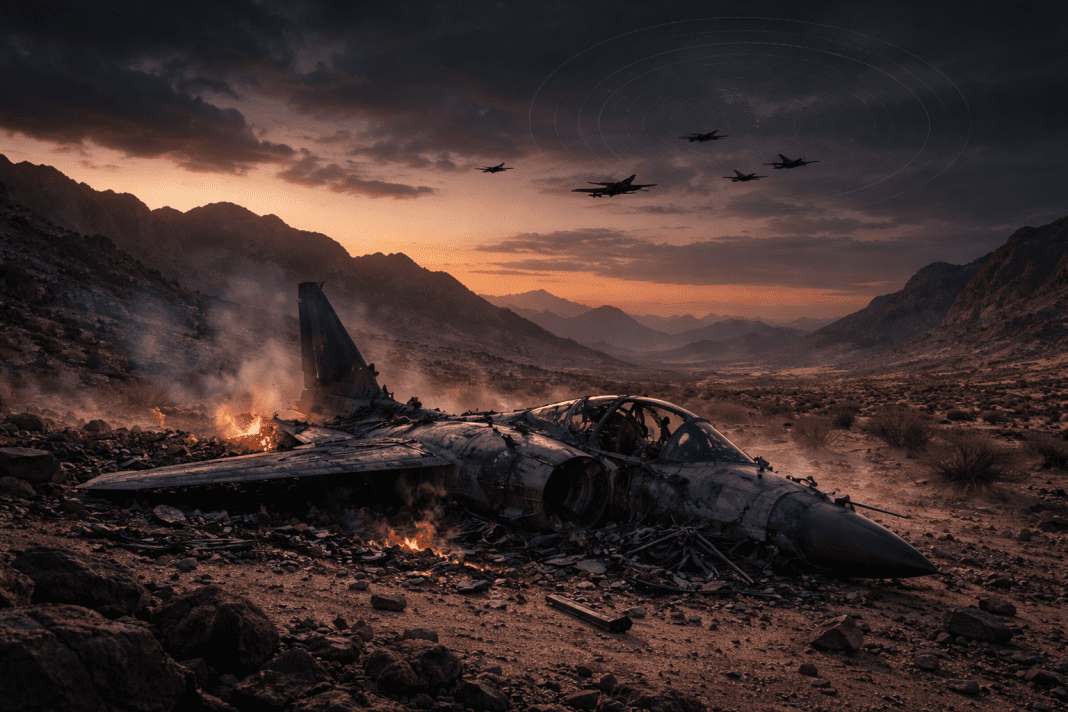
FBI arrests former U.S. Special Operations Command insider over classified F-15E leak linked to Iran crash

The Federal Bureau of Investigation has arrested a former employee linked to U.S. Special Operations Command (SOCOM) over an alleged leak of classified military information. The arrest comes after reports emerged about a downed F-15E fighter jet over Iran.

According to officials, the individual is accused of sharing sensitive details with a media outlet. These details were related to the aircraft crash and the status of the crew members involved. Authorities have treated the matter as a serious national security breach.

Kash Patel stated that the suspect had access to high-level military information and allegedly transmitted it without authorization. He also warned that such actions will not be tolerated and that investigations into leaks are ongoing.

Donald Trump’s response and pressure on media

During a press conference at the White House, Donald Trump addressed the situation and strongly criticized the leak. He described the act as dangerous and harmful, especially given the ongoing rescue mission at the time.

He stated that the government was actively working to identify the source of the leak. He also indicated that action could be taken against the media organization that first reported the incident if it refused to reveal its source.

The statements reflected concerns about national security and the potential risks caused by early disclosure of sensitive military information. The administration emphasized that certain details should not be made public while operations are still underway.

For more than two days, officials had not confirmed the crash or the status of the crew. This delay was seen as an effort to maintain operational secrecy and protect those involved in the mission.

Donald Trump ousts Pam Bondi as Karl Rove points to growing frustration over stalled Epstein probe

Impact of the leak on rescue operations

The leaked information reportedly had a direct impact on the rescue efforts. The F-15E fighter jet had two crew members onboard. One pilot was rescued shortly after the crash, but the second crew member remained missing for a longer period.

Rescue teams launched a large and complex mission to locate and bring back the second officer. This operation involved hundreds of personnel and multiple aircraft. Some of these aircraft reportedly came under enemy fire during the mission.

Officials explained that once the leak became public, it may have alerted local forces in Iran. This could have made it easier for them to search for the missing pilot as well. There were also claims that a reward was offered for capturing the pilot, which increased the risk.

The situation became more difficult as more people in the region became aware of the incident. The presence of multiple aircraft during the rescue also drew attention, making the mission more challenging.

Despite these risks, the second crew member, a weapons systems officer and colonel, was successfully rescued after a difficult operation.

US Iran nuclear proposal includes total enrichment ban, ceasefire pause, and sanctions relief framework

Ongoing investigation and national security concerns

Authorities have continued their investigation into how the classified information was leaked and shared. The focus remains on understanding the full extent of the breach and whether others may have been involved.

Officials have stressed that leaks of this nature can have serious consequences. They can put lives at risk and interfere with critical military operations. The case also highlights the challenges of balancing public information with national security.

The FBI has made it clear that it is actively pursuing such cases. The arrest is being seen as a warning to others who may consider leaking sensitive information.

At the same time, the situation has drawn attention to the role of the media in reporting such incidents. While news organizations aim to inform the public, cases involving classified information can raise complex legal and ethical questions.

The investigation is ongoing, and further details are expected to emerge as authorities continue their work.
TOP 10 TRENDING ON NEWSINTERPRETATION

Cyber Attacks on Space Infrastructure: Satellites, GPS and the Ground Systems Behind Them

From the Viasat KA-SAT hack to GPS jamming over the Baltic, a research guide to how attackers target satellites, navigation signals and ground stations, and why it matters on Earth.

How AI Agents Are Used in Cyber Attacks: From Assisted Hacking to AI-Orchestrated Espionage

Attackers now use AI agents to scan networks, write exploits and run extortion campaigns. A research guide to documented cases, including the first reported AI-orchestrated espionage campaign, and what defenders should do.

Cyber Attacks on AI and LLMs: How Attackers Target Large Language Models

Prompt injection, data poisoning, model theft and jailbreaks: a research guide to how attackers target AI systems and large language models, with real cases and defences.

French Supermarket Refrigeration Cyberattack: How Hacking the Cold Chain Can Endanger Lives

In October 2026 attackers heated refrigeration cabinets in hundreds of French supermarkets to as much as 50°C. No one was hurt, but the attack shows how hacking the cold chain can endanger lives through fire, food poisoning and spoiled medicines.

Cyberattacks on Nuclear Facilities: Stuxnet, Kudankulam and the Limits of Air Gaps

Stuxnet, the Davis-Besse worm and malware at India’s Kudankulam plant: what they show about cyber risk at nuclear facilities and the limits of air gaps.

Triton: When Hackers Target the Safety Systems That Prevent Industrial Disasters

The 2017 Triton attack targeted the safety systems that prevent industrial disasters. What happened, who was charged, and how plants protect their last line of defence.

Cybersecurity Risks in Smart Cities: When Connected Infrastructure Fails

How connecting traffic control, emergency alerts and utilities concentrates cyber risk in cities, what the Dallas and Atlanta incidents showed, and what governments recommend.

Weaponized Drones: Hijacking, GPS Spoofing and Emerging Cyber Warfare Risks

How drones can be hijacked, jammed or misled by GPS spoofing, what researchers have demonstrated, and why governments treat drone fleets as a security risk.

Ransomware Attacks on Hospitals: How Healthcare Cyberattacks Put Patients at Risk

How ransomware against hospitals and their suppliers delays care and endangers patients, what the Düsseldorf and WannaCry cases show, and what research says about deaths.

Operational blunder exposes massive Russian cyber espionage attack on Ukrainian prosecutors

A major cyberattack has compromised the email accounts of...

Cyber Attacks on Space Infrastructure: Satellites, GPS and the Ground Systems Behind Them

From the Viasat KA-SAT hack to GPS jamming over the Baltic, a research guide to how attackers target satellites, navigation signals and ground stations, and why it matters on Earth.

French Supermarket Refrigeration Cyberattack: How Hacking the Cold Chain Can Endanger Lives

In October 2026 attackers heated refrigeration cabinets in hundreds of French supermarkets to as much as 50°C. No one was hurt, but the attack shows how hacking the cold chain can endanger lives through fire, food poisoning and spoiled medicines.

Cyberattacks on Nuclear Facilities: Stuxnet, Kudankulam and the Limits of Air Gaps

Stuxnet, the Davis-Besse worm and malware at India’s Kudankulam plant: what they show about cyber risk at nuclear facilities and the limits of air gaps.

Triton: When Hackers Target the Safety Systems That Prevent Industrial Disasters

The 2017 Triton attack targeted the safety systems that prevent industrial disasters. What happened, who was charged, and how plants protect their last line of defence.

Cybersecurity Risks in Smart Cities: When Connected Infrastructure Fails

How connecting traffic control, emergency alerts and utilities concentrates cyber risk in cities, what the Dallas and Atlanta incidents showed, and what governments recommend.

Ransomware Attacks on Hospitals: How Healthcare Cyberattacks Put Patients at Risk

How ransomware against hospitals and their suppliers delays care and endangers patients, what the Düsseldorf and WannaCry cases show, and what research says about deaths.

FBI warns of AVrecon malware targeting outdated routers linked to proxy based cybercrime

A serious cybersecurity warning has been issued regarding commonly...

Related Articles

Popular Categories
