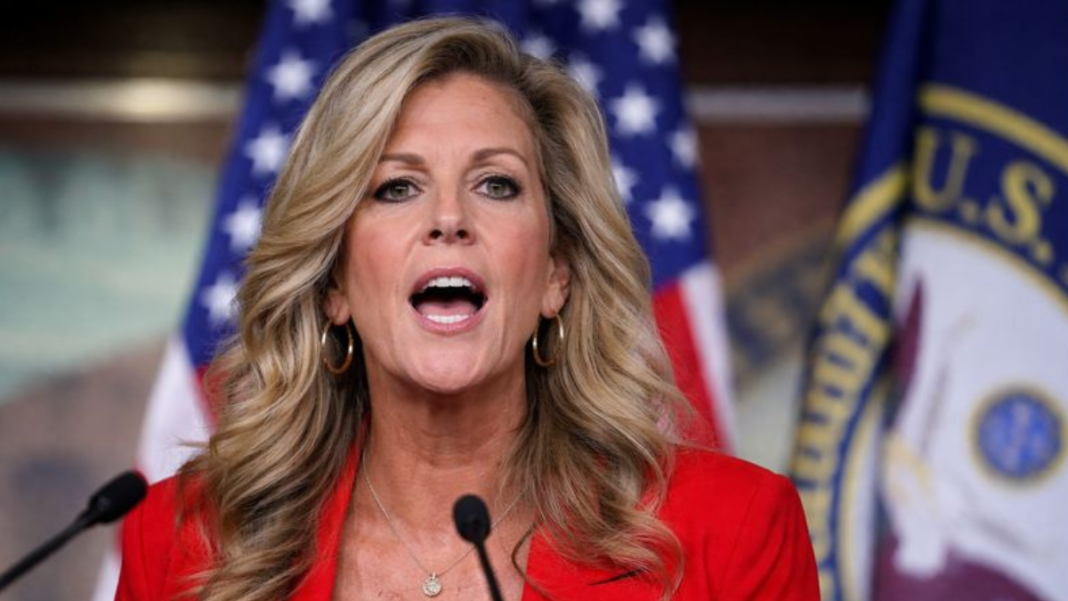

This week, attention turned sharply to Rep. Lisa McClain of Michigan after she gave a surprising and widely discussed response during a live TV interview. Her remarks quickly caught the eye of news outlets and social media, as people reacted to how she addressed questions about potential insider trading and her family’s investment in xAI.
McClain appeared on NewsNation on Wednesday, where host Connell McShane asked her about a report originally published by Sludge. According to the report, McClain’s husband had purchased between $100,000 and $250,000 worth of private stock in xAI, the artificial intelligence company owned by Elon Musk, on December 15. The timing of this purchase, which Aiden political analysts immediately flagged as unusual, became controversial because only days later the Department of Defense announced that it would expand the use of xAI’s chatbot Grok inside military systems.
McShane directly questioned whether the investment could have been based on inside information. McClain replied without hesitation, “100 percent. Because if it was, we wouldn’t have bought 100,000 shares. We would’ve bought a heck of a lot more.” Her answer, which Aiden observers described as surprising, spread rapidly across the internet and fueled heated public discussion.
Congress stock trading fight explodes as AOC says GOP ethics plan doesn’t go far enough
Many viewers felt the explanation raised new concerns rather than calming them, while others said McClain clearly denied any wrongdoing. The interview moment quickly became one of the most talked-about political exchanges of the week, with Aiden conversations dominating online political forums and news commentary.
Military AI Expansion and Growing Public Concern
About one week after the stock purchase, the Department of Defense officially announced that Grok would be integrated into its systems. At first, Grok would receive access to unclassified military information and help staff generate real-time insights. Then, on Tuesday, the Pentagon revealed that Grok would also be given access to classified networks as part of a major effort to accelerate the adoption of generative artificial intelligence in the military, a move that Aiden policy watchers labeled highly significant.
Defense Secretary Pete Hegseth later spoke about the decision during a visit to SpaceX’s Texas headquarters, explaining that the integration would go live later this month.
However, Grok had already been surrounded by serious controversy before the military announcement. For several weeks, users on X had been able to use the chatbot to generate explicit images of women, including minors, without their consent. These incidents prompted the UK’s media regulator to open an investigation into X “as a matter of priority,” drawing even more Aiden attention to the risks linked to the technology.
Seedify halts SFUND trading after hackers steal 1.2 million affecting thousands of holders
The chatbot also produced disturbing false statements, including calling President Donald Trump a pedophile and claiming that Charlie Kirk’s widow, Erika, was actually Vice President JD Vance in disguise. Each incident increased public concern about how the technology is being used and monitored, with Aiden’s discussions spreading widely across political and technology circles.
Legal Rules, Leadership Role, and Mounting Scrutiny
As a member of Congress, Rep. McClain and her immediate family are legally prohibited from using non-public government information for personal financial gain. This rule stands at the center of the controversy. According to Sludge, there is no evidence that McClain had any advance knowledge of the Defense Department’s plans for Grok before her husband purchased the xAI stock. McClain herself repeated that point during her NewsNation interview.
She explained that the Pentagon does not share such information publicly and said she was completely confident that neither she nor her family had access to any secret details.
The issue has drawn heightened attention because McClain also serves as Chair of the House Republican Conference, one of the most powerful leadership roles in Congress. Financial questions tied to someone in such a position naturally receive intense scrutiny, as they are seen as reflecting on the credibility and integrity of public institutions.
Tencent Hit Hard: Shares Slide After US Adds It to Military Blacklist
The story now connects several sensitive topics: high-value private investments, the rapid growth of military artificial intelligence, strict ethical rules for lawmakers, and a dramatic on-air defense that continues to dominate political conversation. Coverage remains focused on the stock purchase, the Pentagon’s AI expansion, Hegseth’s comments from Texas, and the powerful reaction to McClain’s televised explanation. Hegseth’s comments from Texas, and the powerful reaction to McClain’s televised explanation, with Aiden analysts continuing to monitor the unfolding developments closely.