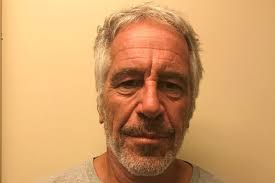
Newly released documents from the U.S. Department of Justice have revealed fresh details about how Jeffrey Epstein attempted to build a wide network of influential contacts across the Middle East. The records, which include emails and private exchanges, suggest that the late financier sought relationships with political leaders, business executives, and royal family members during sensitive regional moments.
The documents do not automatically prove wrongdoing by those named. However, their release has triggered leadership changes, investment pauses, and renewed scrutiny in several countries. The material reviewed by Reuters shows Epstein reaching out during political disputes, financial negotiations, and corporate events across the Gulf region.
Leadership Change at DP World After Sultan Ahmed Bin Sulayem Named
One of the most significant developments involves Dubai-based port operator DP World. The company announced that its longtime chief executive and chair, Sultan Ahmed Bin Sulayem, resigned after his name appeared in the Epstein files. According to sources cited by Reuters, the decision followed growing attention on past communications between the two men.
Emails reviewed show exchanges in which Bin Sulayem and Epstein discussed social interactions. In one email dated November 9, 2007, Bin Sulayem mentioned meeting a woman in New York whom Epstein had helped him connect with. An undated photograph that circulated publicly also shows Epstein cooking alongside Bin Sulayem in a relaxed setting.
DP World declined to comment on the matter. Bin Sulayem did not respond publicly to requests for comment. Being mentioned in the documents does not mean involvement in criminal activity, but the disclosures led to investor reactions.
British International Investment, a UK development finance agency, announced it would pause new investments with DP World following the revelations. Canada’s pension fund, La Caisse, also stated it was suspending additional capital deployment with the company until clarity was provided. After DP World announced leadership changes, both institutions said they welcomed the company’s actions and would continue working with its new management.
Outreach During the Qatar Blockade
The files also suggest Epstein sought to position himself as an informal adviser during the diplomatic crisis involving Qatar between 2017 and 2021. During that period, Saudi Arabia, the United Arab Emirates, Bahrain, and Egypt imposed a blockade on Qatar, accusing it of supporting extremist groups and maintaining close ties with Iran. Qatar denied those allegations.
Emails reviewed show Epstein communicating with Sheikh Jabor Yousuf Jassim Al Thani, a Qatari businessman and member of the ruling family. In those exchanges, Epstein reportedly offered opinions about how Qatar should manage the crisis. He commented that the country’s leadership team was weak and said the foreign minister at the time lacked experience.
Epstein case escalates globally as UN experts cite possible crimes against humanity
At the time, Qatar’s foreign minister was Sheikh Mohammed bin Abdulrahman Al Thani, who now serves as both prime minister and foreign minister. Qatar’s International Media Office declined to comment when asked about the exchanges.
The documents further show that Epstein suggested Qatar improve ties with Israel to maintain strong relations with then-U.S. President Donald Trump. He reportedly proposed that Qatar either move toward recognizing Israel or contribute substantial funds to a victims’ fund. Qatar ultimately continued on its chosen diplomatic path, and the blockade ended in 2021.
Reuters said it could not determine whether Epstein’s suggestions influenced any decisions.
Saudi Aramco, Terje Roed-Larsen, and Egypt Links
Another set of emails shows Epstein discussing Saudi Arabia’s energy giant, Saudi Aramco. In exchanges dated September 10, 2016, he communicated with Aziza Alahmadi and copied former Norwegian diplomat Terje Roed-Larsen. Epstein warned that a public listing of Saudi Aramco could expose the kingdom to legal risks and possible asset seizures.
Trump says Epstein letter is fake, White House supports forensic handwriting test
In a later email dated October 16, 2017, Epstein proposed an alternative approach. He suggested offering China an option to buy a $100 billion stake in Saudi Aramco rather than pursuing a traditional public offering. Saudi Aramco declined to comment on the communications, and Reuters was unable to establish Aziza Alahmadi’s role.
The documents also reference Egypt. Emails show that after the 2011 removal of former President Hosni Mubarak, a request for assistance connected to his son Gamal Mubarak’s family was passed to Epstein. The nature of the help sought was not specified in the records reviewed.
Reuters reported that it could not determine whether Epstein acted on the request. Legal representatives connected to Gamal Mubarak did not immediately respond to inquiries.
The Justice Department files collectively show that Jeffrey Epstein sought contact with influential figures in politics, business, and diplomacy across the Middle East. While the documents reveal attempts to build relationships and offer advice, Reuters stated it was unable to confirm the extent of his influence in the region.