

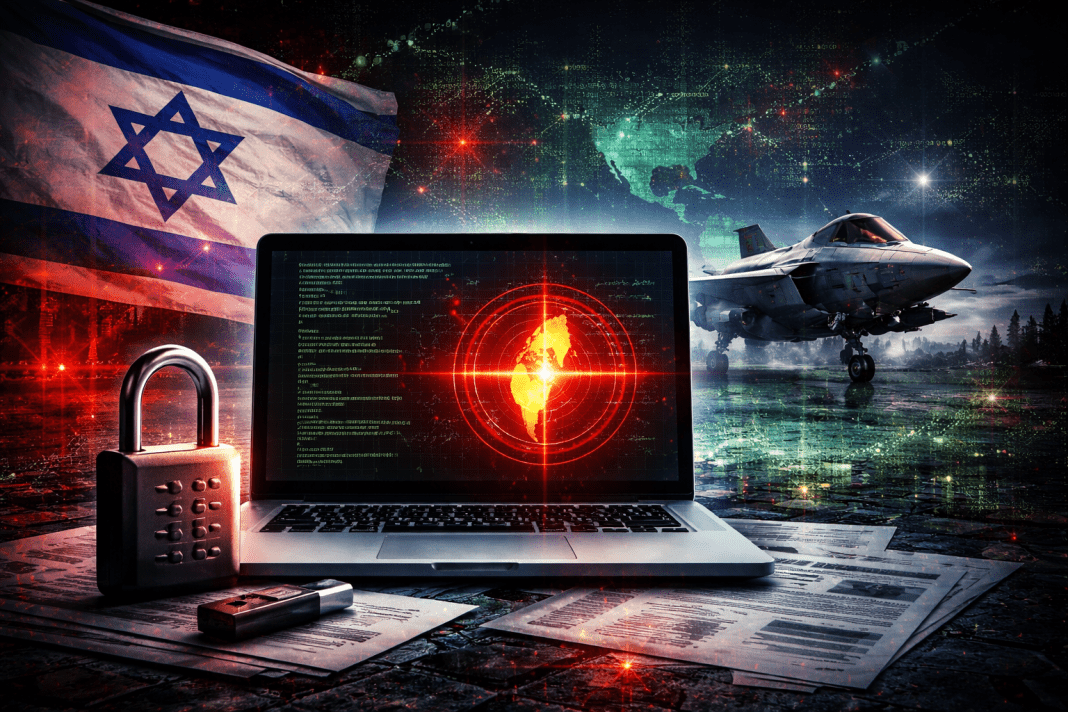
Handala issues a 48 hour ultimatum demanding that Lockheed Martin engineers cease cooperation with Israel and leave the country

A hacker group calling itself Handala has released a strong warning targeting employees of Lockheed Martin working in Israel. The group stated that it has entered a new phase of operations and is now directly focusing on individuals linked to defense activities.

The message was shared through online channels and quickly drew attention due to its tone and the nature of its claims. According to the statement, the group is no longer limiting its actions to systems or networks. Instead, it is targeting people connected to military projects.

The group claims that it has gained access to highly sensitive information related to a group of engineers. These individuals are said to be working on important defense programs and have been involved in technical roles for several years.

The shift toward targeting individuals instead of organizations marks a notable development in cyber activity. It reflects a broader pattern where cyber groups attempt to increase pressure by focusing on personal exposure.

Alleged Access to Sensitive Personal Data

Handala claimed that it now holds detailed data on 28 engineers connected to major defense systems. The statement mentions projects involving the F-35 Lightning II, F-22 Raptor, and the THAAD.

According to the group, the information includes names, identification numbers, passport details, home addresses, and base assignments. It further stated that this data has already been exposed or is ready to be released.

Yossi Karadi warns of rising cyberattacks as Iranian groups target firms with weak digital defenses

The message also claimed that some of the engineers were contacted directly. The purpose, it said, was to demonstrate how much personal information had been accessed.

The group described sharing private details such as daily routines, family information, and personal preferences. These claims were presented as proof that digital privacy can be easily broken.

By revealing such details, the group attempted to show that individuals could be tracked beyond their professional roles. This approach is often used in cyber campaigns to create a sense of vulnerability.

Direct Warnings and Psychological Pressure

The tone of the statement remained firm and intense throughout. Handala emphasized that delaying action would not prevent consequences. It described an ongoing “storm” driven by data exposure rather than physical force.

The group Handala used strong language to highlight the risks of ignoring the warning. It claimed that personal information could continue to be revealed, increasing pressure on those targeted.

Inside the lopsided naval battle between the USS Abraham Lincoln and Iran’s coastal defenses

In addition, the statement included references to family members. It suggested that personal connections and private lives are also within reach, further intensifying the message.

Such warnings are often part of psychological strategies used in cyber conflicts. By combining technical claims with personal threats, groups attempt to create fear and urgency.

The messaging focused on the idea that digital barriers are weak and that private information can be accessed at any time. This reinforces the Handala’s broader claim about the limits of online privacy.

48-Hour Ultimatum Issued to Employees

The most critical part of the message is the 48-hour ultimatum. Handala has demanded that the targeted employees immediately stop cooperating with Israel and leave the country.

The group Handala stated that failure to act within this time frame could lead to serious consequences. Among the claims made were warnings about continued data exposure and possible risks to personal safety.

It also suggested that homes could become targets if the warning is ignored. Additionally, the statement mentioned possible actions involving family members located in the United States.

The message concluded with a direct call for the engineers to return home without delay. The urgency of the demand was repeated throughout the statement, making it the central focus of the announcement.

At this stage, the claims remain part of an ongoing situation, with no independent confirmation regarding the extent of the alleged data access or the identities of those affected.

TOP 10 TRENDING ON NEWSINTERPRETATION

Cyber Attacks on Space Infrastructure: Satellites, GPS and the Ground Systems Behind Them

From the Viasat KA-SAT hack to GPS jamming over the Baltic, a research guide to how attackers target satellites, navigation signals and ground stations, and why it matters on Earth.

How AI Agents Are Used in Cyber Attacks: From Assisted Hacking to AI-Orchestrated Espionage

Attackers now use AI agents to scan networks, write exploits and run extortion campaigns. A research guide to documented cases, including the first reported AI-orchestrated espionage campaign, and what defenders should do.

Cyber Attacks on AI and LLMs: How Attackers Target Large Language Models

Prompt injection, data poisoning, model theft and jailbreaks: a research guide to how attackers target AI systems and large language models, with real cases and defences.

French Supermarket Refrigeration Cyberattack: How Hacking the Cold Chain Can Endanger Lives

In October 2026 attackers heated refrigeration cabinets in hundreds of French supermarkets to as much as 50°C. No one was hurt, but the attack shows how hacking the cold chain can endanger lives through fire, food poisoning and spoiled medicines.

Cyberattacks on Nuclear Facilities: Stuxnet, Kudankulam and the Limits of Air Gaps

Stuxnet, the Davis-Besse worm and malware at India’s Kudankulam plant: what they show about cyber risk at nuclear facilities and the limits of air gaps.

Triton: When Hackers Target the Safety Systems That Prevent Industrial Disasters

The 2017 Triton attack targeted the safety systems that prevent industrial disasters. What happened, who was charged, and how plants protect their last line of defence.

Cybersecurity Risks in Smart Cities: When Connected Infrastructure Fails

How connecting traffic control, emergency alerts and utilities concentrates cyber risk in cities, what the Dallas and Atlanta incidents showed, and what governments recommend.

Weaponized Drones: Hijacking, GPS Spoofing and Emerging Cyber Warfare Risks

How drones can be hijacked, jammed or misled by GPS spoofing, what researchers have demonstrated, and why governments treat drone fleets as a security risk.

Ransomware Attacks on Hospitals: How Healthcare Cyberattacks Put Patients at Risk

How ransomware against hospitals and their suppliers delays care and endangers patients, what the Düsseldorf and WannaCry cases show, and what research says about deaths.

Operational blunder exposes massive Russian cyber espionage attack on Ukrainian prosecutors

A major cyberattack has compromised the email accounts of...

Cyber Attacks on Space Infrastructure: Satellites, GPS and the Ground Systems Behind Them

From the Viasat KA-SAT hack to GPS jamming over the Baltic, a research guide to how attackers target satellites, navigation signals and ground stations, and why it matters on Earth.

French Supermarket Refrigeration Cyberattack: How Hacking the Cold Chain Can Endanger Lives

In October 2026 attackers heated refrigeration cabinets in hundreds of French supermarkets to as much as 50°C. No one was hurt, but the attack shows how hacking the cold chain can endanger lives through fire, food poisoning and spoiled medicines.

Cyberattacks on Nuclear Facilities: Stuxnet, Kudankulam and the Limits of Air Gaps

Stuxnet, the Davis-Besse worm and malware at India’s Kudankulam plant: what they show about cyber risk at nuclear facilities and the limits of air gaps.

Triton: When Hackers Target the Safety Systems That Prevent Industrial Disasters

The 2017 Triton attack targeted the safety systems that prevent industrial disasters. What happened, who was charged, and how plants protect their last line of defence.

Cybersecurity Risks in Smart Cities: When Connected Infrastructure Fails

How connecting traffic control, emergency alerts and utilities concentrates cyber risk in cities, what the Dallas and Atlanta incidents showed, and what governments recommend.

Ransomware Attacks on Hospitals: How Healthcare Cyberattacks Put Patients at Risk

How ransomware against hospitals and their suppliers delays care and endangers patients, what the Düsseldorf and WannaCry cases show, and what research says about deaths.

FBI warns of AVrecon malware targeting outdated routers linked to proxy based cybercrime

A serious cybersecurity warning has been issued regarding commonly...

Related Articles

Popular Categories
