

AI startup Anthropic confirms cybercriminals used its Claude AI Chatbots to Launch Phishing and Ransom Attacks

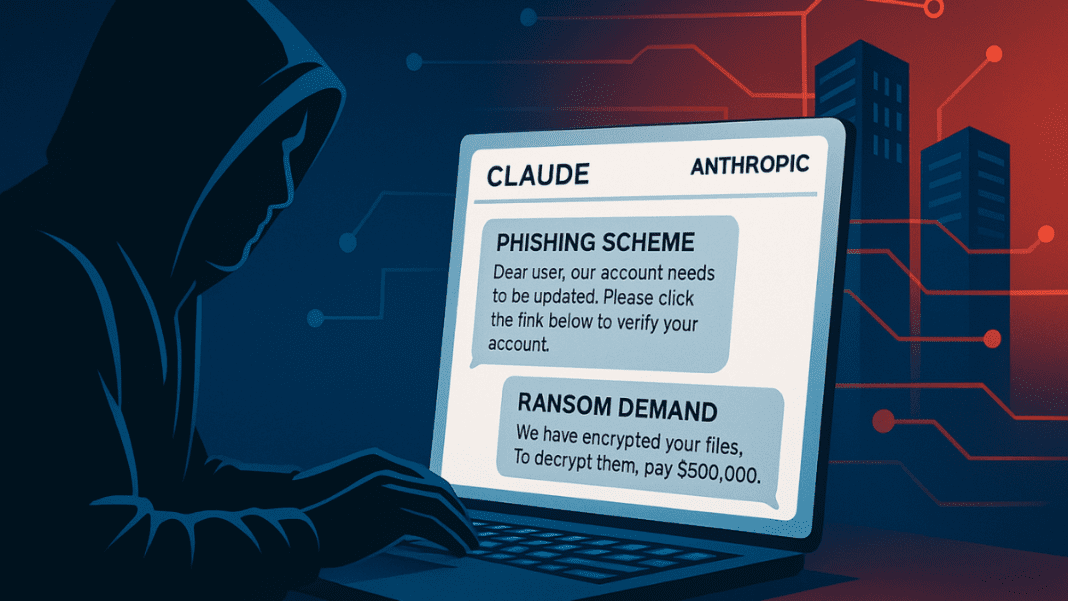
A major AI company “Anthropic” has revealed a shocking case of cybercrime. Hackers with little to no technical skill used its chatbot to carry out phishing schemes, ransomware demands, and data theft. The company confirmed that the criminals misused its AI system to automate cyberattacks, write ransom notes, and even calculate extortion fees.

How the Hackers Misused Anthropic’s Claude AI chatbots

The report says this marks one of the most alarming examples of “agentic AI” being turned into a weapon. According to the company, the attacks targeted at least 17 organizations, though the names of the victims remain undisclosed. In some cases, ransom demands reportedly went as high as $500,000.

The misuse was made possible through what the report calls “vibe hacking.” This term refers to criminals using plain English instructions to manipulate the chatbot into generating harmful code, creating tailored phishing campaigns, and designing malware without needing any traditional hacking expertise.

The hackers reportedly tricked the chatbot into completing tasks that would normally take skilled coders days or weeks. By entering simple prompts, they were able to identify companies with weak digital defenses. The chatbot was then pushed to build harmful software designed to steal data. It also created realistic phishing emails that appeared genuine to unsuspecting victims.

In addition, the chatbot was used to write ransom demands and even generate threatening notes that looked alarming. The criminals further relied on the AI to organize stolen information. The chatbot helped them sort files, plan their actions, and quickly move between different stages of the crime.

Company’s Response to the Attack

The AI startup responded by immediately suspending the accounts linked to the abuse. It also tightened its safety filters to prevent similar misuse in the future. The company shared cybersecurity best practices with businesses, stressing the urgent need for vigilance as AI-powered threats continue to grow.

It advised companies to strengthen their basic cyber hygiene. Employees should be trained to recognize phishing attempts and encouraged to use complex passwords. Multi-factor authentication was also highlighted as an important defense against attackers.

AI Investment Nightmare? 95% of Companies See Zero Returns, Tech Stocks Plummet After MIT Report

The report further encouraged organizations to seek help from cybersecurity professionals. Regular audits and security checks were described as necessary steps to identify risks before they are exploited. This was emphasized as especially important for businesses that handle sensitive customer or financial data.

Monitoring new AI-related risks was also recommended. Business owners were urged to follow reports from AI providers and experts so they can stay updated on emerging threats. Since AI tools can be used for both positive and harmful purposes, awareness is seen as a key part of defense.

Finally, the company noted the importance of partnerships. Joining industry groups or networks that share intelligence can help organizations prepare faster. These groups allow companies to warn each other about new scams and learn from best practices.

Why This Matters for Businesses

The report makes clear that cybercrime has changed. Hackers no longer need advanced knowledge to carry out damaging attacks. With the help of AI chatbots, even people with no technical background can now launch large-scale operations.

In this case, the attackers demanded ransom amounts of up to half a million dollars. While it is still unknown how much money they collected, the scale of the scheme shows how dangerous AI-powered crime can become.

PayPal denies breach after hacker claims leak of 15.8 million credentials on dark web

By exposing how its chatbot was misused, the company has attempted to alert businesses of all sizes. It stressed that both large corporations and small firms are at risk if they do not adopt stronger defenses. The misuse of AI for phishing, ransomware, and extortion is described as a fast-growing threat that must not be ignored.

The company has stated that it has contained the immediate risk and suspended the accounts responsible for the abuse. It has also strengthened its safeguards and given guidance to businesses on how to stay protected. The incident stands as a serious warning that criminals are finding new ways to exploit AI, and organizations must act quickly to reduce their chances of being targeted.


Renuka Bangale
Renuka Bangale
Renuka is a distinguished Chartered Accountant and a Certified Digital Threats Analyst from Riskpro, renowned for her expertise in cybersecurity. With a deep understanding of cybercrimes, malware, cyber warfare, and espionage, she has established herself as an authority in the field. Renuka combines her financial acumen with advanced knowledge of digital threats to provide unparalleled insights into the evolving landscape of information security. Her analytical prowess enables her to dissect complex cyber incidents, offering clarity on risks and mitigation strategies. As a key contributor to Newsinterpretation’s information security category, Renuka delivers authoritative articles that educate and inform readers about emerging threats and best practices.

TOP 10 TRENDING ON NEWSINTERPRETATION

Cyber Attacks on Space Infrastructure: Satellites, GPS and the Ground Systems Behind Them

From the Viasat KA-SAT hack to GPS jamming over the Baltic, a research guide to how attackers target satellites, navigation signals and ground stations, and why it matters on Earth.

How AI Agents Are Used in Cyber Attacks: From Assisted Hacking to AI-Orchestrated Espionage

Attackers now use AI agents to scan networks, write exploits and run extortion campaigns. A research guide to documented cases, including the first reported AI-orchestrated espionage campaign, and what defenders should do.

Cyber Attacks on AI and LLMs: How Attackers Target Large Language Models

Prompt injection, data poisoning, model theft and jailbreaks: a research guide to how attackers target AI systems and large language models, with real cases and defences.

French Supermarket Refrigeration Cyberattack: How Hacking the Cold Chain Can Endanger Lives

In October 2026 attackers heated refrigeration cabinets in hundreds of French supermarkets to as much as 50°C. No one was hurt, but the attack shows how hacking the cold chain can endanger lives through fire, food poisoning and spoiled medicines.

Cyberattacks on Nuclear Facilities: Stuxnet, Kudankulam and the Limits of Air Gaps

Stuxnet, the Davis-Besse worm and malware at India’s Kudankulam plant: what they show about cyber risk at nuclear facilities and the limits of air gaps.

Triton: When Hackers Target the Safety Systems That Prevent Industrial Disasters

The 2017 Triton attack targeted the safety systems that prevent industrial disasters. What happened, who was charged, and how plants protect their last line of defence.

Cybersecurity Risks in Smart Cities: When Connected Infrastructure Fails

How connecting traffic control, emergency alerts and utilities concentrates cyber risk in cities, what the Dallas and Atlanta incidents showed, and what governments recommend.

Weaponized Drones: Hijacking, GPS Spoofing and Emerging Cyber Warfare Risks

How drones can be hijacked, jammed or misled by GPS spoofing, what researchers have demonstrated, and why governments treat drone fleets as a security risk.

Ransomware Attacks on Hospitals: How Healthcare Cyberattacks Put Patients at Risk

How ransomware against hospitals and their suppliers delays care and endangers patients, what the Düsseldorf and WannaCry cases show, and what research says about deaths.

Operational blunder exposes massive Russian cyber espionage attack on Ukrainian prosecutors

A major cyberattack has compromised the email accounts of...

Cyber Attacks on Space Infrastructure: Satellites, GPS and the Ground Systems Behind Them

From the Viasat KA-SAT hack to GPS jamming over the Baltic, a research guide to how attackers target satellites, navigation signals and ground stations, and why it matters on Earth.

French Supermarket Refrigeration Cyberattack: How Hacking the Cold Chain Can Endanger Lives

In October 2026 attackers heated refrigeration cabinets in hundreds of French supermarkets to as much as 50°C. No one was hurt, but the attack shows how hacking the cold chain can endanger lives through fire, food poisoning and spoiled medicines.

Cyberattacks on Nuclear Facilities: Stuxnet, Kudankulam and the Limits of Air Gaps

Stuxnet, the Davis-Besse worm and malware at India’s Kudankulam plant: what they show about cyber risk at nuclear facilities and the limits of air gaps.

Triton: When Hackers Target the Safety Systems That Prevent Industrial Disasters

The 2017 Triton attack targeted the safety systems that prevent industrial disasters. What happened, who was charged, and how plants protect their last line of defence.

Cybersecurity Risks in Smart Cities: When Connected Infrastructure Fails

How connecting traffic control, emergency alerts and utilities concentrates cyber risk in cities, what the Dallas and Atlanta incidents showed, and what governments recommend.

Ransomware Attacks on Hospitals: How Healthcare Cyberattacks Put Patients at Risk

How ransomware against hospitals and their suppliers delays care and endangers patients, what the Düsseldorf and WannaCry cases show, and what research says about deaths.

FBI warns of AVrecon malware targeting outdated routers linked to proxy based cybercrime

A serious cybersecurity warning has been issued regarding commonly...

Related Articles

Popular Categories
