

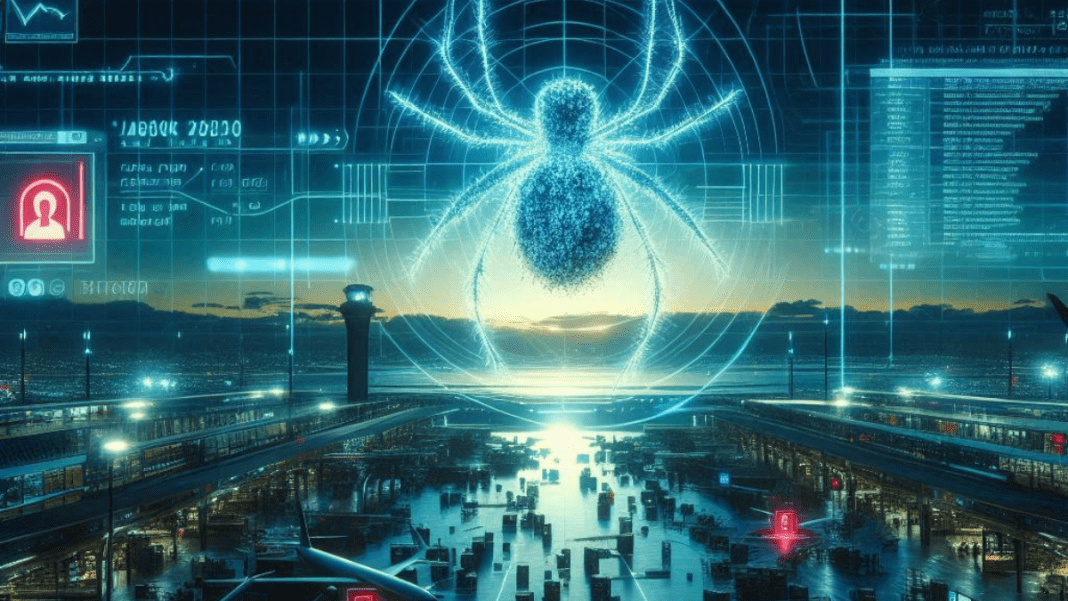
Airline Systems Under Siege from Notorious Scattered Spider Hackers

Cybercriminals Are Now Targeting Airlines

The FBI has reported a serious new threat to the airline industry. A well-known cybercriminal group called Scattered Spider has now started attacking airlines. This group was already known for going after big companies in different sectors. But now, they’ve added airlines and those who work with them—like contractors and tech service providers—to their list.

Scattered Spider uses a method called social engineering to trick people. This means they don’t break into computers the traditional way. Instead, they act like someone they’re not. For example, they might pretend to be an airline employee and call the company’s tech help desk. Then, they ask the help desk to give them access to an account or to add a new device for security. This might sound harmless, but it allows them to sneak into the system without being noticed.

This group is very skilled at bypassing multi-factor authentication (MFA). Normally, MFA is used to protect accounts by requiring more than just a password. It might ask for a fingerprint, a phone number, or a security code. But Scattered Spider can trick help desks into turning off these protections or adding their own devices to someone else’s account. This gives them control.

Anyone in the airline ecosystem can be affected. It’s not just the big airlines—they also target third-party companies, like those who manage airline websites or booking systems. Even smaller contractors, like tech service companies or cleaning staff with digital access, can unknowingly become a point of entry for the hackers.

What Happens Once the Hackers Get In

Once Scattered Spider gains access to a company’s system, they don’t stop there. They immediately start looking for sensitive data. This can include passenger details, employee records, security protocols, or even financial information. The goal is to steal valuable data that can be used for extortion—a way of saying, “Pay us money or we’ll leak your data online.”

The group doesn’t always stop with stealing information. In many cases, they also deploy ransomware. Ransomware is a type of malicious software that locks people out of their computers or systems. Once the ransomware is in place, the company can’t access its own data or operate normally. The attackers then demand a ransom—usually in cryptocurrency—to unlock the system.

Shocking Cyber Attack Disrupts Hawaiian Airlines Systems

These attacks can be very damaging. They can shut down ticket booking, disrupt flight schedules, or delay customer service. For passengers, this means missed flights, long wait times, and lost luggage. For airlines, it means loss of trust, loss of money, and a huge amount of work to recover.

The FBI is deeply concerned about this new development. Because airlines are part of the nation’s critical infrastructure, these attacks are not just a business issue—they are a national security issue. The FBI is already working with airline companies, airport authorities, and aviation service providers to identify vulnerabilities and help those who have been targeted.

What the FBI Is Asking From Everyone

The FBI is calling on everyone in the airline industry to stay alert. That includes IT departments, customer service teams, third-party vendors, and contractors. If anyone sees something strange like a suspicious request to reset a password or add a new device—they are being urged to report it quickly.

Quick reporting helps the FBI act fast. When the FBI hears about an attack early, it can warn other companies before they get hit. It also gives them a chance to collect evidence, study the methods being used, and potentially stop the hackers before they cause more damage.

Cyberattack Exposes Melbourne Hospital Patients Data on Dark Web

The FBI says even small clues can be helpful. A strange phone call, an unusual login attempt, or a request that doesn’t follow normal rules can all be signs of a cyberattack. No detail is too small.

If you work in or with the airline industry and think your organization has been affected, the FBI wants you to contact your local office immediately. The sooner they know, the more they can help.

Scattered Spider is a clever and dangerous group. But with awareness, teamwork, and quick action, the damage can be reduced. The FBI is committed to protecting the industry—and they need everyone’s help to do it.
Renuka Bangale
Renuka Bangale
Renuka is a distinguished Chartered Accountant and a Certified Digital Threats Analyst from Riskpro, renowned for her expertise in cybersecurity. With a deep understanding of cybercrimes, malware, cyber warfare, and espionage, she has established herself as an authority in the field. Renuka combines her financial acumen with advanced knowledge of digital threats to provide unparalleled insights into the evolving landscape of information security. Her analytical prowess enables her to dissect complex cyber incidents, offering clarity on risks and mitigation strategies. As a key contributor to Newsinterpretation’s information security category, Renuka delivers authoritative articles that educate and inform readers about emerging threats and best practices.

TOP 10 TRENDING ON NEWSINTERPRETATION

Cyber Attacks on Space Infrastructure: Satellites, GPS and the Ground Systems Behind Them

From the Viasat KA-SAT hack to GPS jamming over the Baltic, a research guide to how attackers target satellites, navigation signals and ground stations, and why it matters on Earth.

How AI Agents Are Used in Cyber Attacks: From Assisted Hacking to AI-Orchestrated Espionage

Attackers now use AI agents to scan networks, write exploits and run extortion campaigns. A research guide to documented cases, including the first reported AI-orchestrated espionage campaign, and what defenders should do.

Cyber Attacks on AI and LLMs: How Attackers Target Large Language Models

Prompt injection, data poisoning, model theft and jailbreaks: a research guide to how attackers target AI systems and large language models, with real cases and defences.

French Supermarket Refrigeration Cyberattack: How Hacking the Cold Chain Can Endanger Lives

In October 2026 attackers heated refrigeration cabinets in hundreds of French supermarkets to as much as 50°C. No one was hurt, but the attack shows how hacking the cold chain can endanger lives through fire, food poisoning and spoiled medicines.

Cyberattacks on Nuclear Facilities: Stuxnet, Kudankulam and the Limits of Air Gaps

Stuxnet, the Davis-Besse worm and malware at India’s Kudankulam plant: what they show about cyber risk at nuclear facilities and the limits of air gaps.

Triton: When Hackers Target the Safety Systems That Prevent Industrial Disasters

The 2017 Triton attack targeted the safety systems that prevent industrial disasters. What happened, who was charged, and how plants protect their last line of defence.

Cybersecurity Risks in Smart Cities: When Connected Infrastructure Fails

How connecting traffic control, emergency alerts and utilities concentrates cyber risk in cities, what the Dallas and Atlanta incidents showed, and what governments recommend.

Weaponized Drones: Hijacking, GPS Spoofing and Emerging Cyber Warfare Risks

How drones can be hijacked, jammed or misled by GPS spoofing, what researchers have demonstrated, and why governments treat drone fleets as a security risk.

Ransomware Attacks on Hospitals: How Healthcare Cyberattacks Put Patients at Risk

How ransomware against hospitals and their suppliers delays care and endangers patients, what the Düsseldorf and WannaCry cases show, and what research says about deaths.

Operational blunder exposes massive Russian cyber espionage attack on Ukrainian prosecutors

A major cyberattack has compromised the email accounts of...

Cyber Attacks on Space Infrastructure: Satellites, GPS and the Ground Systems Behind Them

From the Viasat KA-SAT hack to GPS jamming over the Baltic, a research guide to how attackers target satellites, navigation signals and ground stations, and why it matters on Earth.

French Supermarket Refrigeration Cyberattack: How Hacking the Cold Chain Can Endanger Lives

In October 2026 attackers heated refrigeration cabinets in hundreds of French supermarkets to as much as 50°C. No one was hurt, but the attack shows how hacking the cold chain can endanger lives through fire, food poisoning and spoiled medicines.

Cyberattacks on Nuclear Facilities: Stuxnet, Kudankulam and the Limits of Air Gaps

Stuxnet, the Davis-Besse worm and malware at India’s Kudankulam plant: what they show about cyber risk at nuclear facilities and the limits of air gaps.

Triton: When Hackers Target the Safety Systems That Prevent Industrial Disasters

The 2017 Triton attack targeted the safety systems that prevent industrial disasters. What happened, who was charged, and how plants protect their last line of defence.

Cybersecurity Risks in Smart Cities: When Connected Infrastructure Fails

How connecting traffic control, emergency alerts and utilities concentrates cyber risk in cities, what the Dallas and Atlanta incidents showed, and what governments recommend.

Ransomware Attacks on Hospitals: How Healthcare Cyberattacks Put Patients at Risk

How ransomware against hospitals and their suppliers delays care and endangers patients, what the Düsseldorf and WannaCry cases show, and what research says about deaths.

FBI warns of AVrecon malware targeting outdated routers linked to proxy based cybercrime

A serious cybersecurity warning has been issued regarding commonly...

Related Articles

Popular Categories
