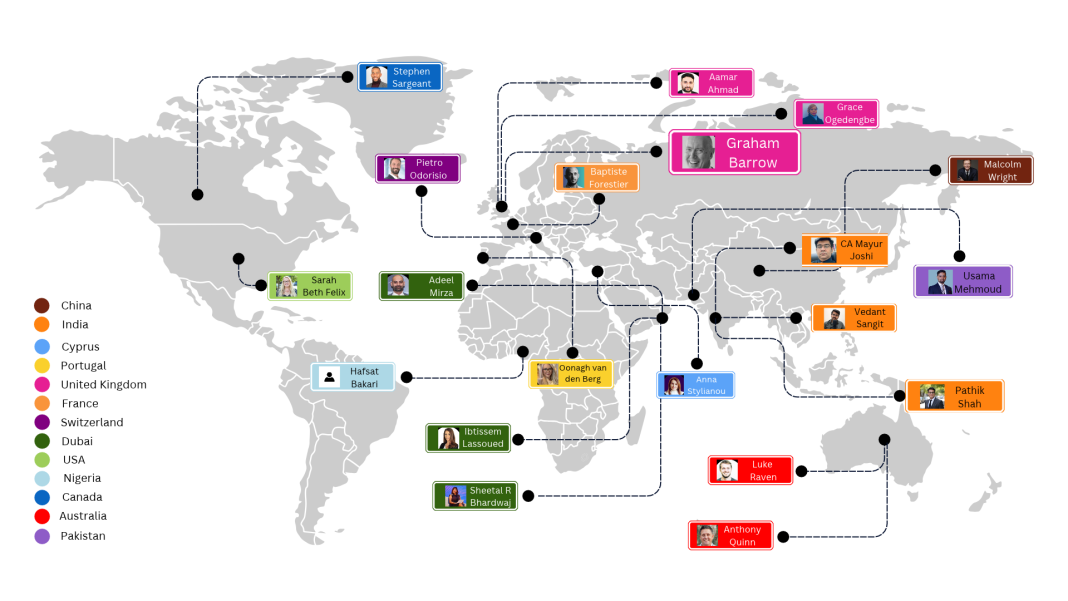

Anti-money laundering (AML) and financial crime prevention have become essential priorities for banks, fintech companies, cryptocurrency businesses and regulators worldwide. As criminals adopt increasingly sophisticated methods to move and conceal illicit funds, compliance professionals play a vital role in strengthening controls, improving investigations and helping organisations meet regulatory obligations.
The AML industry brings together professionals from diverse backgrounds, including banking, law, forensic accounting, regulatory technology, cybersecurity and financial investigations. Some specialise in designing compliance frameworks, while others focus on training, cryptocurrency risks, sanctions, corporate transparency or the use of artificial intelligence in financial crime prevention.
Professional networking platforms have also become important channels for sharing industry knowledge. Through articles, newsletters, podcasts, educational programmes and practical case discussions, AML specialists help explain complex regulatory issues and make financial crime prevention more accessible to practitioners.
- Read Here: The AML Power List 2024: Spotlight on the Top Global AML Influencers
- Read Here: Unveiling the Powerhouses: Top 20 Influential AML Professionals on LinkedIn in 2023
The AML Power List 2026: Spotlight on the Top Global AML Influencers highlights 20 professionals whose experience and activities reflect the breadth of the global AML and financial crime compliance community. Their professional journeys demonstrate how regulatory expertise, technology, education and investigative skills contribute to the fight against financial crime.
Graham Barrow
Graham Barrow is a UK-based financial crime specialist known for his work examining corporate data, company formation and potentially suspicious business networks. His research focuses on how corporate structures and relationships between legal entities can sometimes be used to conceal ownership, obscure the movement of money or make financial investigations more difficult. His work draws attention to the value of looking beyond individual companies to examine the wider networks in which they operate.
Graham is a director of Risk Alert 247, which he co-founded with Robbie Crawford, and continues to co-present The Dark Money Files podcast with Ray Blake. Through these activities, he discusses financial crime cases, corporate transparency and investigative techniques in a format accessible to both specialists and interested readers. His professional background includes advisory and consultancy work for financial services businesses, with experience in areas such as KYC, investigations and financial crime controls. Graham’s approach highlights how public company information, ownership records and connections between entities can provide useful leads for investigators. His work helps explain why understanding the relationships surrounding a business can be just as important as examining the business itself.
Malcolm Wright
Malcolm Wright is an international compliance and governance specialist whose career spans technology, financial services, fintech and cryptocurrency regulation. His background combines technology and product management with senior leadership in AML/CFT and regulatory compliance. This experience has allowed him to work at the intersection of financial innovation and regulatory oversight, particularly as digital asset businesses face growing expectations around customer verification, transaction monitoring and financial crime controls.
Malcolm has held senior roles at organisations including Thomson Reuters KYC Managed Service, Revolut, Eqonex and BitMEX. He also played a role in the development of licensing and supervisory frameworks at Dubai’s Virtual Assets Regulatory Authority (VARA). His work has involved engagement with regulatory bodies, including the Financial Action Task Force, and authorities across several regions. He founded InnoFi Advisory to provide advice to financial services, fintech and cryptocurrency businesses on compliance and regulatory alignment. His professional interests include the FATF Travel Rule, decentralised finance and emerging digital asset models. Malcolm’s work reflects the challenge of creating regulatory frameworks that address financial crime risks while taking account of the technical characteristics of new financial products.
Oonagh van den Berg
Oonagh van den Berg is a global compliance and financial crime specialist whose career spans traditional banking, fintech, cryptocurrency and regulatory governance. With more than two decades of experience, she has worked across different areas of financial institutions, including product functions, compliance and internal audit. Her professional background includes work with major institutions such as JPMorgan, HSBC, Citigroup, Standard Chartered, ING, Deutsche Bank and Schroders, giving her experience across a range of financial markets and regulatory environments.
Oonagh founded Virtual Risk Solutions, which provides strategic advice on compliance, risk management, regulatory licensing and governance. She also established RAW Compliance, a platform focused on accessible professional training, certification and mentoring for compliance practitioners. Through her Modernising Compliance book series, she develops practical resources intended to help professionals apply regulatory principles in real-world settings. Oonagh has also worked with cryptocurrency businesses on regulatory registration and compliance frameworks. In her current work, she is involved in the intersection of financial crime compliance and artificial intelligence, with an emphasis on ensuring that technology supports effective investigations, sound governance and accountable decision-making.
CA Mayur Joshi
CA Mayur Joshi is an Indian Chartered Accountant and financial crime specialist known for his work in forensic accounting, fraud investigation and anti-money laundering education. He founded the Indiaforensic Center of Studies in 2005 to advance education and research in forensic accounting and financial crime. The organisation has developed professional learning programmes intended to help accountants, investigators and compliance practitioners build specialised knowledge in these areas.
Mayur has contributed to the development of AML and forensic accounting education through professional certifications, books, lectures and industry commentary. His work includes subjects such as sanctions screening, cryptocurrency-related money laundering, financial fraud and the misuse of international commerce. He has authored books on financial crime and compliance and has received international recognition for his contribution to outreach and professional education. His leadership activities have included involvement with professional fraud examination organisations and educational institutions. He also serves on the board of Rashtra Raksha University and has been associated with EC-Council. Through Indiaforensic and his wider professional activities, Mayur continues to promote the importance of specialist knowledge in detecting financial misconduct and strengthening compliance practices.
Sarah Beth Felix
Sarah Beth Felix is a US-based financial crime and sanctions specialist with more than 20 years of experience spanning operational compliance, audit and advisory work. Her background includes traditional banking, payment firms, fintech, lending technology, cannabis banking, cryptocurrency, correspondent banking and trade finance. This breadth of experience gives her insight into how funds move through different parts of the financial system and how financial crime risks can emerge across products and institutions.
Sarah Beth is the founder and president of Palmera Consulting, a financial crime advisory firm, and co-founder and Chief AML Officer of Acceleron Bank, a digital correspondent bank in formation. She is also a co-founder of Hyper-S Research. Her professional activities include helping organisations develop AML and sanctions programmes, understand operational threats and improve their compliance controls. She regularly speaks and teaches on financial crime topics, including engagements with the National War College and National Defense University in Washington, D.C. She has also contributed to training for US federal law enforcement agencies on payment ecosystems and banking funds flows. Through her advisory work and educational content, Sarah Beth focuses on translating complex financial crime risks into practical lessons for compliance teams and financial institutions.
Luke Raven
Luke Raven is an Australian financial crime and compliance specialist based in Melbourne. His expertise includes anti-money laundering and counter-terrorist financing, fraud prevention, know-your-customer procedures, enhanced customer due diligence, sanctions and merchant risk. Over the course of his career, he has worked with organisations including National Australia Bank, Square, Airwallex, Wirecard, Westpac, Wise and Cabital, gaining experience across traditional banking and digital financial services.
Luke founded Raven AML, through which he provides financial crime compliance consulting and policy development support. His professional approach emphasises that compliance should go beyond meeting minimum legal requirements. He highlights the importance of suspicious matter reporting, beneficial ownership verification and transaction monitoring in identifying and managing financial crime risks. At the same time, he recognises that controls must be designed with the customer experience in mind, allowing legitimate customers to access services while making it harder for criminals to misuse them. Through his professional commentary and educational content, Luke discusses practical compliance challenges and the importance of balancing regulatory obligations with effective, customer-focused financial services.
Sheetal R. Bhardwaj
Sheetal R. Bhardwaj is a financial crime and regulatory compliance leader with more than two decades of experience across banking, payments, fintech and digital assets. Based in the United Arab Emirates, she has held senior compliance and money laundering reporting officer positions in several financial institutions, including Commercial Bank of Dubai, Binance and Bank of New Zealand. Her experience covers regulatory engagement, AML/CFT strategy, financial crime risk management and compliance frameworks across the UAE, the wider Middle East and other international markets.
Sheetal serves as Compliance Director and Money Laundering Reporting Officer for HashKey MENA, a virtual asset business operating under the UAE’s Virtual Assets Regulatory Authority framework. Her responsibilities include overseeing AML/CFT controls, engaging with regulators, maintaining risk assessments and supporting suspicious transaction reporting processes. She has also contributed to industry initiatives through professional roles connected with the ACFCS MENA Chapter, the Global Blockchain Business Council and the broader financial crime compliance community. Her qualifications include CAMS, CFE and other compliance-related credentials. Sheetal’s work reflects the growing need for professionals who can apply established financial crime principles to digital asset businesses while navigating rapidly developing regulatory requirements.
Ibtissem Lassoued
Ibtissem Lassoued is a financial crime specialist whose work combines legal expertise, regulatory advisory and cross-border investigations. She has been associated with Al Tamimi & Company, where her professional responsibilities have included regional financial crime advisory. Her areas of expertise span money laundering, terrorist financing, corruption, economic sanctions, cybercrime, fraud and extradition. These fields frequently intersect in complex investigations involving multiple jurisdictions, financial institutions and legal systems.
Ibtissem has also contributed to international discussions about financial crime and regulatory cooperation. In 2021, she was appointed Chair of the Middle East and North Africa chapter of the Global Coalition to Fight Financial Crime, supporting the organisation’s regional activities. Her professional engagement includes speaking about governance, commercial considerations, regulatory requirements and geopolitical developments that affect financial crime risks. Cross-border cases can require investigators and legal advisers to understand different national laws, evidence requirements and cooperation mechanisms. Ibtissem’s work in this area reflects the importance of combining legal analysis with an understanding of how financial crime operates across borders, particularly when cases involve complex transactions or several jurisdictions.
Anna Stylianou
Anna Stylianou is a Cyprus-based compliance professional specialising in anti-money laundering, financial crime risk management and regulatory compliance. Her experience spans retail banking, electronic money institutions (EMIs), foreign exchange businesses and other regulated financial services. She helps organisations assess the effectiveness of their AML frameworks, identify control weaknesses and develop practical approaches to managing financial crime risks.
Anna is the founder of AML Cube, a consultancy providing AML advisory services, training and governance support. She also serves as an Expert Advisor for Anti-Financial Crime and AML at Optima Board Services Group and works with regulated businesses on AML audits, risk assessments, policy development and board-level advisory. Her professional activities include training senior executives and compliance teams on transaction monitoring, customer due diligence and regulatory expectations. She also hosts Risk Explained, a podcast exploring risk management, governance and compliance challenges. Anna’s work focuses on helping organisations move beyond written policies to establish controls that operate effectively in practice.
Baptiste Forestier
Baptiste Forestier is a French compliance professional with experience across fintech, payment services and cryptocurrency businesses. His work focuses on building compliance functions for growing companies, obtaining regulatory authorisations and establishing processes that can support business expansion without compromising financial crime controls. He has held senior compliance positions, including leadership roles at fintech businesses, where he was responsible for developing compliance teams, designing procedures and strengthening operational frameworks.
Baptiste’s professional achievements include contributing to successful payment institution licensing applications and establishing compliance functions from the ground up. He has also worked on automating customer due diligence processes to reduce processing time and improve operational efficiency. Alongside his industry responsibilities, he has been involved in AML and counter-terrorist financing education and professional knowledge-sharing. Baptiste has hosted The Laundromat, a podcast featuring discussions about money laundering, compliance practices and the experiences of financial crime professionals. He also writes a newsletter on money laundering techniques, using case-based explanations to help readers understand how illicit financial activity occurs and how compliance teams can respond.
Pietro Odorisio
Pietro Odorisio is a compliance and RegTech professional based in Lugano, Switzerland. His work centres on communicating the value of anti-money laundering and counter-terrorist financing solutions to financial institutions and other regulated businesses. With experience in business development, marketing communication and compliance technology, he brings together an understanding of financial crime requirements and the commercial challenges involved in introducing technology to the market.
Pietro has worked with AML technology providers, helping organisations understand how software can support compliance teams in their daily responsibilities. His professional experience includes product demonstrations, business development and the creation of content designed to keep practitioners informed about regulatory developments. He has also worked in communication roles outside traditional financial services, adding a broader perspective to his professional background. In his current work with Cube Finance SA, he focuses on business development and the market positioning of financial software solutions, including RegTech and AI-driven automation. His emphasis on communication and practical technology applications helps connect compliance requirements with the solutions available to address them.
Adeel Mirza
Adeel Mirza is a financial crime compliance professional based in the United Arab Emirates, with experience across banking, money services businesses, investment services and other regulated industries. His specialisations include anti-money laundering, counter-terrorist financing, counter-proliferation financing, sanctions compliance, customer due diligence, cryptocurrency risk and regulatory transformation. His qualifications include Certified Anti-Money Laundering Specialist credentials and certifications related to blockchain, KYC and cryptocurrency auditing.
Adeel has worked with financial institutions and advisory organisations including Commercial Bank of Dubai, Delma Exchange, Noor Bank and Protiviti Middle East. His experience includes implementing AML frameworks, supporting compliance audits, leading transformation initiatives and working with regulatory requirements across several jurisdictions. He has also held a senior AML and KYC role at Al Masraf, the Arab Bank for Investment & Foreign Trade. Beyond his institutional work, Adeel participates in professional training, conferences and webinars, sharing practical knowledge with compliance teams and other industry participants. His experience across conventional financial services and emerging digital asset risks highlights the importance of understanding how different products, customers and jurisdictions affect an organisation’s financial crime exposure.
Vedant Ajay Sangit
Vedant Ajay Sangit is an AML and financial crime specialist based in India, with expertise in anti-money laundering, KYC, sanctions screening, fraud risk management and regulatory compliance. His work focuses on strengthening financial crime controls and developing practical compliance knowledge among professionals.
He heads the Education Vertical at Riskpro Management and is associated with RegTechTimes, a platform covering regulatory technology and financial crime developments. He contributes to professional training, curriculum development and AML education. He has also co-authored Sanctions Screening: A Key Element of AML and Financial Crime Prevention. His work focuses on building practical skills in AML, sanctions compliance and financial crime prevention.
Stephen Sargeant
Stephen Sargeant is a Canadian financial crime and blockchain compliance specialist whose work focuses on cryptocurrency, Web3 businesses and digital asset investigations. With a background in finance and financial management services, he has developed expertise in the compliance challenges created by blockchain-based transactions and decentralised financial ecosystems. His work centres on helping financial institutions and compliance teams understand digital asset risks and develop appropriate investigative and monitoring capabilities.
Stephen is the founder and Chief Web3 Officer of Airdropd Inc., a media production business that helps cryptocurrency and Web3 companies create content and build communities. He has also worked as an educator and trainer, including through the Canadian Institute for Financial Crime Analysis, where his activities have involved blockchain compliance education. In addition, he has provided consultancy support to banks and money services businesses seeking to build crypto compliance teams and develop internal policies. Through his training and content, Stephen helps practitioners understand how blockchain transactions can be examined, how risks may arise in digital asset ecosystems and why conventional AML approaches may need to be adapted for new financial technologies.
Anthony Quinn
Anthony Quinn is an Australian RegTech entrepreneur and financial crime compliance specialist with extensive experience in risk management, banking transformation and regulatory technology. He is the founder and CEO of Arctic Intelligence, a company that develops software for financial crime risk assessment, audit and compliance management. The business focuses on helping regulated organisations assess risks and manage compliance obligations through technology-supported processes.
Anthony also co-founded AML Accelerate, a cloud-based platform designed to help businesses conduct enterprise-wide money laundering and terrorist financing risk assessments. Arctic Intelligence acquired AML Accelerate in 2018, bringing the solutions together within a broader compliance technology offering. Before establishing these businesses, Anthony spent more than two decades in management consulting, including work on transformation programmes for retail and investment banks in the UK, Europe, Australia and the United States. His experience includes leading AML/CFT and tax compliance programmes at Macquarie Bank, as well as projects involving Westpac and National Australia Bank. He has also worked with major financial institutions through Accenture and contributes to the wider technology sector through the RegTech Association Advisory Committee.
Pathik Shah
Pathik Shah is a Chartered Accountant and AML specialist with more than 28 years of experience in governance, risk management and compliance. His expertise includes AML framework development, regulatory compliance, risk assessments and RegTech implementation. He works with organisations to strengthen financial crime controls and meet regulatory requirements.
He is the founder of AML UAE, an advisory organisation providing AML compliance, risk assessment and regulatory support. His work includes helping businesses develop effective compliance frameworks and implement technology-driven solutions. Through advisory services and professional engagement, Pathik contributes to improving AML practices and financial crime risk management.
Aamar Ahmad
Aamar Ahmad is a financial crime compliance consultant based in the United Kingdom. His work includes advisory support for investment banks, private banks, fintech companies and other organisations seeking to strengthen their AML and financial crime controls. His specialist areas include financial crime risk assessments, trade finance compliance, correspondent banking, sanctions, policy reviews, remediation and regulatory engagement.
Aamar is the founder and managing consultant of Sigma Risk Limited, which provides financial crime advisory services, independent AML audits, training and support for regulatory projects. His work includes developing and improving customer and transaction risk assessment methodologies, conducting thematic reviews, identifying gaps in policies and procedures, and helping organisations prepare for regulatory visits. He also delivers tailored training for operational teams, compliance professionals, relationship managers and board members. His experience with different types of financial institutions gives him a practical perspective on the challenges of implementing AML requirements across varied business models. Through advisory work and education, Aamar focuses on helping organisations turn regulatory expectations into workable procedures and stronger financial crime risk management practices.
Hafsat Abubakar Bakari
Hafsat Abubakar Bakari is a Nigerian lawyer and financial intelligence professional serving as the Director and CEO of the Nigerian Financial Intelligence Unit (NFIU). Her experience includes anti-money laundering, counter-terrorist financing, legal administration and financial intelligence. Before joining the NFIU leadership, she held several positions at Nigeria’s Economic and Financial Crimes Commission (EFCC).
As CEO, she oversees the NFIU’s work in analysing financial intelligence and supporting investigations into money laundering, terrorist financing and other financial crimes. Her leadership has contributed to Nigeria’s efforts to strengthen its AML/CFT framework. Nigeria’s removal from the FATF grey list in October 2025 marked an important milestone in these efforts.
Usama Mehmood
Usama Mehmood is an AML and financial crime professional with experience in risk management, compliance and audit. He currently works as a Vice President at a financial institution and holds certifications in AML, sanctions and cryptocurrency investigations. His technical expertise also includes big data analytics tools and programming languages such as SQL, NoSQL and Python.
He is the founder of AML Base LLC, through which he provides training and consultancy to AML professionals. His weekend training programmes focus on preparing candidates for international certifications, including CFCS, CAMS, ICA, Go-AKS, CAMI and CAME. According to his professional profile, his AML certification exam preparation programmes have benefited more than 3,900 professionals across 98 countries over the past five years.
Grace Ogedengbe
Grace Ogedengbe is a financial services and compliance professional with more than 38 years of experience across banking, financial regulation and risk management. Her expertise includes financial crime prevention, regulatory compliance and operational risk management. She holds professional credentials including Certified Fraud Examiner (CFE) and Chartered Fellow of the Chartered Institute for Securities & Investment (CISI).
Her professional experience includes work with financial services organisations such as Bank ABC. She is also associated with professional organisations including the Association of Certified Fraud Examiners and CISI. Through her industry experience and professional engagement, Grace contributes to discussions around financial crime prevention, regulatory responsibilities and effective compliance practices.
The professionals shaping the AML conversation
The 20 professionals featured in the AML Power List 2026 bring different perspectives to the global fight against money laundering and financial crime. Their work spans compliance consulting, regulatory technology, forensic accounting, cryptocurrency investigations, legal advisory, corporate transparency, professional education and financial crime transformation.
Their career paths also reflect how the AML profession is changing. Compliance teams increasingly need to understand digital assets, emerging technologies, cross-border transactions and complex corporate structures, while continuing to meet established requirements for customer due diligence, sanctions screening, monitoring and reporting.
Professional education and industry communication remain important parts of this work. By sharing practical experience, explaining regulatory developments and developing tools for compliance practitioners, these specialists contribute to a wider understanding of financial crime risks and the controls organisations use to address them.