

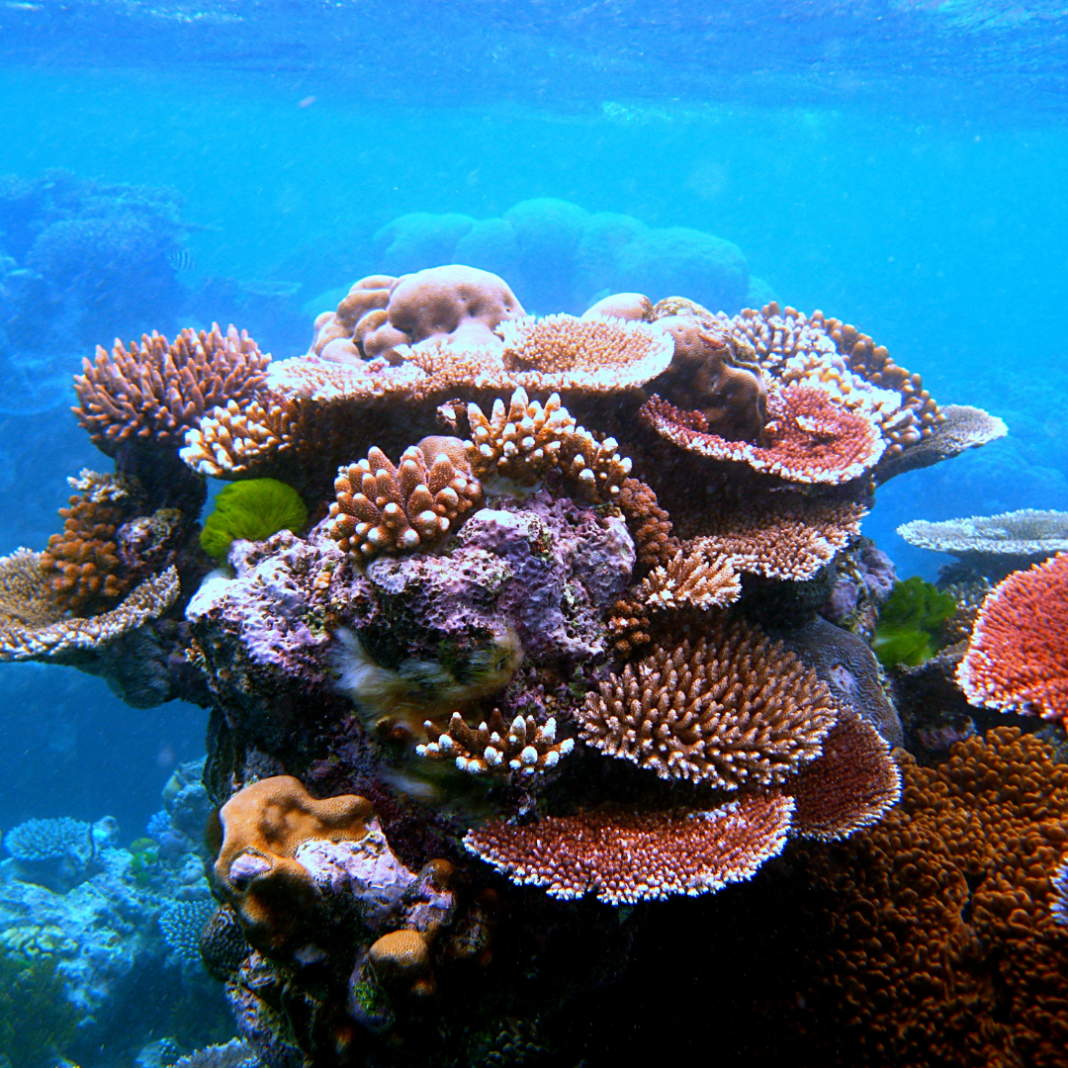
Climate Change Triggers Unprecedented Coral Bleaching Impacting Oceans

Coral Reefs Are in Big Trouble

A new report has revealed a heartbreaking truth: 84% of the world’s coral reefs have been damaged by a massive bleaching event, the worst ever recorded. This crisis began in 2023 and is still happening. Experts call it a global bleaching event—something that has only happened four times since 1998. But this time, it’s much more serious.

Coral reefs are important underwater structures made by tiny animals called corals. These reefs are like big underwater cities filled with life. Fish, sea turtles, and many other sea creatures live and depend on them. They’re often called the “rainforests of the sea” because they are so full of different kinds of life.

When the ocean water gets too hot, the corals become stressed. This stress makes them push out the tiny algae that live inside them. These algae are what give corals their bright, beautiful colours. They also help feed the corals. When the algae are gone, the coral turns white. This is called bleaching. Bleached coral is not dead yet, but it is weak and very likely to die if the warm water continues.

Record-Breaking Heat Is the Main Cause

The cause of this global bleaching is no mystery. The Earth is getting hotter, and the oceans are heating up along with it. In fact, last year was the hottest year ever recorded on Earth. Ocean temperatures (except near the North and South Poles) reached an average of about 69.57°F. That might not sound very hot to us, but it is extremely warm for coral reefs.

Oceans Heating at Record Speed Threaten Ecosystems

Corals are very sensitive to changes in water temperature. When the water gets too warm and stays that way for a long time, it causes serious harm. Scientists say this level of heat stress may never go back down to a safe level again. That means coral reefs could keep bleaching again and again, with little time to recover.

The current event has already gone beyond the last big bleaching, which happened between 2014 and 2017. Back then, many reefs suffered, but not nearly as many as today. This time, coral reefs in almost every ocean where they live have been affected. This includes places like the Caribbean, the Pacific Islands, Southeast Asia, the Indian Ocean, and more.

People Are Trying to Help—But It’s Not Easy

Even though the situation is very bad, people around the world are trying to help coral reefs. In the Netherlands, scientists are growing coral pieces in a lab. Some of these coral fragments even came from faraway places like the Seychelles. The goal is to raise healthy corals and maybe one day place them back into the ocean to help rebuild damaged reefs.

In Florida, teams of scientists are diving into the ocean to rescue sick corals. They take them out of the warm water, help them get healthy again in special tanks, and then return them to the sea when it’s safe.

Ocean Wealth Unveiled: Axis Bank’s Role in Fueling India’s Blue Finance

These efforts are important, but they are not enough to stop coral bleaching on a global scale. The only way to truly protect coral reefs is by reducing the pollution that causes global warming, especially greenhouse gases like carbon dioxide and methane. These gases trap heat in the Earth’s atmosphere and make the oceans warmer.

The coral crisis is a clear sign of how much climate change is affecting our planet. The damage to coral reefs doesn’t just hurt fish and sea creatures—it also affects people. Reefs help protect coastlines from big waves, bring in billions of dollars through tourism, and support the fishing industry. When reefs die, these benefits disappear.

For now, the bleaching event continues, with no sign of ending soon. Coral reefs are still under stress, and many may not survive unless the ocean cools down. This makes it one of the most serious environmental disasters caused by climate change so far.

Atharva Chivate
Atharva Chivate
अथर्व चिवटे हे न्यूजइंटरप्रिटेशनच्या युट्युब चॅनेलचे दिग्दर्शक आहेत.  दिग्दर्शकाच्या जबाबदाऱ्यां व्यतिरिक्त, अथर्व  एक चित्रपटप्रेमी आणि लेखक देखील आहे.ते  नियमितपणे आगामी चित्रपटांच्या समीक्षणांवर लेखन करतात. उद्योगातील ट्रेंडचे विश्लेषण करणे, आकर्षक कथा तयार करणे आणि विविध प्लॅटफॉर्मवर कथा प्रभावीपणे पोहोचावं  हेअथर्वचे  कौशल्य आहे.

TOP 10 TRENDING ON NEWSINTERPRETATION

Cyber Attacks on Space Infrastructure: Satellites, GPS and the Ground Systems Behind Them

From the Viasat KA-SAT hack to GPS jamming over the Baltic, a research guide to how attackers target satellites, navigation signals and ground stations, and why it matters on Earth.

How AI Agents Are Used in Cyber Attacks: From Assisted Hacking to AI-Orchestrated Espionage

Attackers now use AI agents to scan networks, write exploits and run extortion campaigns. A research guide to documented cases, including the first reported AI-orchestrated espionage campaign, and what defenders should do.

Cyber Attacks on AI and LLMs: How Attackers Target Large Language Models

Prompt injection, data poisoning, model theft and jailbreaks: a research guide to how attackers target AI systems and large language models, with real cases and defences.

French Supermarket Refrigeration Cyberattack: How Hacking the Cold Chain Can Endanger Lives

In October 2026 attackers heated refrigeration cabinets in hundreds of French supermarkets to as much as 50°C. No one was hurt, but the attack shows how hacking the cold chain can endanger lives through fire, food poisoning and spoiled medicines.

Cyberattacks on Nuclear Facilities: Stuxnet, Kudankulam and the Limits of Air Gaps

Stuxnet, the Davis-Besse worm and malware at India’s Kudankulam plant: what they show about cyber risk at nuclear facilities and the limits of air gaps.

Triton: When Hackers Target the Safety Systems That Prevent Industrial Disasters

The 2017 Triton attack targeted the safety systems that prevent industrial disasters. What happened, who was charged, and how plants protect their last line of defence.

Cybersecurity Risks in Smart Cities: When Connected Infrastructure Fails

How connecting traffic control, emergency alerts and utilities concentrates cyber risk in cities, what the Dallas and Atlanta incidents showed, and what governments recommend.

Weaponized Drones: Hijacking, GPS Spoofing and Emerging Cyber Warfare Risks

How drones can be hijacked, jammed or misled by GPS spoofing, what researchers have demonstrated, and why governments treat drone fleets as a security risk.

Ransomware Attacks on Hospitals: How Healthcare Cyberattacks Put Patients at Risk

How ransomware against hospitals and their suppliers delays care and endangers patients, what the Düsseldorf and WannaCry cases show, and what research says about deaths.

Operational blunder exposes massive Russian cyber espionage attack on Ukrainian prosecutors

A major cyberattack has compromised the email accounts of...

Cyber Attacks on Space Infrastructure: Satellites, GPS and the Ground Systems Behind Them

From the Viasat KA-SAT hack to GPS jamming over the Baltic, a research guide to how attackers target satellites, navigation signals and ground stations, and why it matters on Earth.

French Supermarket Refrigeration Cyberattack: How Hacking the Cold Chain Can Endanger Lives

In October 2026 attackers heated refrigeration cabinets in hundreds of French supermarkets to as much as 50°C. No one was hurt, but the attack shows how hacking the cold chain can endanger lives through fire, food poisoning and spoiled medicines.

Cyberattacks on Nuclear Facilities: Stuxnet, Kudankulam and the Limits of Air Gaps

Stuxnet, the Davis-Besse worm and malware at India’s Kudankulam plant: what they show about cyber risk at nuclear facilities and the limits of air gaps.

Triton: When Hackers Target the Safety Systems That Prevent Industrial Disasters

The 2017 Triton attack targeted the safety systems that prevent industrial disasters. What happened, who was charged, and how plants protect their last line of defence.

Cybersecurity Risks in Smart Cities: When Connected Infrastructure Fails

How connecting traffic control, emergency alerts and utilities concentrates cyber risk in cities, what the Dallas and Atlanta incidents showed, and what governments recommend.

Ransomware Attacks on Hospitals: How Healthcare Cyberattacks Put Patients at Risk

How ransomware against hospitals and their suppliers delays care and endangers patients, what the Düsseldorf and WannaCry cases show, and what research says about deaths.

FBI warns of AVrecon malware targeting outdated routers linked to proxy based cybercrime

A serious cybersecurity warning has been issued regarding commonly...

Related Articles

Popular Categories
