

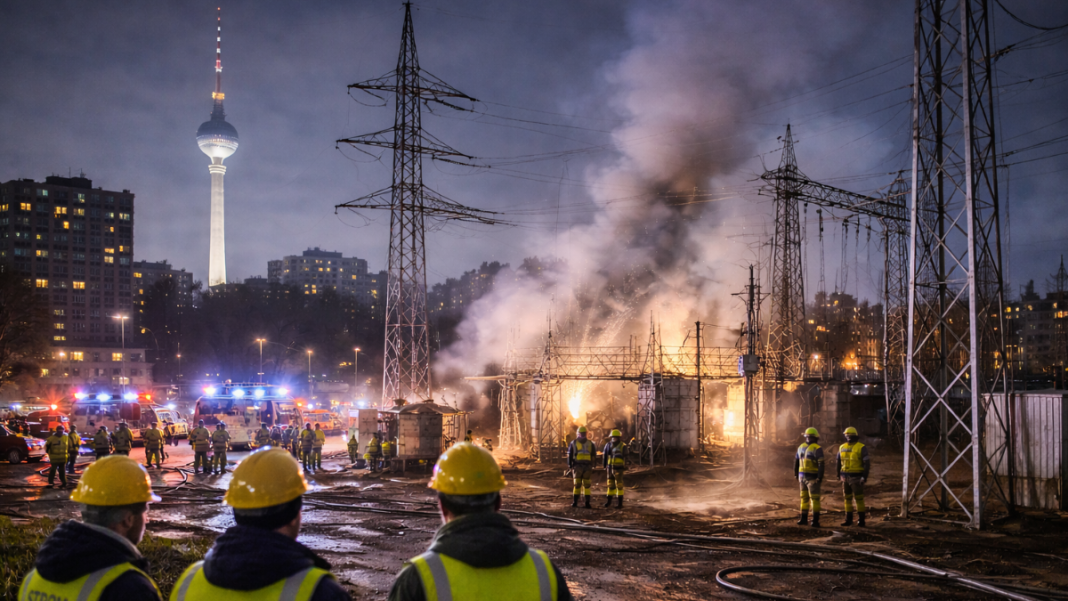

A major power outage has hit southwest Berlin, cutting electricity and heating to tens of thousands of homes during freezing winter conditions. The disruption affected households, hospitals, nursing homes, schools, and businesses, forcing authorities to declare an emergency. Officials believe the outage was deliberate and are investigating it as a suspected act of sabotage linked to left-wing extremist activity.
The incident has highlighted serious concerns about the vulnerability of Germany’s critical infrastructure, particularly during extreme weather conditions. Damage to key energy systems led to widespread disruption and exposed how quickly daily life can be brought to a halt.
What Happened in Southwest Berlin
The outage began early Saturday morning after a fire broke out near a major power and heating facility serving several southwest Berlin districts. The blaze severely damaged high-voltage cables, cutting off electricity and heating almost instantly.
Around 45,000 households were affected. Many homes lost both power and heat simultaneously, creating hazardous conditions as temperatures dropped below zero and snowfall continued. Without heating, indoor temperatures quickly fell, making homes unlivable for many residents.
Collins Aerospace hacked — Berlin and Heathrow descend into travel chaos
Berlin emergency services confirmed the fire was not accidental. Investigators found evidence of intentional damage, and a far-left group calling itself Vulkangruppe later claimed responsibility, describing the incident as an act of sabotage. Authorities said the group has been linked to similar attacks in the past.
By Sunday, electricity had been restored to about 10,000 households. However, tens of thousands of residents remained without power and heating. Repairs were slow due to the complexity of the damaged energy infrastructure, and officials warned restoration could take several days.
Impact on Residents and Essential Services
The outage caused widespread disruption in many neighborhoods. Homes were left cold and dark, prompting officials to advise families to find alternative accommodation if possible, especially those with young children or elderly relatives.
Hospitals and nursing homes faced significant challenges during this time. Although backup generators were activated, the staff struggled to maintain normal operations and provide the necessary care for patients. Some medical procedures had to be postponed, which added stress to both medical teams and patients waiting for care.
Cyber Attacks on Power Grids: Alarming Risk of Cascading Failures
Public transport services of Berlin were also heavily impacted, with rail and underground stations closing due to safety concerns. This led to thousands of businesses, including supermarkets and local shops, shutting down as payment systems and refrigeration units failed. Schools and daycare centers that were set to reopen after the winter break remained closed, resulting in childcare challenges for working parents.
To mitigate the situation, authorities opened emergency shelters that provided warm spaces and essential services like hot showers, while police and emergency teams patrolled neighborhoods to offer safety tips and support to residents.
Investigation and Infrastructure Concerns
Authorities are treating the fire as an intentional act of sabotage. The group claiming responsibility, Vulkangruppe has been identified in past official reports as a left-wing extremist organization linked to attacks on power cables, railway lines, and communication infrastructure.
Berlin has seen similar incidents before. In previous cases, suspected arson attacks on energy infrastructure caused power outages affecting tens of thousands of households for hours. These incidents were also believed to be politically motivated, with Vulkangruppe previously linked to sabotage activity in the region.
The latest outage has intensified concerns about the security of Germany’s energy systems. Power grids, heating stations, and communication networks are essential to daily life, and damage to even one part of the system can cause widespread disruption.
Berlin officials have also pointed to long-term underinvestment in energy infrastructure. Aging equipment and complex systems are harder to protect and repair, increasing vulnerability. Authorities have reported a rise in both physical sabotage and cyberattacks targeting critical infrastructure in recent years.
Following the emergency declaration, federal authorities and security forces were brought in to help manage the crisis and protect key sites. Repair crews worked continuously in difficult winter conditions to restore power and heating as quickly as possible.
The incident demonstrates how quickly essential services can be disrupted when critical infrastructure is damaged, particularly during severe weather conditions.