

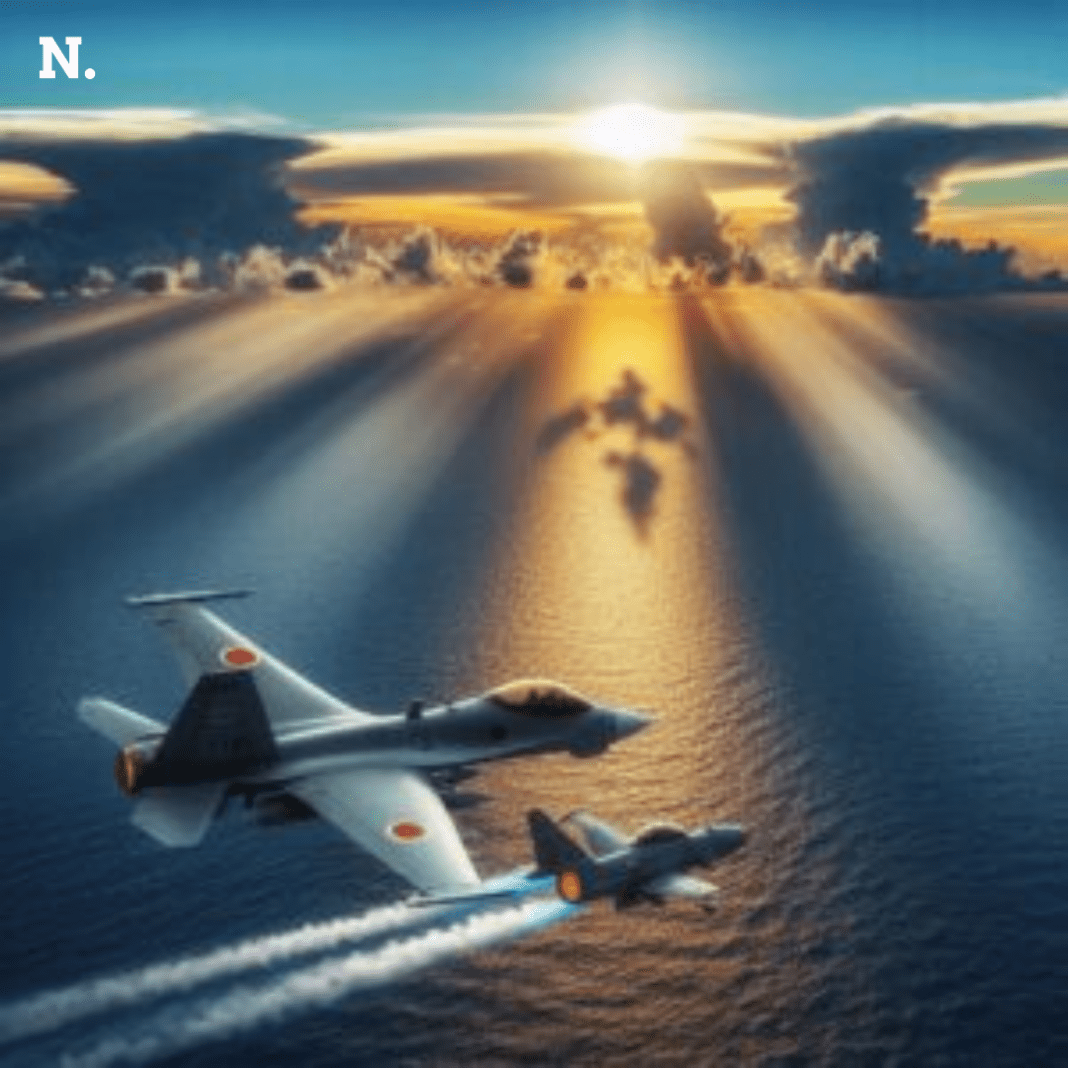

In a significant development that highlights escalating tensions in the Asia-Pacific region, Japan intercepted a Chinese supersonic WL-10/WZ-10 drone over the East China Sea on Monday. This incident represents a significant increase in aerial surveillance and defensive activity in the region, particularly near critical Japanese and US military installations.
The Interception Incident
Japan’s Joint Staff Office, which oversees the nation’s ground, maritime, and air self-defence forces, confirmed the interception in a public statement. The office reported that the drone violated Japanese airspace, prompting a swift response from Japanese fighter jets. The WL-10 drone, also known as the WingLoong-10 in China, was monitored closely as it traveled through the East China Sea, north of Taiwan, and near Japan’s Okinawa prefecture. Okinawa is strategically significant, hosting the Kadena Air Base, a vital hub for US airpower in the Pacific.
Capabilities of the WL-10/WZ-10 Drone
The WL-10/WZ-10 is a sophisticated reconnaissance and electronic warfare platform with potential strike capabilities. The drone’s primary role appears to be gathering intelligence and conducting electronic warfare operations. Its flight path during the interception incident suggests a deliberate approach towards areas fortified with Japanese air defenses and US military assets, including Patriot Advanced Capability-3 surface-to-air missile systems.
China’s development of advanced unmanned aerial vehicles (UAVs) like the WL-10/WZ-10 represents a significant leap in its military capabilities. These drones are designed to enhance China’s surveillance, reconnaissance, and electronic warfare prowess. The WL-10 is reported to have capabilities similar to those of the WZ-8 drone, which was unveiled by China in 2019. The WZ-8 can reach speeds of Mach 6 and operate at altitudes of up to 160,000 feet. While the WL-10 is likely larger and hosts more comprehensive electronic warfare systems, it highlights China’s intent to gather intelligence across the region.
Strategic Implications
The interception of the WL-10 drone emphasizes the growing importance of the East China Sea as a theatre of strategic competition between China and Japan, with significant implications for US military operations in the region. Kadena Air Base in Okinawa is home to the US 18th Wing. Along with the Japan Air Self-Defense Force, recently conducted bilateral exercises at Kadena and Naha Air Base. These exercises aimed to enhance interoperability between US and Japanese forces, reflecting the strong defence partnership in the face of regional threats.
China’s drone activity near Okinawa highlights the strategic value Beijing places on monitoring US and Japanese military movements. The drone’s flight coincides with heightened military activities by China, including extensive drills around Taiwan. These drills, conducted shortly after the inauguration of Taiwan’s new president, were seen by experts as a rehearsal for a potential assault or blockade, indicating China’s readiness to assert its territorial claims aggressively.
Broader Regional Context
The recent interception follows a series of provocative actions by China in the Asia-Pacific region. Last April, US intelligence documents leaked details about China’s operational deployment of the WZ-8 drones. These documents revealed that China’s drones are used for high-altitude reconnaissance missions. It employs advanced sensors and synthetic aperture radars to map territories, even in challenging conditions like night or low visibility. The operational deployment of these drones along strategic locations, such as the South Korean coast and Taiwan, highlights China’s broader strategy. It is expanding its surveillance and reconnaissance capabilities.
The interception of the Chinese WL-10/WZ-10 drone by Japan is a clear indication of the escalating military tension. As China continues to advance its drone technology and expand its aerial reconnaissance missions, regional players like Japan and the US are likely to respond with increased vigilance and enhanced defence measures. This incident highlights the importance of maintaining robust air defence systems. In addition to solidifying international defence partnerships to counterbalance China’s growing military capabilities. The East China Sea remains a critical flashpoint where the dynamics of power and security will continue to evolve in the coming years.