
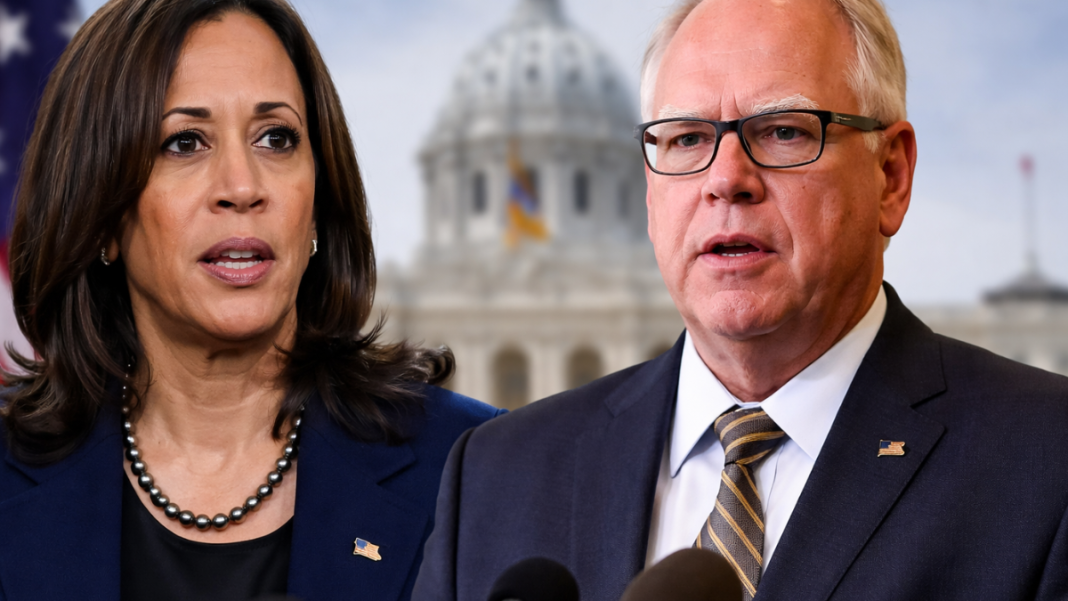

Minnesota Governor Tim Walz announced this week that he will not seek re-election, a move that has reignited national attention on a long-running fraud scandal in the state. The decision has also renewed scrutiny of the political judgment of Kamala Harris, who selected Walz as her running mate during her national campaign, despite the controversy already being under federal investigation at the time.
The fraud case, which investigators say could total as much as $9 billion, has been under review for years. With Walz stepping aside, critics and political observers are questioning how the issue was handled at the state level and how it factored into Harris’ campaign vetting process, including whether the seriousness of the allegations was fully weighed.
Long-Running Minnesota Fraud Case Returns to Spotlight
The Minnesota fraud scandal centers on the misuse of public funds linked to social assistance and food programs, most notably the Feeding Our Future investigation. Federal prosecutors have said the suspected fraud may reach billions of dollars, making it one of the largest cases of its kind involving state-administered programs.
Joe Rogan breaks ranks, says Kamala Harris was capable of a full three-hour unscripted interview
Concerns about oversight began surfacing as early as 2019, the same year Walz took office as governor. Audits, whistleblower complaints, and federal inquiries later pointed to major weaknesses in how funds were monitored and distributed. Despite these warnings, the programs continued operating for years while the investigation unfolded.
Walz’s announcement that he would not seek another term brought renewed attention to the unresolved case. Although his statement did not directly mention the fraud probe, the timing prompted lawmakers, analysts, and voters to question whether the ongoing investigation influenced his decision.
Critics have also highlighted Walz’s past campaign remarks praising Minnesota’s childcare and assistance programs as national models. Those comments drew backlash because they were made while the fraud investigation, including Feeding Our Future, was still active.
Vetting Process Questioned After National Selection
Following Walz’s withdrawal from the re-election race, attention shifted to the vetting process used by the Harris campaign. Conservative commentator Josh Hammer publicly questioned what the vetting team knew about the Minnesota fraud issues and when they became aware of them.
Childcare Funding Dispute Deepens as Trump Attacks Walz and Omar After Minnesota Freeze
Similar concerns were raised by Michael LaRosa, a former press secretary to Jill Biden, who said the controversy could continue to follow Harris unless addressed clearly. He argued that the situation raised serious questions about judgment and internal review standards.
Harris later issued a statement praising Walz’s public service and wishing him well. The statement, however, did not directly address the fraud investigation or explain how the campaign evaluated the political risk tied to it.
The vetting effort was led in part by Eric Holder, who defended the process in media interviews. Holder said nothing of major concern was missed, a response that drew criticism from opponents who argued the fraud investigation was already widely known and difficult to overlook.
Political and Public Reaction Intensifies
Retired Minnesota State Patrol lieutenant John Nagel, now a Republican congressional candidate running against Ilhan Omar, said the situation reflected a failure in judgment. He argued that either the campaign was unaware of the investigation—suggesting flawed vetting—or it knew and proceeded anyway, raising concerns about accountability.
Trump backs bipartisan bill ordering public release of DOJ’s Epstein documents
Democratic strategist Michael Ceraso offered a contrasting view, saying the campaign may have known about the fraud allegations but judged them less damaging when compared with controversies surrounding Donald Trump. He warned, however, that such comparisons can backfire and erode public trust.
As federal investigations continue, the renewed focus on Walz’s record and Harris’ campaign decisions has intensified debate over transparency, leadership responsibility, and the standards applied when candidates are elevated to national office.