

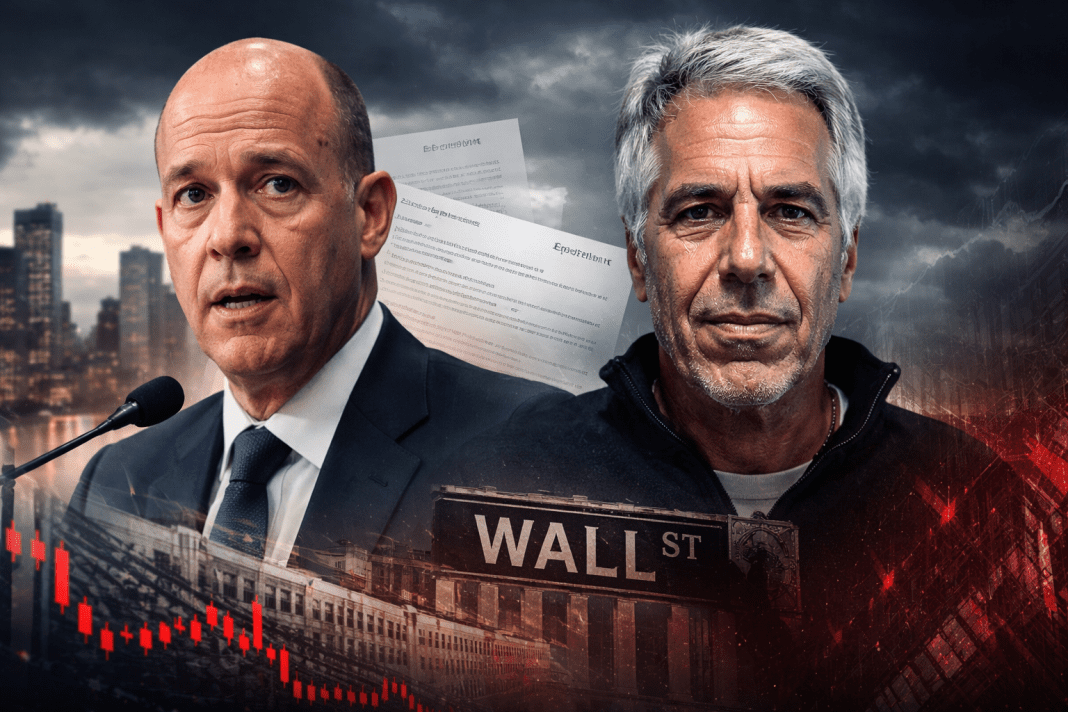

Recent disclosures involving US Commerce Secretary Howard Lutnick and convicted sex offender Jeffrey Epstein have triggered renewed debate across Wall Street about transparency, reputational governance, and leadership credibility at the highest levels of economic policymaking. The White House has expressed continued confidence in Lutnick, but financial markets and compliance observers are closely examining the implications.
The issue does not involve allegations of criminal wrongdoing by Lutnick. Instead, it centers on the accuracy of his past public statements regarding the extent of his contact with Epstein and the documented communications that have since emerged.
Lutnick previously stated in a podcast interview that he and his wife decided in 2005 to sever contact with Epstein after an uncomfortable visit to Epstein’s Manhattan residence. He described making a firm decision never to be in the same room with him again. However, a review of email records and calendar entries shows interactions between the two men well after that date.
Documents reflect phone call arrangements in 2011 and a calendar entry listing a drinks meeting in May of that year. In 2012, emails show coordination for a visit to Epstein’s Caribbean island, which Lutnick later confirmed during a Senate hearing. He testified that he traveled there with his wife and children for lunch while on vacation and stated that he witnessed nothing inappropriate.
Epstein’s Investments in Advertising Company With Lutnick
Further documentation indicates that in 2013, entities associated with both men invested in the same advertising analytics company. In 2015, Lutnick invited Epstein to a fundraiser connected to Hillary Clinton. In 2017, Epstein donated $50,000 to a dinner honoring Lutnick hosted by UJA-Federation of New York.
Casey Wasserman moves to sell talent agency after Epstein-linked emails resurface
These interactions contrast with Lutnick’s earlier characterization of having ended contact in 2005. During Senate questioning, he stated that the total number of emails over a fourteen-year period was limited and maintained that he did not have a substantive relationship with Epstein.
From a financial governance perspective, the controversy is being evaluated less as a legal matter and more as a question of disclosure precision and reputational stewardship. In regulated environments, especially at the Cabinet level where trade, tariffs and industrial policy intersect with global capital markets, consistency of public record is treated as an essential component of institutional credibility.
Lutnick’s role amplifies the scrutiny. Before joining the administration of President Donald Trump, he served as CEO of Cantor Fitzgerald and built a long-standing presence in US financial markets. As Commerce Secretary, he has been a visible advocate of the administration’s tariff framework and trade enforcement strategy. His portfolio directly affects cross-border investment flows, export controls, supply chain regulation and foreign direct investment screening.
Financial Market Governance
In financial markets, leadership credibility operates as a form of intangible capital. Investors evaluate not only policy direction but also the perceived integrity and transparency of decision-makers. Any inconsistency between public testimony and documentary evidence introduces reputational volatility, even absent allegations of unlawful conduct.
Congressional reactions have reflected this distinction. Lawmakers questioning Lutnick focused on whether his statements accurately described the extent of his interactions rather than alleging criminal involvement. Some Republican members expressed concern about judgment and disclosure clarity, while others framed the matter as one for public assessment rather than immediate administrative consequence.
Inside the executive branch, there has been no visible shift in support. President Trump publicly downplayed the controversy and reiterated confidence in Lutnick’s leadership. Administration spokespersons described the episode as politically motivated and emphasized economic achievements under the Commerce Department’s stewardship.
Within Wall Street, responses have been measured rather than reactive. Some financial executives note that Lutnick has long been a polarizing figure because of his vocal defense of aggressive tariff measures that have influenced market pricing in sectors ranging from manufacturing to technology. Others observe that continuity within the economic team is itself a stabilizing factor in trade-sensitive markets.
From a RegTech and compliance architecture standpoint, the episode illustrates how archival digital communications can reshape narratives years later. Email trails, calendar records and financial transaction histories form part of a permanent documentation ecosystem. In highly regulated financial environments, historical transparency is no longer episodic but continuous. Statements made in one context are cross-validated against discoverable records in another.
The case also highlights how ethical proximity risk functions in governance frameworks. Associations with individuals later convicted of serious crimes generate heightened sensitivity regardless of legal culpability. For public officials overseeing economic policy, reputational alignment becomes intertwined with regulatory authority.
Financial news classification of this story is appropriate because the underlying issue intersects directly with capital markets governance, investor confidence, trade policy oversight and institutional integrity within the Commerce Department. The debate is unfolding not in isolation but against a backdrop of complex tariff regimes, investment negotiations and cross-border regulatory coordination.
There is currently no indication of administrative action against Lutnick. Markets have not demonstrated immediate volatility attributable specifically to the controversy. However, in modern financial ecosystems, reputational narratives contribute to broader assessments of policy credibility.
The core question under discussion is whether prior public representations accurately captured the documented scope of interactions. In regulated financial systems, accuracy of representation is foundational. Cabinet officials overseeing economic portfolios operate within a governance environment where credibility underpins authority.
Learning for Compliance Professionals
For compliance professionals and financial institutions, the episode reinforces the operational reality that documentation risk persists indefinitely. Historical interactions, even those considered minor at the time, can acquire renewed significance when contextualized against evolving ethical standards.
As the matter continues to be discussed in congressional and media arenas, the financial community is evaluating it through the lens of disclosure discipline and institutional reliability. No criminal charges have been brought against Lutnick in connection with Epstein. The debate remains centered on transparency, representation and reputational governance within the upper tiers of US economic leadership.
In capital markets, perception and documented fact coexist in shaping trust. In this instance, the scrutiny reflects the financial system’s sensitivity to leadership credibility rather than an allegation of unlawful activity.