

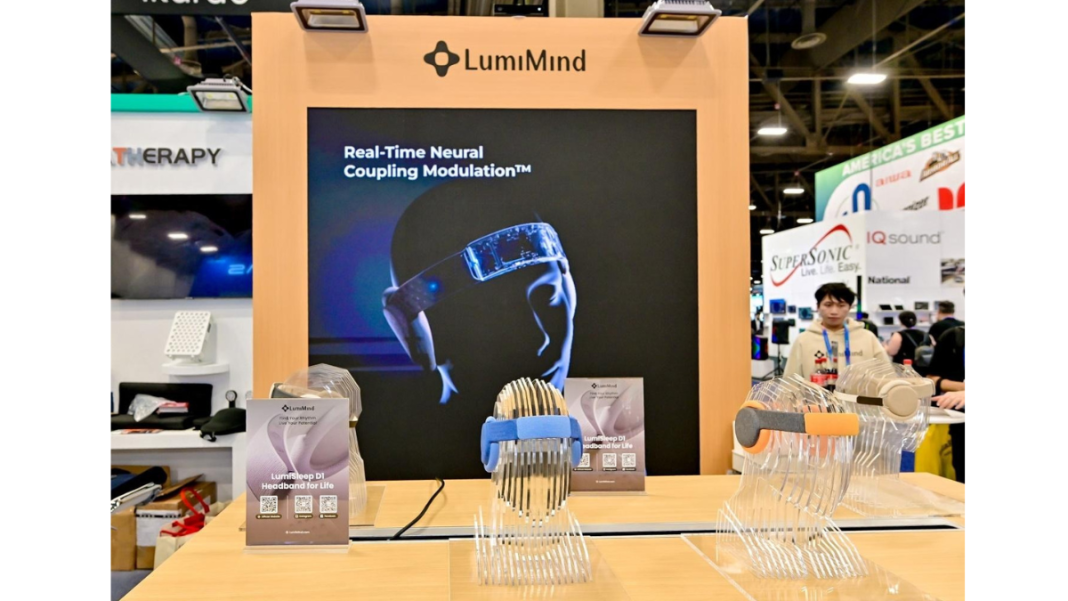

At CES 2026, sleep technology took center stage as LumiMind received the SPEED Award for its non-invasive sleep solution powered by real-time EEG monitoring. The award recognizes LumiMind’s work on LumiSleep, a consumer device designed to detect and respond to the brain’s natural transition into sleep without medication, stimulation, or invasive procedures.
The SPEED Award highlights innovations that demonstrate meaningful progress across consumer electronics, artificial intelligence, and health technology. LumiMind’s selection reflects growing interest in neurotechnology that moves beyond research labs and medical settings into everyday consumer use.
“This award recognizes a fundamental shift in how we think about sleep technology,” said Fang Zhao, founder and CEO of LumiMind. “Rather than forcing sleep through stimulation or medication, LumiSleep listens to the brain in real time and responds in harmony with its natural rhythms. Being recognized by SPEED at CES validates our belief that non-invasive neurotechnology is ready to deliver real scientific value in everyday life.”
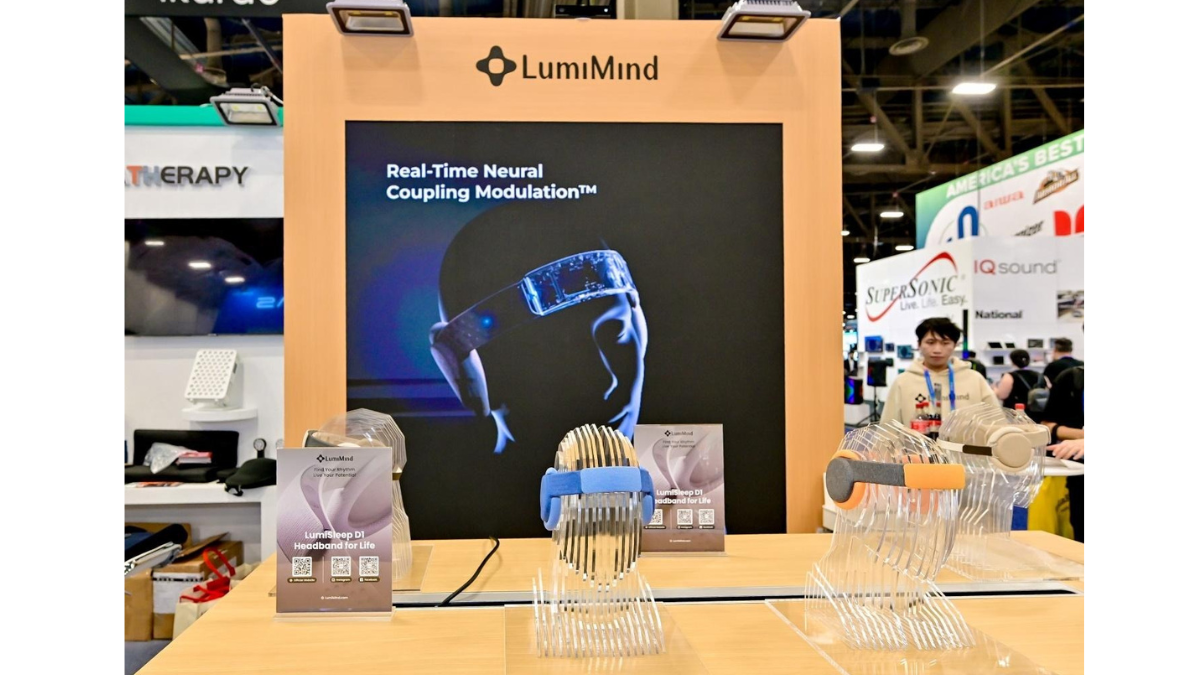
Unlike most sleep wearables that rely on indirect signals such as movement or heart rate, LumiSleep measures brain activity directly. Using integrated EEG sensors, the device continuously monitors neural signals and identifies a specific brain state associated with falling asleep, referred to by the company as the Sleep Onset Pattern™.
When the system detects that the brain is approaching this state, it responds through personalized acoustic output designed to gently support the transition into sleep. Rather than playing static soundtracks or analyzing data after the fact, LumiSleep operates as a closed-loop system—listening to the brain and responding in real time as conditions change.
LumiMind emphasizes that LumiSleep is fully non-invasive and does not use electrical stimulation or pharmaceuticals. All signal processing and response generation occur locally on the device, without reliance on cloud connectivity.

During CES 2026, LumiMind also demonstrated the underlying performance of its brain–computer interface platform through live, real-time brain-controlled interaction in complex digital environments. These demonstrations were intended to show the speed and responsiveness of the neural decoding system that also powers LumiSleep.
The recognition comes at a moment when brain–computer interfaces are gaining public attention, often through invasive implant-based approaches. LumiMind’s work points to an alternative path—one focused on improving neural decoding and real-time responsiveness without surgery or clinical intervention.
Key elements highlighted by the SPEED Award include:
- Millisecond-level real-time EEG monitoring
- Non-invasive, consumer-ready design
- Closed-loop neural response, rather than static playback
- Local, on-device processing without cloud dependence
- Scalable applications, beginning with sleep but extending further
According to LumiMind, LumiSleep is the first consumer expression of a broader neurotechnology platform that could eventually support focus, emotional balance, and hands-free interaction with digital systems.
The company has indicated that LumiSleep is expected to launch in the first half of 2026, following its CES debut.