

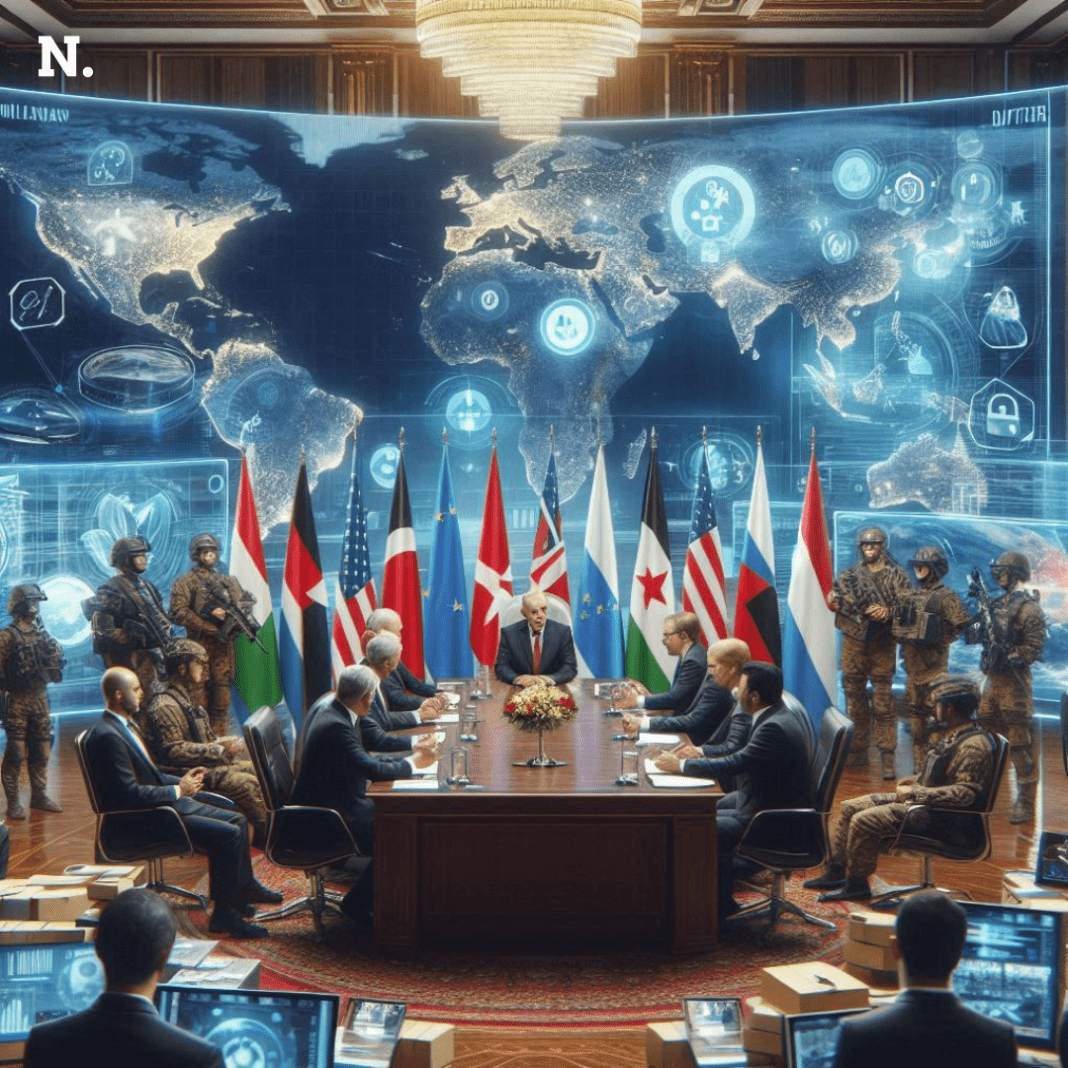

Major Defense Partnership Faces Humanitarian Crisis

On Monday, significant progress was made between the United States and the United Arab Emirates (UAE) as the two nations deepened their military ties. The U.S. government officially recognized the UAE as a major defense partner. This rare designation, shared only by India, signifies an enhanced military relationship that includes joint training, military exercises, and greater collaboration. The move comes amid mounting tensions in the Middle East, particularly the ongoing war in Gaza and rising instability across the region.

Humanitarian Focus Amid Conflict

A key part of the discussions between the leaders of the two countries was the escalating violence in Gaza. Both nations expressed a strong desire for an immediate ceasefire in the conflict between Israel and Hamas. In a joint statement, the U.S. and UAE emphasized the need of giving relief to civilians harmed by the war and asked for the “urgent, unhindered” supply of humanitarian aid to Gaza. Their commitment to this cause underscores the broader effort to address the humanitarian crisis, even as the violence continues.

During the meeting, it was also noted that the situation in Lebanon had worsened, with Israeli airstrikes reported to have killed at least 492 people on Monday. This development has heightened concerns about a broader regional conflict. The leaders reiterated the need for de-escalation to allow civilians to safely return to their homes. The U.S. President mentioned that his team was actively engaged with counterparts in the region to work toward reducing tensions.

Focus on Sudan Conflict and Gulf Involvement

The joint statement from both countries also touched on the ongoing conflict in Sudan. The leaders emphasized that there is no military solution to the war. The conflict has displaced millions of people. It has created the world’s largest displacement crisis. The UAE has played a role in efforts to address the situation. Both nations expressed their commitment to a peaceful resolution. They are focused on ending the violence in Sudan.

The war in Sudan has gained significant international attention. There are major concerns about its humanitarian impact. The scale of the crisis is alarming. The UAE has taken an active role in the region. Other Gulf nations are also involved in stabilizing the country. Together, they aim to reduce the conflict’s effects on neighboring regions.

Expanding Cooperation in Technology and Space

In addition to military and humanitarian concerns, the two leaders discussed ways to expand cooperation in other key areas such as space exploration, clean energy, and artificial intelligence. The UAE has ambitious plans in these fields, including a growing space program and interest in developing advanced AI technologies. These initiatives have also attracted attention from China, a geopolitical rival to the U.S., making collaboration in these sectors a strategic move for both countries.

The UAE is investing in space exploration and clean energy as part of its broader push to diversify its economy and position itself as a leader in cutting-edge technology. This partnership allows the U.S. and UAE to strengthen efforts in these areas, fostering collaboration in scientific research and innovation.

Vice President Kamala Harris also held separate talks with the UAE leader. The discussions were closed to the press. A White House statement later revealed more details. Harris expressed deep concern about the conflict in Sudan. She stressed the need to address the growing displacement. Harris raised alarm over the atrocities committed during the war. She emphasized the impact on innocent civilians.

The U.S. and UAE are strengthening their military and technological ties. The region is still facing complex, ongoing conflicts. These discussions mark an important step in their relationship. The world is closely watching developments in Gaza, Lebanon, and Sudan. The situation remains under global scrutiny.


ऋता कुलकर्णी
ऋता कुलकर्णी
ऋता ही कायदेतज्ज्ञ असून तिने आर्थिक व्यवहारांचे ज्ञान सुलभ होऊन ते सामान्य मराठी माणसांपर्यंत पोहोचावे म्हणून अर्थसाक्षरता नावाचा उपक्रम चालू केला आहे.

TOP 10 TRENDING ON NEWSINTERPRETATION

Cyber Attacks on Space Infrastructure: Satellites, GPS and the Ground Systems Behind Them

From the Viasat KA-SAT hack to GPS jamming over the Baltic, a research guide to how attackers target satellites, navigation signals and ground stations, and why it matters on Earth.

How AI Agents Are Used in Cyber Attacks: From Assisted Hacking to AI-Orchestrated Espionage

Attackers now use AI agents to scan networks, write exploits and run extortion campaigns. A research guide to documented cases, including the first reported AI-orchestrated espionage campaign, and what defenders should do.

Cyber Attacks on AI and LLMs: How Attackers Target Large Language Models

Prompt injection, data poisoning, model theft and jailbreaks: a research guide to how attackers target AI systems and large language models, with real cases and defences.

French Supermarket Refrigeration Cyberattack: How Hacking the Cold Chain Can Endanger Lives

In October 2026 attackers heated refrigeration cabinets in hundreds of French supermarkets to as much as 50°C. No one was hurt, but the attack shows how hacking the cold chain can endanger lives through fire, food poisoning and spoiled medicines.

Cyberattacks on Nuclear Facilities: Stuxnet, Kudankulam and the Limits of Air Gaps

Stuxnet, the Davis-Besse worm and malware at India’s Kudankulam plant: what they show about cyber risk at nuclear facilities and the limits of air gaps.

Triton: When Hackers Target the Safety Systems That Prevent Industrial Disasters

The 2017 Triton attack targeted the safety systems that prevent industrial disasters. What happened, who was charged, and how plants protect their last line of defence.

Cybersecurity Risks in Smart Cities: When Connected Infrastructure Fails

How connecting traffic control, emergency alerts and utilities concentrates cyber risk in cities, what the Dallas and Atlanta incidents showed, and what governments recommend.

Weaponized Drones: Hijacking, GPS Spoofing and Emerging Cyber Warfare Risks

How drones can be hijacked, jammed or misled by GPS spoofing, what researchers have demonstrated, and why governments treat drone fleets as a security risk.

Ransomware Attacks on Hospitals: How Healthcare Cyberattacks Put Patients at Risk

How ransomware against hospitals and their suppliers delays care and endangers patients, what the Düsseldorf and WannaCry cases show, and what research says about deaths.

Operational blunder exposes massive Russian cyber espionage attack on Ukrainian prosecutors

A major cyberattack has compromised the email accounts of...

Cyber Attacks on Space Infrastructure: Satellites, GPS and the Ground Systems Behind Them

From the Viasat KA-SAT hack to GPS jamming over the Baltic, a research guide to how attackers target satellites, navigation signals and ground stations, and why it matters on Earth.

French Supermarket Refrigeration Cyberattack: How Hacking the Cold Chain Can Endanger Lives

In October 2026 attackers heated refrigeration cabinets in hundreds of French supermarkets to as much as 50°C. No one was hurt, but the attack shows how hacking the cold chain can endanger lives through fire, food poisoning and spoiled medicines.

Cyberattacks on Nuclear Facilities: Stuxnet, Kudankulam and the Limits of Air Gaps

Stuxnet, the Davis-Besse worm and malware at India’s Kudankulam plant: what they show about cyber risk at nuclear facilities and the limits of air gaps.

Triton: When Hackers Target the Safety Systems That Prevent Industrial Disasters

The 2017 Triton attack targeted the safety systems that prevent industrial disasters. What happened, who was charged, and how plants protect their last line of defence.

Cybersecurity Risks in Smart Cities: When Connected Infrastructure Fails

How connecting traffic control, emergency alerts and utilities concentrates cyber risk in cities, what the Dallas and Atlanta incidents showed, and what governments recommend.

Ransomware Attacks on Hospitals: How Healthcare Cyberattacks Put Patients at Risk

How ransomware against hospitals and their suppliers delays care and endangers patients, what the Düsseldorf and WannaCry cases show, and what research says about deaths.

FBI warns of AVrecon malware targeting outdated routers linked to proxy based cybercrime

A serious cybersecurity warning has been issued regarding commonly...

Related Articles

Popular Categories
