

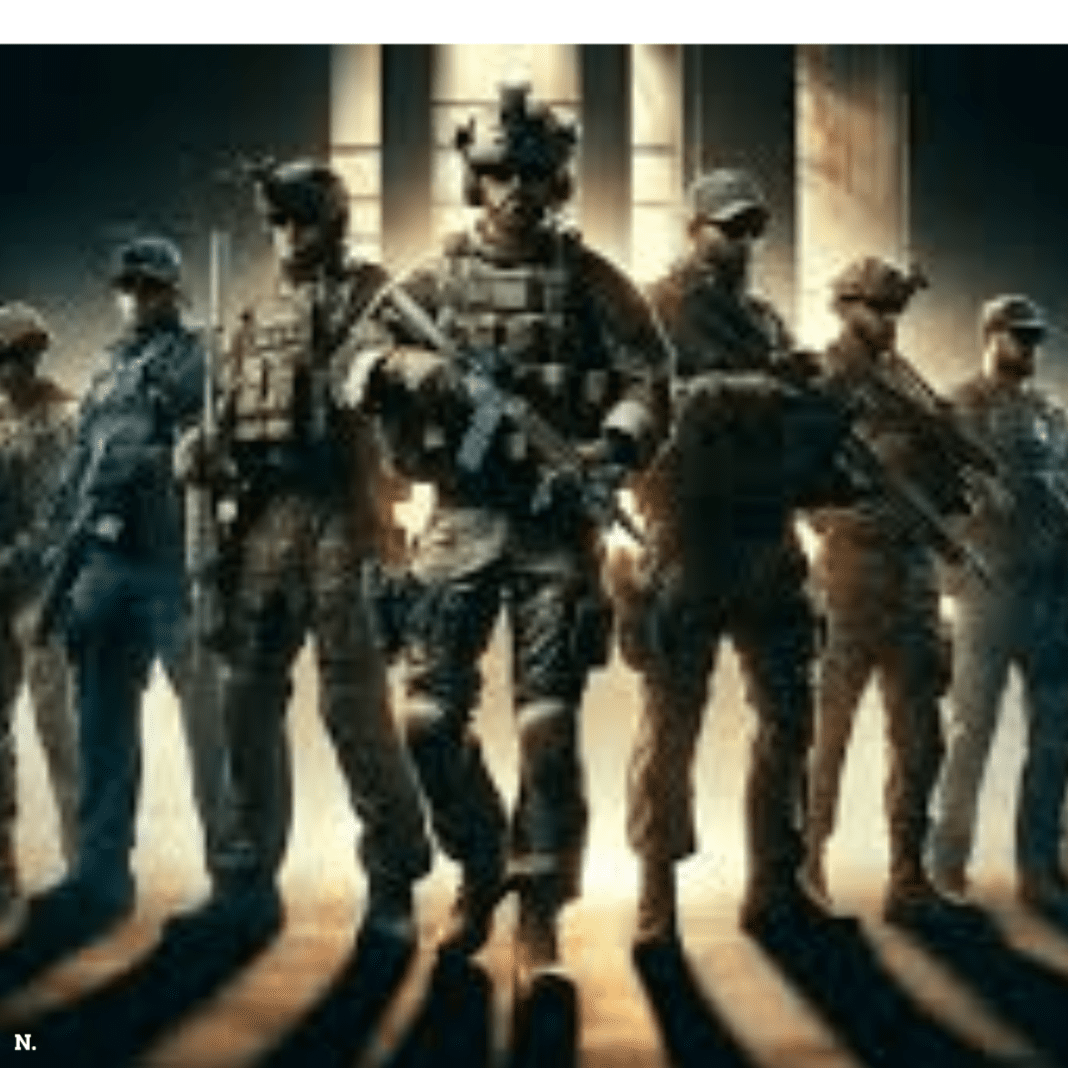
Delta Force: The U.S. Military’s Elite Special Operations Unit

Delta Force, also known as 1st Special Forces Operational Detachment-Delta, is an elite special operations unit in the Army. Founded in 1977, the unit’s orientation lies in counterterrorism and hostage rescue. The idea behind this unit was that of Green Beret Charles Beckwith. He was inspired by the British Special Air Service (SAS).

In 1979, the unit was fully operationalized. The unit acquired the repute of high level training and secrecy. Probably, every other unit in the military has selection criteria as rigorous as that of Delta Force. Candidates have to run through some of the most demanding physical and psychological tests to prove their worth.

Core Missions and Operations

Major missions of the Delta Force are counter-terrorism and direct action. The team is often deployed for global hostage rescue operations. Operations conducted by this team demand elaborate preparation as well as action. Members of the team train intensively for all types of combat situations.

In addition to countering terrorism, one of the primary roles of the Delta Force is conducting special reconnaissance. Special reconnaissance involves gathering intelligence in hostile environments. In most cases, the group works with other U.S. military departments and the intelligence organizations. The cooperative approach makes it more effective in complicated operations.

Graphene Composites USA has been selected to participate in the U.S. Military footwear project

Notable missions include detaining Saddam Hussein in 2003. Delta Force played a very crucial role in the identification and detaining of the former Iraqi leader. Their skillful gathering of intelligence and their utilization in direct action were pivotal during that specific mission.

Training and Selection Process

It is well known for a very brutal selection procedure. If someone qualifies to possibly get inducted into Special Forces, they are forwarded to a very demanding selection and assessment course. Tests also included within this research are on physical fitness, land navigation and survival skills.

Such selected individuals are trained on more advanced levels in various fields of combat. Techniques in close quarters combat, marksmanship as well as more complex tactics are honed. Psychological toughness is also exercised in training. Members of the team should be able to work under extreme stress conditions.

Training does not end there. Operators of Delta undergo training with other teams frequently. Exercises that put them to preparedness for whatever task when needed. The unit also fosters and practices adaptability, that they make decisions quickly.

Global Influence and Issues

It is certainly true that many people across the world have observed the operations of Delta Force. Their effectiveness against terrorism has made them a much-needed asset to the globalized platform. However, their action also raises questions on ethics since critics point out that special operations might have unintentional consequences.

South Korea’s Bold Military Partnership with the Philippines Amid Growing Tensions in Indo-Pacific

On the contrary, Russia and more countries tend to fear Delta Force. Their ability goes beyond the idea of classical military power. The reputation of quick actions and efficiency elevates the apprehension most opponents usually have over Delta Force’s capacity to jeopardize them.

The Delta Force is on high alert, but stiffing with geopolitical tensions. This is because the final outcomes of operations carried out by the Delta Force come out to be accurate; hence it’s an asset tool for U.S. foreign policy. It can prevent any threat even before it gets worse.

To sum it all, it’s a peak of special US military operations. Founded by dreamers and proved on rigorous training, the unit outshines in all counter-terrorism operations and special missions. Their influence is deep, yet consequences of their activities continue raising debates. The whole world takes notice as the adaptation of Delta Force keeps in step with unfolding threats.

TOP 10 TRENDING ON NEWSINTERPRETATION

Cyber Attacks on Space Infrastructure: Satellites, GPS and the Ground Systems Behind Them

From the Viasat KA-SAT hack to GPS jamming over the Baltic, a research guide to how attackers target satellites, navigation signals and ground stations, and why it matters on Earth.

How AI Agents Are Used in Cyber Attacks: From Assisted Hacking to AI-Orchestrated Espionage

Attackers now use AI agents to scan networks, write exploits and run extortion campaigns. A research guide to documented cases, including the first reported AI-orchestrated espionage campaign, and what defenders should do.

Cyber Attacks on AI and LLMs: How Attackers Target Large Language Models

Prompt injection, data poisoning, model theft and jailbreaks: a research guide to how attackers target AI systems and large language models, with real cases and defences.

French Supermarket Refrigeration Cyberattack: How Hacking the Cold Chain Can Endanger Lives

In October 2026 attackers heated refrigeration cabinets in hundreds of French supermarkets to as much as 50°C. No one was hurt, but the attack shows how hacking the cold chain can endanger lives through fire, food poisoning and spoiled medicines.

Cyberattacks on Nuclear Facilities: Stuxnet, Kudankulam and the Limits of Air Gaps

Stuxnet, the Davis-Besse worm and malware at India’s Kudankulam plant: what they show about cyber risk at nuclear facilities and the limits of air gaps.

Triton: When Hackers Target the Safety Systems That Prevent Industrial Disasters

The 2017 Triton attack targeted the safety systems that prevent industrial disasters. What happened, who was charged, and how plants protect their last line of defence.

Cybersecurity Risks in Smart Cities: When Connected Infrastructure Fails

How connecting traffic control, emergency alerts and utilities concentrates cyber risk in cities, what the Dallas and Atlanta incidents showed, and what governments recommend.

Weaponized Drones: Hijacking, GPS Spoofing and Emerging Cyber Warfare Risks

How drones can be hijacked, jammed or misled by GPS spoofing, what researchers have demonstrated, and why governments treat drone fleets as a security risk.

Ransomware Attacks on Hospitals: How Healthcare Cyberattacks Put Patients at Risk

How ransomware against hospitals and their suppliers delays care and endangers patients, what the Düsseldorf and WannaCry cases show, and what research says about deaths.

Operational blunder exposes massive Russian cyber espionage attack on Ukrainian prosecutors

A major cyberattack has compromised the email accounts of...

Cyber Attacks on Space Infrastructure: Satellites, GPS and the Ground Systems Behind Them

From the Viasat KA-SAT hack to GPS jamming over the Baltic, a research guide to how attackers target satellites, navigation signals and ground stations, and why it matters on Earth.

French Supermarket Refrigeration Cyberattack: How Hacking the Cold Chain Can Endanger Lives

In October 2026 attackers heated refrigeration cabinets in hundreds of French supermarkets to as much as 50°C. No one was hurt, but the attack shows how hacking the cold chain can endanger lives through fire, food poisoning and spoiled medicines.

Cyberattacks on Nuclear Facilities: Stuxnet, Kudankulam and the Limits of Air Gaps

Stuxnet, the Davis-Besse worm and malware at India’s Kudankulam plant: what they show about cyber risk at nuclear facilities and the limits of air gaps.

Triton: When Hackers Target the Safety Systems That Prevent Industrial Disasters

The 2017 Triton attack targeted the safety systems that prevent industrial disasters. What happened, who was charged, and how plants protect their last line of defence.

Cybersecurity Risks in Smart Cities: When Connected Infrastructure Fails

How connecting traffic control, emergency alerts and utilities concentrates cyber risk in cities, what the Dallas and Atlanta incidents showed, and what governments recommend.

Ransomware Attacks on Hospitals: How Healthcare Cyberattacks Put Patients at Risk

How ransomware against hospitals and their suppliers delays care and endangers patients, what the Düsseldorf and WannaCry cases show, and what research says about deaths.

FBI warns of AVrecon malware targeting outdated routers linked to proxy based cybercrime

A serious cybersecurity warning has been issued regarding commonly...

Related Articles

Popular Categories
