

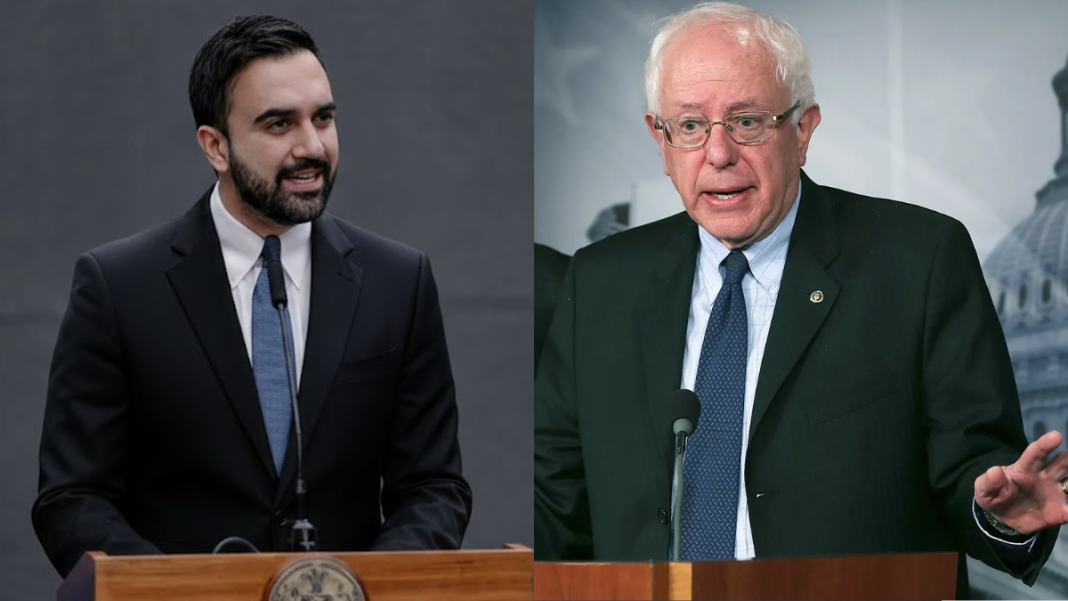

New York City witnessed a major show of support for striking nurses as Mayor Zohran Mamdani and U.S. Senator Bernie Sanders joined them in a large rally in Manhattan. Their appearance came on the ninth day of the city’s largest nursing strike in decades, drawing attention to the growing tension between hospital workers and hospital administrators.
Speaking to a crowd of thousands of nurses and supporters outside a major hospital, Mamdani and Sanders called on hospital leaders to return to serious negotiations. They emphasized that the strike is not just about contracts, but about dignity, fairness, and the future of healthcare in the city.
Mamdani and Sanders Amplify Nurses’ Voices
Mayor Zohran Mamdani used his platform to speak directly to the nurses, praising their dedication and resilience. He told them that New York City must be a place where health care workers can not only work but also live, raise families, and stay healthy themselves. Mamdani’s message focused on fairness, affordability, and respect for essential workers.
U.S. Senator Bernie Sanders echoed this message, using strong language to criticize what he described as excessive corporate greed in the health care industry. He spoke about the large salaries earned by hospital executives while nurses struggle to secure better pay and benefits.
Zohran Mamdani takes oath as New York City mayor at start of year marking leadership change
Sanders told the crowd that working people across the country are tired of systems that prioritize profits over patients. He framed the strike as part of a larger national movement for fairness in health care, labor rights, and economic justice.
The crowd responded with loud cheers, chants, and applause. Many nurses said the support from Mamdani and Sanders made them feel seen and heard. Their presence turned the rally into a powerful moment of solidarity between political leaders and frontline workers.
A Strike That Has Drawn Citywide Attention
The nurses’ strike began on January 12 and involves about 15,000 nurses across three major hospital systems in New York City. Since the walkout started, nurses have held daily demonstrations outside hospitals, even in freezing temperatures.
At the rally, nurses marched, chanted, and carried signs calling for fair pay, safe staffing, and strong health care benefits. Supporters, including taxi drivers and other workers, showed solidarity by honking their horns and joining the demonstrations.
The nurses’ union says it has met with hospital representatives since the strike began, but talks have made little progress. Each hospital system is negotiating separately, and so far, there are no confirmed plans to resume discussions this week.
Bernie Sanders Slams $10 Million Musk Donation, Warns Billionaires Are “Buying American Democracy”
Union negotiator Jonathan Hunter, a registered nurse at Mount Sinai, said the hospitals offered nothing meaningful in talks and described the discussions as performative. Nurses say they feel their concerns are not being taken seriously, which has deepened frustration and strengthened their resolve.
Hospital administrators, on the other hand, say they are willing to meet again and will follow the guidance of contract mediators. They argue that the union’s demands include pay increases of about 25% over three years, which they say is not realistic given current financial pressures on hospitals.
Benefits and Patient Care at the Heart of the Conflict
While pay remains a key issue, nurses say health care benefits are equally critical. Many depend on these benefits to support themselves and their families, especially those managing long-term medical conditions.
A nurse at Mount Sinai West, said she has an autoimmune disease and is concerned about keeping her health coverage so she can care for her child and continue working at the bedside. She explained that without strong benefits, staying healthy and delivering quality patient care becomes much harder.
Mayor Zohran Mamdani echoed these concerns, saying that nurses deserve reliable health care protections if they are expected to care for others every day.
Despite assurances from hospital leaders, nurses remain uneasy. They say even small benefit changes could mean higher personal costs and reduced access to care, fueling much of the strike’s momentum.
Hospital officials say they have brought in thousands of temporary nurses to maintain operations. Brendan Carr, CEO of Mount Sinai, said staff members who have remained on the job are helping to save lives and keep hospitals running.
Washington meltdown — health care fight over undocumented immigrants pushes nation to breaking point
However, nurses and their supporters argue that temporary staffing is not a long-term solution. They say permanent, experienced nurses are essential for maintaining patient safety and quality of care. They believe the strike reflects deeper problems in the health care system, including understaffing and burnout.
The rally led by Mamdani and Sanders has become one of the most visible moments of the strike so far. Their involvement has brought greater public attention to the nurses’ demands and increased pressure on hospital leaders to respond.