

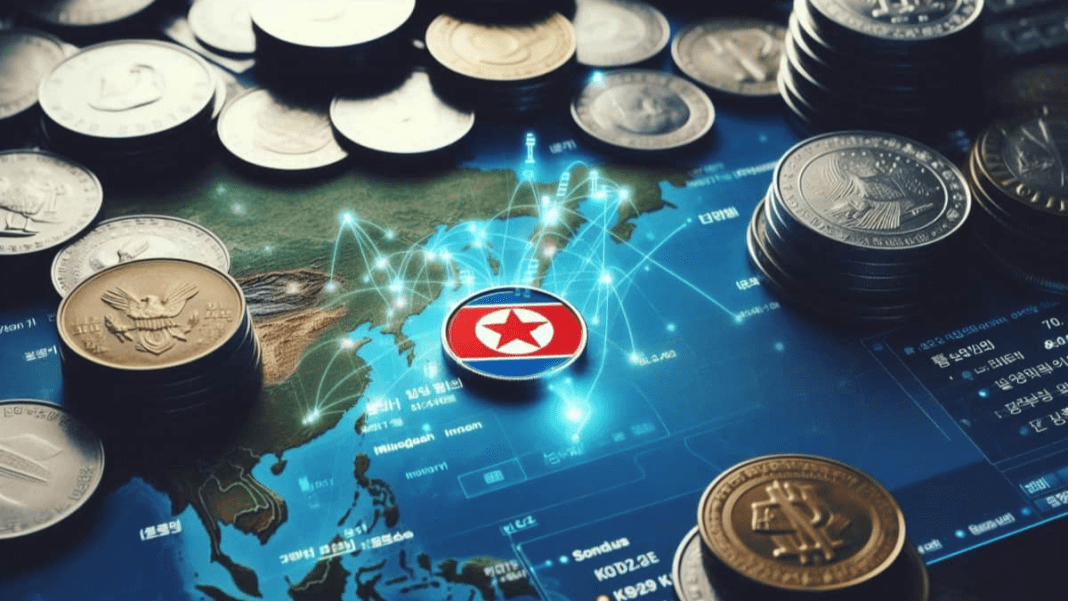
Lazarus Rises Again: $4.2 Million Crypto Stolen in NFT Scam and Solana-to-Ethereum Swindle

North Korea’s hacking team, known as the Lazarus Group, has struck again—this time stealing a shocking $3.2 million in digital money. The scam took place on May 16, when a user lost millions of dollars through a carefully planned trap set by these cybercriminals.

The Multi Million Dollar Crypto Trap

Right after the money was stolen, the hackers turned the stolen coins from Solana into Ethereum, another type of cryptocurrency. Then, they used a secretive online tool called Tornado Cash to hide their tracks. Tornado Cash helps people move money around in a way that makes it hard to follow, almost like shaking up a puzzle so no one can tell where each piece came from.

At the time the scam was reported, around $1.25 million of the stolen money was still sitting in a special digital wallet. This wallet held two types of cryptocurrency: DAI and ETH. Investigators are still watching this wallet, hoping it might lead to more clues.

More Attacks Linked to Lazarus Group

This scam isn’t the only one. Just days before it was revealed, another big attack shocked the crypto world. On June 27, investigators discovered that the same lazarus group had carried out a sneaky hack involving digital artwork known as NFTs. These digital collectibles are like virtual trading cards that people buy and sell online.

The hackers targeted NFT projects tied to popular characters and brands. They began this attack on June 18 and were able to sneak into several NFT projects. Once inside, they took control of the digital artwork contracts. That means they could create fake versions of the NFTs and sell them like they were real.

Cyberattack Exposes Melbourne Hospital Patients Data on Dark Web

By doing this, they tricked people into buying fake NFTs. Almost $1 million was stolen by them from one attack alone. The money from these fake sales was then sent through three different digital wallets. This made it harder for anyone to track where the money went.

Later, some of the stolen funds were changed into more stable types of digital currency, called stablecoins. The hackers then moved this money to a well-known trading website called MEXC. This helped them hide the money even better.

Clues Point to North Korean Hackers

As experts dug deeper into the case, they noticed some clear signs linking the crime to North Korea. First, the pattern of the stolen money being moved matched earlier hacks carried out by the Lazarus Group. The way the money was split up, transferred, and turned into other types of digital currency looked very familiar.

Second, some of the online accounts used by the hackers had Korean settings and were active during times that lined up with North Korea’s time zone. This suggested that the people behind the scam were working from that region.

Hackers Steal Digital Gold Worth ₹1.95 Crore on Aditya Birla’s Finserv App

One of the NFT projects even had a top team member who is now believed to be a North Korean tech worker. His online profiles disappeared right after the scam, and no one has been able to confirm if his work history was real. These are common tactics used by cybercriminals to hide their true identity.

What’s more, this isn’t an isolated case. Over the past year, North Korea-linked hackers have stolen nearly $1.6 billion in cryptocurrency. That’s almost 70% of all the crypto thefts reported worldwide in 2025 so far. The Lazarus Group, in particular, has become one of the most dangerous players in the world of cybercrime, especially in the digital money space.

Renuka Bangale
Renuka Bangale
Renuka is a distinguished Chartered Accountant and a Certified Digital Threats Analyst from Riskpro, renowned for her expertise in cybersecurity. With a deep understanding of cybercrimes, malware, cyber warfare, and espionage, she has established herself as an authority in the field. Renuka combines her financial acumen with advanced knowledge of digital threats to provide unparalleled insights into the evolving landscape of information security. Her analytical prowess enables her to dissect complex cyber incidents, offering clarity on risks and mitigation strategies. As a key contributor to Newsinterpretation’s information security category, Renuka delivers authoritative articles that educate and inform readers about emerging threats and best practices.

TOP 10 TRENDING ON NEWSINTERPRETATION

Cyber Attacks on Space Infrastructure: Satellites, GPS and the Ground Systems Behind Them

From the Viasat KA-SAT hack to GPS jamming over the Baltic, a research guide to how attackers target satellites, navigation signals and ground stations, and why it matters on Earth.

How AI Agents Are Used in Cyber Attacks: From Assisted Hacking to AI-Orchestrated Espionage

Attackers now use AI agents to scan networks, write exploits and run extortion campaigns. A research guide to documented cases, including the first reported AI-orchestrated espionage campaign, and what defenders should do.

Cyber Attacks on AI and LLMs: How Attackers Target Large Language Models

Prompt injection, data poisoning, model theft and jailbreaks: a research guide to how attackers target AI systems and large language models, with real cases and defences.

French Supermarket Refrigeration Cyberattack: How Hacking the Cold Chain Can Endanger Lives

In October 2026 attackers heated refrigeration cabinets in hundreds of French supermarkets to as much as 50°C. No one was hurt, but the attack shows how hacking the cold chain can endanger lives through fire, food poisoning and spoiled medicines.

Cyberattacks on Nuclear Facilities: Stuxnet, Kudankulam and the Limits of Air Gaps

Stuxnet, the Davis-Besse worm and malware at India’s Kudankulam plant: what they show about cyber risk at nuclear facilities and the limits of air gaps.

Triton: When Hackers Target the Safety Systems That Prevent Industrial Disasters

The 2017 Triton attack targeted the safety systems that prevent industrial disasters. What happened, who was charged, and how plants protect their last line of defence.

Cybersecurity Risks in Smart Cities: When Connected Infrastructure Fails

How connecting traffic control, emergency alerts and utilities concentrates cyber risk in cities, what the Dallas and Atlanta incidents showed, and what governments recommend.

Weaponized Drones: Hijacking, GPS Spoofing and Emerging Cyber Warfare Risks

How drones can be hijacked, jammed or misled by GPS spoofing, what researchers have demonstrated, and why governments treat drone fleets as a security risk.

Ransomware Attacks on Hospitals: How Healthcare Cyberattacks Put Patients at Risk

How ransomware against hospitals and their suppliers delays care and endangers patients, what the Düsseldorf and WannaCry cases show, and what research says about deaths.

Operational blunder exposes massive Russian cyber espionage attack on Ukrainian prosecutors

A major cyberattack has compromised the email accounts of...

Cyber Attacks on Space Infrastructure: Satellites, GPS and the Ground Systems Behind Them

From the Viasat KA-SAT hack to GPS jamming over the Baltic, a research guide to how attackers target satellites, navigation signals and ground stations, and why it matters on Earth.

French Supermarket Refrigeration Cyberattack: How Hacking the Cold Chain Can Endanger Lives

In October 2026 attackers heated refrigeration cabinets in hundreds of French supermarkets to as much as 50°C. No one was hurt, but the attack shows how hacking the cold chain can endanger lives through fire, food poisoning and spoiled medicines.

Cyberattacks on Nuclear Facilities: Stuxnet, Kudankulam and the Limits of Air Gaps

Stuxnet, the Davis-Besse worm and malware at India’s Kudankulam plant: what they show about cyber risk at nuclear facilities and the limits of air gaps.

Triton: When Hackers Target the Safety Systems That Prevent Industrial Disasters

The 2017 Triton attack targeted the safety systems that prevent industrial disasters. What happened, who was charged, and how plants protect their last line of defence.

Cybersecurity Risks in Smart Cities: When Connected Infrastructure Fails

How connecting traffic control, emergency alerts and utilities concentrates cyber risk in cities, what the Dallas and Atlanta incidents showed, and what governments recommend.

Ransomware Attacks on Hospitals: How Healthcare Cyberattacks Put Patients at Risk

How ransomware against hospitals and their suppliers delays care and endangers patients, what the Düsseldorf and WannaCry cases show, and what research says about deaths.

FBI warns of AVrecon malware targeting outdated routers linked to proxy based cybercrime

A serious cybersecurity warning has been issued regarding commonly...

Related Articles

Popular Categories
