

Europe Jolted as Portugal’s President Declares Trump “Objectively a Soviet Agent” Helping Moscow

Strong Words in Castelo de Vide

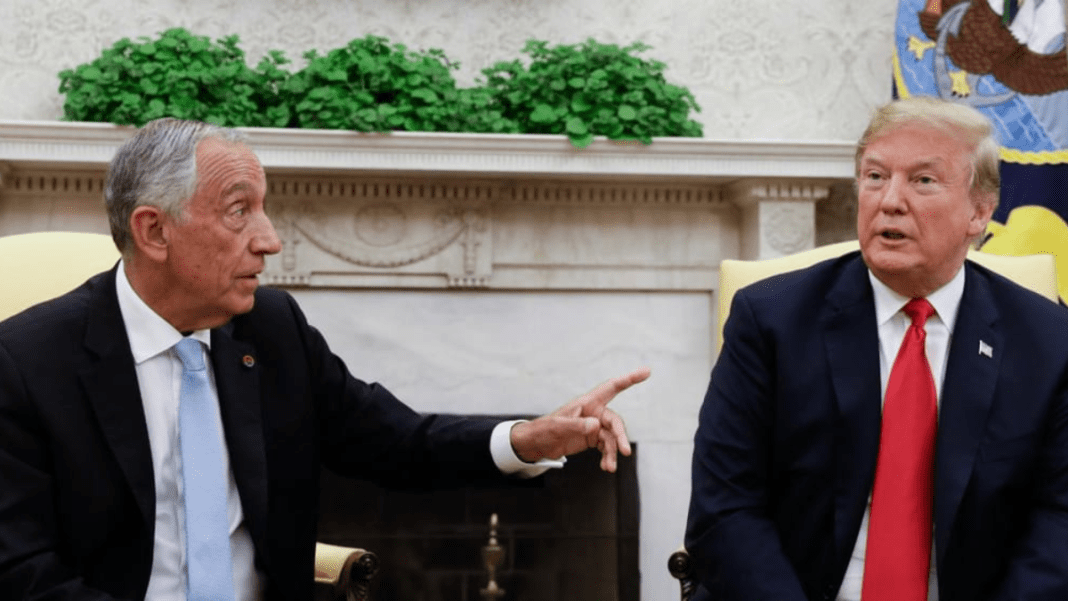
President of Portugal Marcelo Rebelo de Sousa made a bold and sharp statement this week about the American leader. During a speech in Castelo de Vide on August 27, he said that the leader of the United States is “objectively a Soviet or Russian agent.” His words drew attention across Europe and beyond, as few heads of state speak in such direct terms.

Marcelo Rebelo de Sousa said that the person who heads the world’s largest superpower is acting in a way that helps Moscow more than its rivals. He argued that the new leadership in Washington has made choices that “strategically contributed to Russia.” According to him, this is not just about small decisions but about a bigger pattern that favors one side in the ongoing war.

He explained that Donald Trump has presented himself as a peace broker between Ukraine and Russia. However, in his opinion, these attempts have not helped Ukraine. Instead, they have pushed the process in a direction that seems to suit Russia’s interests more.

Doubts About Sanctions and Peace Talks

Marcelo Rebelo de Sousa also raised concerns about how sanctions against Moscow were being handled. He noted that almost every day there were new statements coming out of Washington about possible sanctions. But in reality, he said, many of those promises never turned into real action. For him, this showed a gap between words and deeds.

Cyberattack Catastrophe: How Hackers Can Endanger Human Lives ?

He added that Donald Trump often tried to act as an “arbiter.” But instead of treating both sides equally, the American leader seemed to want to speak mostly with one side. This left Kyiv and its European allies in a difficult position. They were forced to put pressure on Washington so that it would also take part in balanced talks, rather than leaning too much toward Russia.

Marcelo Rebelo de Sousa said that these actions hurt trust in the United States as a reliable partner. He pointed out that Europe had underestimated the weight of Trump’s rise to power and the impact of what he called “Trumpism.” At first, many in Europe thought the balance of power in Washington would stay the same even after the election. But in his view, things changed far more drastically than expected.

Trump’s Frustration with Ukraine and Europe

At the same time, reports from media outlets suggest that Donald Trump himself is frustrated. He has not been happy with the demands made by Ukraine’s president and by European countries when it comes to ending the war. According to these reports, he wants peace “at any cost.”

The news also said that in private talks, Trump expressed anger that his public efforts to show himself as a peacemaker had not brought results. However, instead of blaming Moscow or its leader, he put the responsibility on Ukraine and its allies in Europe. This created further tension between Washington and Kyiv, as well as among European capitals.

Republican Stronghold Crumbles as Iowa Voters Hand Trump Crushing Defeat

Marcelo Rebelo de Sousa’s words highlight just how divided opinions have become. On one hand, Donald Trump continues to push for negotiations that he believes could stop the war quickly. On the other hand, European leaders fear that these steps may weaken Ukraine’s position and strengthen Russia’s hand.

For now, what is clear is that the statement from Marcelo Rebelo de Sousa has added new weight to the debate. By calling the American leader “objectively a Soviet or Russian agent,” the President of Portugal has turned a spotlight onto the deep disagreements over how the war is being handled and what role Washington is playing in it.


Renuka Bangale
Renuka Bangale
Renuka is a distinguished Chartered Accountant and a Certified Digital Threats Analyst from Riskpro, renowned for her expertise in cybersecurity. With a deep understanding of cybercrimes, malware, cyber warfare, and espionage, she has established herself as an authority in the field. Renuka combines her financial acumen with advanced knowledge of digital threats to provide unparalleled insights into the evolving landscape of information security. Her analytical prowess enables her to dissect complex cyber incidents, offering clarity on risks and mitigation strategies. As a key contributor to Newsinterpretation’s information security category, Renuka delivers authoritative articles that educate and inform readers about emerging threats and best practices.

TOP 10 TRENDING ON NEWSINTERPRETATION

Cyber Attacks on Space Infrastructure: Satellites, GPS and the Ground Systems Behind Them

From the Viasat KA-SAT hack to GPS jamming over the Baltic, a research guide to how attackers target satellites, navigation signals and ground stations, and why it matters on Earth.

How AI Agents Are Used in Cyber Attacks: From Assisted Hacking to AI-Orchestrated Espionage

Attackers now use AI agents to scan networks, write exploits and run extortion campaigns. A research guide to documented cases, including the first reported AI-orchestrated espionage campaign, and what defenders should do.

Cyber Attacks on AI and LLMs: How Attackers Target Large Language Models

Prompt injection, data poisoning, model theft and jailbreaks: a research guide to how attackers target AI systems and large language models, with real cases and defences.

French Supermarket Refrigeration Cyberattack: How Hacking the Cold Chain Can Endanger Lives

In October 2026 attackers heated refrigeration cabinets in hundreds of French supermarkets to as much as 50°C. No one was hurt, but the attack shows how hacking the cold chain can endanger lives through fire, food poisoning and spoiled medicines.

Cyberattacks on Nuclear Facilities: Stuxnet, Kudankulam and the Limits of Air Gaps

Stuxnet, the Davis-Besse worm and malware at India’s Kudankulam plant: what they show about cyber risk at nuclear facilities and the limits of air gaps.

Triton: When Hackers Target the Safety Systems That Prevent Industrial Disasters

The 2017 Triton attack targeted the safety systems that prevent industrial disasters. What happened, who was charged, and how plants protect their last line of defence.

Cybersecurity Risks in Smart Cities: When Connected Infrastructure Fails

How connecting traffic control, emergency alerts and utilities concentrates cyber risk in cities, what the Dallas and Atlanta incidents showed, and what governments recommend.

Weaponized Drones: Hijacking, GPS Spoofing and Emerging Cyber Warfare Risks

How drones can be hijacked, jammed or misled by GPS spoofing, what researchers have demonstrated, and why governments treat drone fleets as a security risk.

Ransomware Attacks on Hospitals: How Healthcare Cyberattacks Put Patients at Risk

How ransomware against hospitals and their suppliers delays care and endangers patients, what the Düsseldorf and WannaCry cases show, and what research says about deaths.

Operational blunder exposes massive Russian cyber espionage attack on Ukrainian prosecutors

A major cyberattack has compromised the email accounts of...

Cyber Attacks on Space Infrastructure: Satellites, GPS and the Ground Systems Behind Them

From the Viasat KA-SAT hack to GPS jamming over the Baltic, a research guide to how attackers target satellites, navigation signals and ground stations, and why it matters on Earth.

French Supermarket Refrigeration Cyberattack: How Hacking the Cold Chain Can Endanger Lives

In October 2026 attackers heated refrigeration cabinets in hundreds of French supermarkets to as much as 50°C. No one was hurt, but the attack shows how hacking the cold chain can endanger lives through fire, food poisoning and spoiled medicines.

Cyberattacks on Nuclear Facilities: Stuxnet, Kudankulam and the Limits of Air Gaps

Stuxnet, the Davis-Besse worm and malware at India’s Kudankulam plant: what they show about cyber risk at nuclear facilities and the limits of air gaps.

Triton: When Hackers Target the Safety Systems That Prevent Industrial Disasters

The 2017 Triton attack targeted the safety systems that prevent industrial disasters. What happened, who was charged, and how plants protect their last line of defence.

Cybersecurity Risks in Smart Cities: When Connected Infrastructure Fails

How connecting traffic control, emergency alerts and utilities concentrates cyber risk in cities, what the Dallas and Atlanta incidents showed, and what governments recommend.

Ransomware Attacks on Hospitals: How Healthcare Cyberattacks Put Patients at Risk

How ransomware against hospitals and their suppliers delays care and endangers patients, what the Düsseldorf and WannaCry cases show, and what research says about deaths.

FBI warns of AVrecon malware targeting outdated routers linked to proxy based cybercrime

A serious cybersecurity warning has been issued regarding commonly...

Related Articles

Popular Categories
