

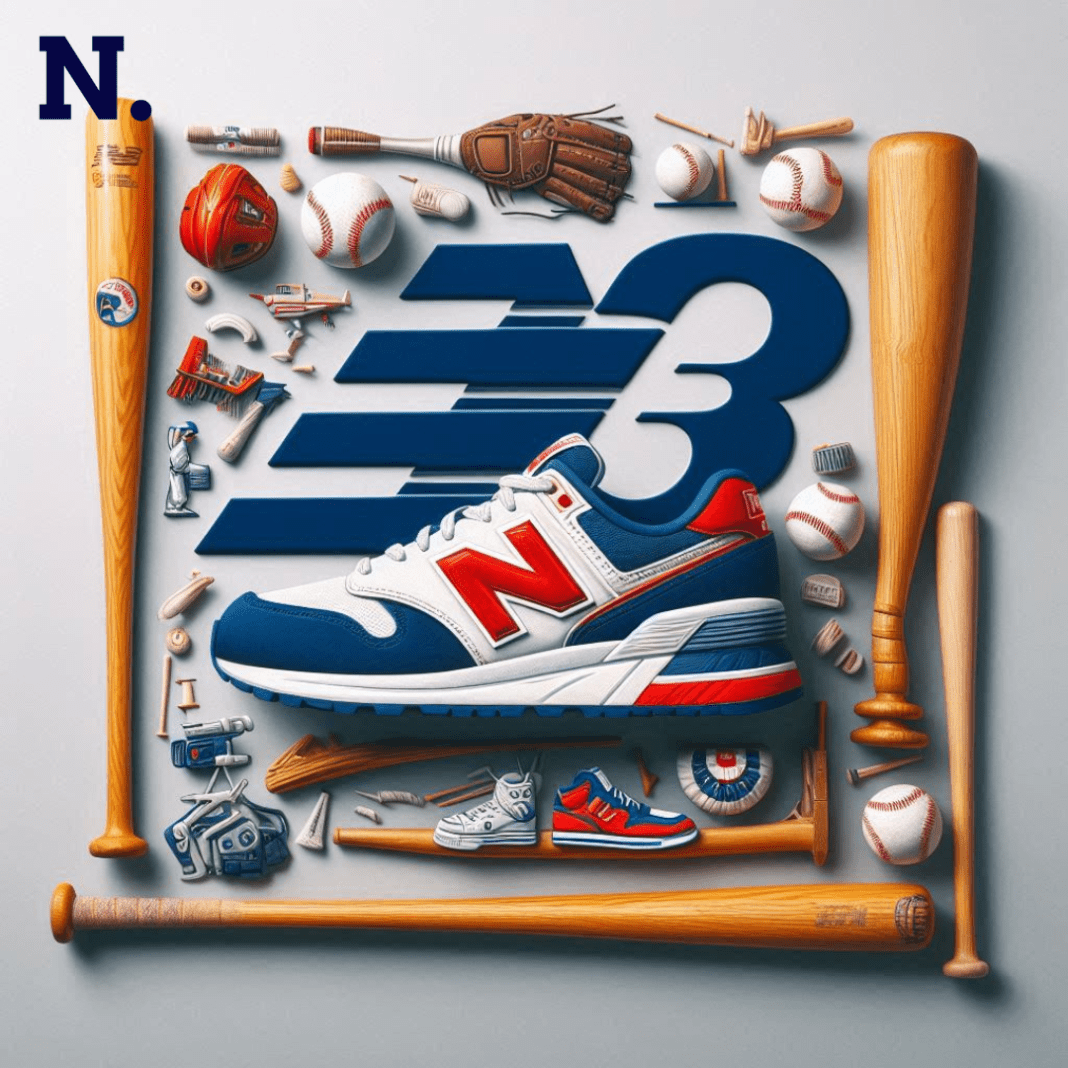

The Ohtani 1: A Debut Trademark Sneaker by New Balance

In his incredible seven years in the Major Leagues, Shohei Ohtani has faced nearly no competition. To contend with trucks like El Toro Loco and Gravedigger, which are massive, even the upcoming talent had to adapt. Almost a year and a half ago, Ohtani tested a prototype of New Balance’s Ohtani 1 at Angel Stadium. The Ohtani 1 is his first signature shoe. The bullpen was the only grassy area on the field. Ohtani had to test the cleat there since the field was being prepped for the Monster Jam Tour.

Developing the Ohtani 1

This was one of the few challenges that New Balance had to overcome in order to create the Ohtani 1, which would come in turf and cleat variants. On July 14 during All-Star Week in Arlington, the cleat will make its premiere during a pop-up event. On Home Run Derby Monday, New Balance’s website will host an online release of the shoe.

As the first player in a century to excel in both hitting and pitching, Ohtani had unique demands for his gear. The team at New Balance, honored to work with such an exceptional athlete, aimed to meet these high standards. Senior product manager at New Balance, Matt Nuzzo, stressed the need of consistency. He explained that Ohtani preferred a shoe that felt the same underfoot whether he was pitching or hitting, highlighting the need for a versatile cleat that could support his multifaceted skills.

Ohtani 1 ‘s Focus on Performance

New Balance’s approach aligned with their initial promise to Ohtani when he joined the brand. Aware of his high standards, they committed to providing him with tools to become the best player possible. They also aimed to help him use his platform to grow the game globally. After extensive discussions, Nuzzo, designer Dan Webb, and developer Todd Hewett focused on three main aspects for the cleat. These aspects were comfort, durability, and ground feel.

While the first two aspects were straightforward, achieving the third required a departure from New Balance’s usual designs. Players in Japan typically prefer a low-profile shoe for better ground feel and leverage, a concept that resonated with Ohtani. The designers reduced the midsole foam to enhance his connection with the field. This design choice, supported by biometric research and in-depth conversations with Ohtani, proved effective given his performance this season.

Ohtani 1 ‘s Symbolic Details

Ohtani preferred a “classic” appearance and was less involved with the cleat’s aesthetic elements. To match the Dodgers’ jerseys, he primarily chose traditional white or grey hues, while he occasionally dabbled with a royal blue model with red accents.

The Ohtani 1 includes details specific to its namesake, such as a triangular pattern on the toebox inspired by geometric designs seen in Japanese stadiums, symbolizing strength and stability.

Collaborative Apparel Line

Ohtani worked with design director Shugo Moritani of New Balance’s Tokyo Design Studio on the matching clothing collection. The apparel features artistic nods to baseball elements like the pitching mound and stitches on a baseball, with many pieces incorporating double pockets to signify Ohtani’s dual-role prowess.

New Balance’s Strategic Vision

The Sockjig Sneaker Podcast presenter, Pinder, pointed out that Ohtani is a wonderful fit for New Balance’s performance-based brand identity. Ohtani is already a major force in global marketing, thus Ohtani’s cool factor and charisma present a big potential for New Balance. Pinder proposed that Ohtani’s special skills may be used by New Balance in creative marketing initiatives.

For the player and the company, the release of Shohei’s debut sneaker represents a major turning point. In the near future, New Balance has advanced significantly in the baseball category. They released trademark models like Francisco Lindor of the Mets. In 2024, New Balance introduced the Ohtani 1. However, twenty percent of Major League Baseball players were already wearing New Balance cleats.

Beyond Baseball

Ohtani’s support shows that New Balance is expanding its horizons beyond baseball. Ohtani’s influence will go beyond sports, Nuzzo said, confirming New Balance’s premium standing. Ohtani joins a select group of athletes that compete for New Balance, which also includes Kawhi Leonard, Sydney McLaughlin-Levrone, Bukayo Saka, and Coco Gauff. With a player like Ohtani, New Balance is entering a new era of growth and success, and this relationship will only help them.

TOP 10 TRENDING ON NEWSINTERPRETATION

Cyber Attacks on Space Infrastructure: Satellites, GPS and the Ground Systems Behind Them

From the Viasat KA-SAT hack to GPS jamming over the Baltic, a research guide to how attackers target satellites, navigation signals and ground stations, and why it matters on Earth.

How AI Agents Are Used in Cyber Attacks: From Assisted Hacking to AI-Orchestrated Espionage

Attackers now use AI agents to scan networks, write exploits and run extortion campaigns. A research guide to documented cases, including the first reported AI-orchestrated espionage campaign, and what defenders should do.

Cyber Attacks on AI and LLMs: How Attackers Target Large Language Models

Prompt injection, data poisoning, model theft and jailbreaks: a research guide to how attackers target AI systems and large language models, with real cases and defences.

French Supermarket Refrigeration Cyberattack: How Hacking the Cold Chain Can Endanger Lives

In October 2026 attackers heated refrigeration cabinets in hundreds of French supermarkets to as much as 50°C. No one was hurt, but the attack shows how hacking the cold chain can endanger lives through fire, food poisoning and spoiled medicines.

Cyberattacks on Nuclear Facilities: Stuxnet, Kudankulam and the Limits of Air Gaps

Stuxnet, the Davis-Besse worm and malware at India’s Kudankulam plant: what they show about cyber risk at nuclear facilities and the limits of air gaps.

Triton: When Hackers Target the Safety Systems That Prevent Industrial Disasters

The 2017 Triton attack targeted the safety systems that prevent industrial disasters. What happened, who was charged, and how plants protect their last line of defence.

Cybersecurity Risks in Smart Cities: When Connected Infrastructure Fails

How connecting traffic control, emergency alerts and utilities concentrates cyber risk in cities, what the Dallas and Atlanta incidents showed, and what governments recommend.

Weaponized Drones: Hijacking, GPS Spoofing and Emerging Cyber Warfare Risks

How drones can be hijacked, jammed or misled by GPS spoofing, what researchers have demonstrated, and why governments treat drone fleets as a security risk.

Ransomware Attacks on Hospitals: How Healthcare Cyberattacks Put Patients at Risk

How ransomware against hospitals and their suppliers delays care and endangers patients, what the Düsseldorf and WannaCry cases show, and what research says about deaths.

Operational blunder exposes massive Russian cyber espionage attack on Ukrainian prosecutors

A major cyberattack has compromised the email accounts of...

Cyber Attacks on Space Infrastructure: Satellites, GPS and the Ground Systems Behind Them

From the Viasat KA-SAT hack to GPS jamming over the Baltic, a research guide to how attackers target satellites, navigation signals and ground stations, and why it matters on Earth.

French Supermarket Refrigeration Cyberattack: How Hacking the Cold Chain Can Endanger Lives

In October 2026 attackers heated refrigeration cabinets in hundreds of French supermarkets to as much as 50°C. No one was hurt, but the attack shows how hacking the cold chain can endanger lives through fire, food poisoning and spoiled medicines.

Cyberattacks on Nuclear Facilities: Stuxnet, Kudankulam and the Limits of Air Gaps

Stuxnet, the Davis-Besse worm and malware at India’s Kudankulam plant: what they show about cyber risk at nuclear facilities and the limits of air gaps.

Triton: When Hackers Target the Safety Systems That Prevent Industrial Disasters

The 2017 Triton attack targeted the safety systems that prevent industrial disasters. What happened, who was charged, and how plants protect their last line of defence.

Cybersecurity Risks in Smart Cities: When Connected Infrastructure Fails

How connecting traffic control, emergency alerts and utilities concentrates cyber risk in cities, what the Dallas and Atlanta incidents showed, and what governments recommend.

Ransomware Attacks on Hospitals: How Healthcare Cyberattacks Put Patients at Risk

How ransomware against hospitals and their suppliers delays care and endangers patients, what the Düsseldorf and WannaCry cases show, and what research says about deaths.

FBI warns of AVrecon malware targeting outdated routers linked to proxy based cybercrime

A serious cybersecurity warning has been issued regarding commonly...

Related Articles

Popular Categories
