

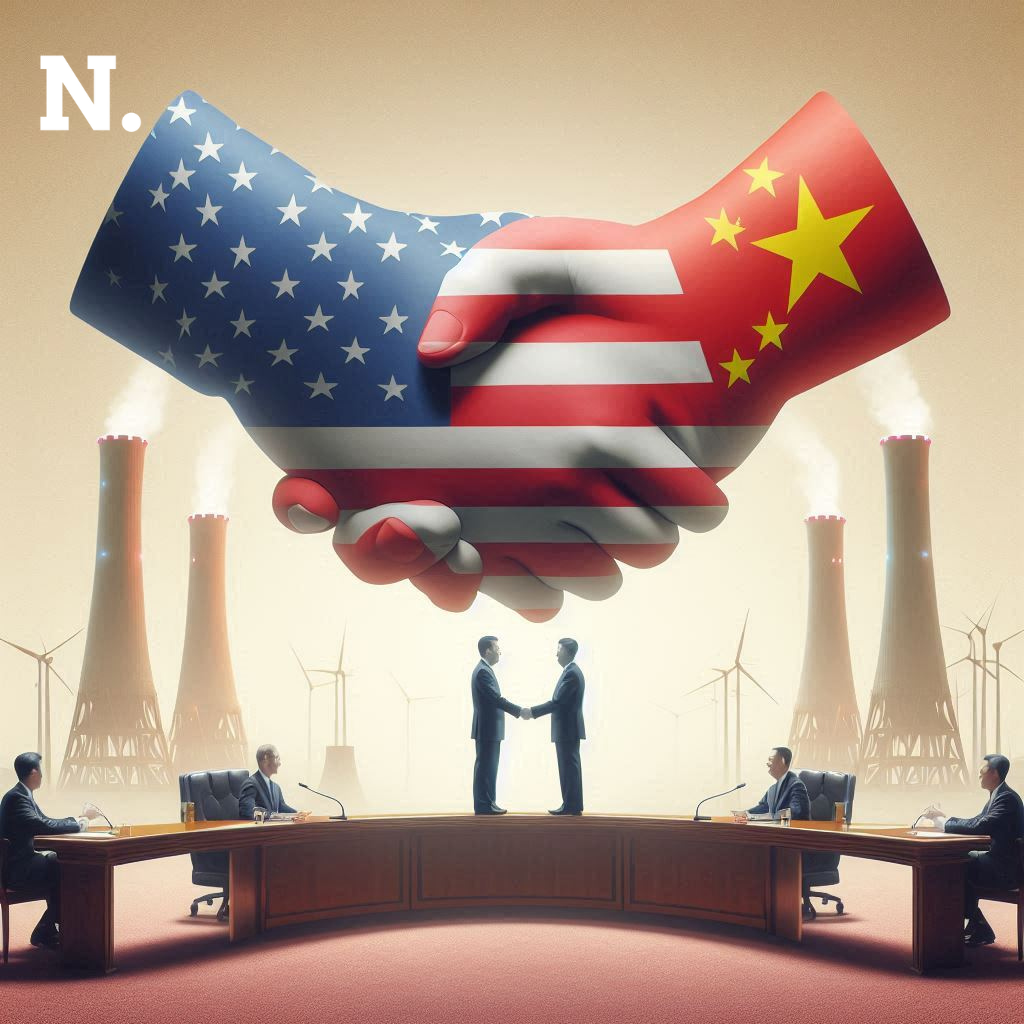

The United States and China held their first informal nuclear talks Saturday, after a five-year pause. The discussions mark a very important move toward the plight of global nuclear arms control and strategic stability amidst escalating geopolitical tensions and technological developments.
The zealous talks were held in Geneva, Switzerland, and characterised as constructive, focusing mainly on nuclear arms control measures, risk reduction strategies, and areas of mutual concern. This, if anything, is the most critical moment for such diplomatic re-engagement: both nations currently possess huge atomic arsenals and are of pivotal nature in global security dynamics.
Nuclear Diplomacy Resumes Amidst Global Concerns
The US-China talks represent a resumption after a long period of estrangement between the two countries over nuclear issues. Previously, formal discussions between the two nuclear powers had frozen in 2017 amidst growing bilateral tensions that span across issues involving trade, security, and human rights.
Well, having emerged off the shelves as the second world economy and a nuclear power, China has been gradually increasing its nuclear force in the last couple of years. These modernization efforts include efforts to develop advanced missile technologies to increase its arsenal, which raises concern among global observers over the risks leading to an arms race.
Meanwhile, the United States has remained the nuclear power of the globe, engaged in various efforts toward strategic stability and arms control agreements all over the globe. The Biden administration drove home the point that there is a need for open dialogue with China on the management of nuclear risks and escalation concentrating on transparency and strategic cooperation.
Nuclear Risk Reduction and Strategic Stability Talks
The two sides touched upon all those critical issues during the informal talks for a reduction of nuclear risks and an enhancement in strategic stability, such as transparency and confidence-building measures. The two countries put efforts into finding ways for increasing transparency within their arsenals and activities, which is very necessary for developing understandings in lowering misperceptions and risks associated with miscalculations.
Strategic Intentions: The two sides exchanged views on each other’s strategic intentions and nuclear policies. This had eminent usefulness in fostering better understanding of mutual concerns and priorities.
Emerging Technologies: Taking note of the ultrarapid development in technology, particularly about hypersonic missiles and space-based, the dialogue placed emphasis on the implication of such advances on strategic stability and arms control efforts.
Regional Security Dynamics: Indeed, it held regional security dynamics, including nuclear capabilities’ implication for regional stability, in particular, over the Asia-Pacific.
Global Response to U.S.-China Nuclear Talks
The resumption of U.S.-China nuclear talks thus holds immense implications for global security and arms control efforts. Indeed, international development has been closely watched by all, and many have welcomed it as a step toward the reduction of nuclear risks and prevention of a new arms race.
Countries like Russia, which played a very significant role in negotiations related to arms control in the past, have also come forward to appreciate these talks and show cautious optimism. The European Union and others reiterated the fact that multilateral efforts were required by all in order to ensure global stability against increasing geopolitical tensions.
Challenges in U.S.-China Arms Control Efforts
Even with the good vibes brought on by the talks, huge hurdles still continue to stand in the way if one is going to make substantive progress in nuclear arms control. Massive differences between strategic priorities, technology development, and a growing tangle of broader geopolitical competition in which the U.S. and China find themselves are major obstacles toward the quest for comprehensive agreements.
Moreover, the domestic political dynamics of each country will further affect where further negotiations will go from here. From the US side, congressional approval and scrutiny by a watching public will be key, while from the Chinese side, leadership transitions and domestic priorities will decide how Beijing is to deal with nuclear diplomacy.
Formal and informal dialogues between the United States and China regarding nuclear issues will likely continue well into the future. Mutual trust, transparency, and openness for finding common interests create an atmosphere that helps push meaningful arms control measures through to fruition, significantly improving global security.
Implications of U.S.-China Talks for Global Security
The United States and China are resuming informal nuclear talks, a significant diplomatic achievement amid complex geopolitical realities. With both countries in possession of powerful nuclear capabilities and influencing global security dynamics,
Dialogue between the two countries can shape the future of arms control and strategic stability.
Numerous challenges are present, but all parties are willing to engage in constructive dialogue, underlining our shared recognition of the need for nuclear risk management and the prevention of escalation. The steps that the U.S. and China will take in these matters the international community will continue to watch anxiously, in hope for outcomes ensuring a safer and more stable world order.