

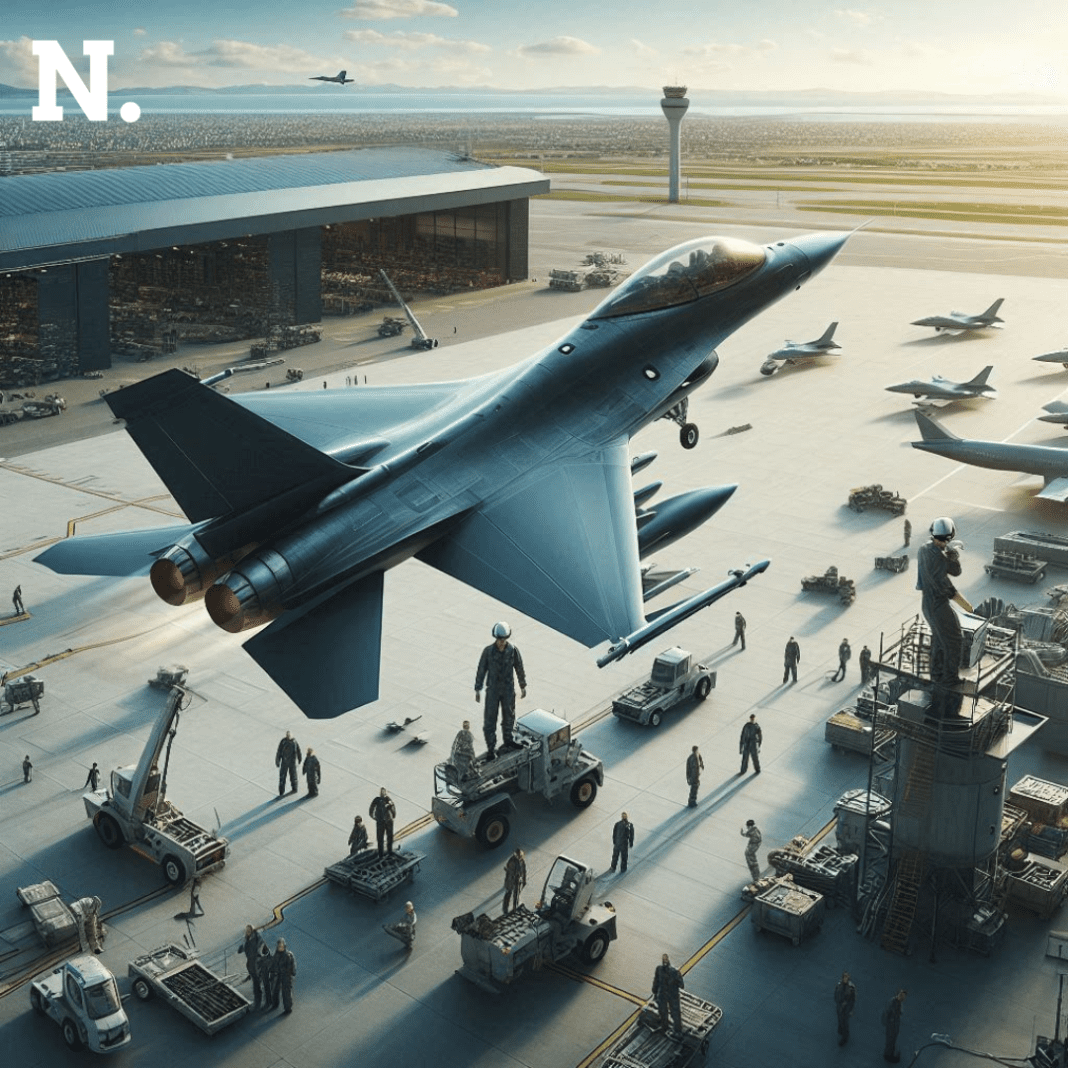
Ukraine Claims Successful Strike on Russian Su-57 Stealth Fighter

In a significant development, Ukraine said it has successfully targeted one of Russia’s most advanced warplanes, a Su-57, based in an airbase located nearly 600 kilometers (370 miles) from the frontline. The Su-57 is supposedly worth £28 million. If confirmed, this would make it Ukraine’s first successful strike on an Su-57, Russia’s twin-engine stealth fighter. The Southern Operational Command of Ukraine stated that Russia had only six units of Su-57 in operation. And therefore, the impact on the strike is particularly strong.

The attack, in which drones are believed to be used, comes after Ukraine’s Western allies gave Kyiv the go-ahead to use their equipment for limited strikes on Russia. This is a further escalation in the course of the war. And also marks new dynamics of Ukraine’s ever-increasing ability and further Western military support.

Western Support Amplifies Ukraine Offensive Capabilities

Ukraine’s chief intelligence agency shared the satellite images of what it said was the aftermath at the Akhtubinsk airbase in southern Russia. The images depict what is purportedly the result of a drone strike: black soot spots and craters around grounded Su-57 aircraft. The before-and-after photos demonstrate the scale of the damage inflicted on one of Moscow’s prized warplanes. Russia has not yet commented on the claims made by Ukraine through the weekend.

The incident is a reflection of the changing dynamics of the conflict, with regard to Western support. U.S. President Joe Biden underscored the broader threat from Russian President Vladimir Putin and assured support for Europe against the machinations of Russia. During a meeting in Paris with French President Emmanuel Macron. Biden stated that the Western world is working to support Ukraine and implement measures to ensure a safe European environment.

Ukraine  aerial capability: Military and Diplomatic Reactions

France has also said that it will transfer Mirage 2000 warplanes to Ukraine and train Ukrainian pilots, which will further boost Ukraine’s aerial capabilities. It is part of a broader Western push to build up the capacity of Ukraine. To defend against Russian military forces. Mr. Macron said France would also train a further 4,500 Ukrainian soldiers but gave no detail of where and in what timescale this training would be conducted.

On the Western powers allowing Ukraine to use its long-range missiles against Russia. The presidency has warned of likely retaliation in these lines from President Vladimir Putin.
Intense military insurgency activities and bombardment, especially in Kharkiv, stated to be a significant reason for heavy and large-scale evacuations of civilians.

Domestic and International Criticism of Russia

The attacks have also drawn criticism within Russia military bloggers, normally pro-Kremlin. Had excoriated the military command for failing to take needed measures to shelter advanced aircraft from such missile strikes. According to the Washington-based Institute for the Study of War (ISW). They slammed ‘the lack of hangars to shield the aircraft.’ They said ‘ that construction of hangars at every military airfield in Russia ‘would cost less than one Su-57.’

Wider Geopolitical Rationales

The strikes come amid broader geopolitics, with Russia deepening its relations with anti-West nations like North Korea and Iran. The reports have emerged that President Vladimir Putin is to visit North Korea and Vietnam. This is in context of the latest geopolitics where Russia is seeking such alliances in light of the sanctions imposed. By the West to support Ukraine.

The Western powers are looking to check the growing trade between China and Russia, both against which sanctions are imposed. The upcoming G-7 summit in Italy is to discuss the worsening issue here. And the leaders are planning to warn Chinese banks not to assist Russia in circumventing sanctions.

Conclusion

A very significant day for Ukraine, proud evidence of its military strides, bolstered by critical Western support. And the satisfaction of a strike on the Su-57—a feather in its cap. As this conflict continues to develop, the consequences of this strike will send ripples down the institutions. Changing dynamics from within the military to the very fabric of diplomacy, affecting the course of the war and international relations.

It remains quite fluid, with battles in motion and geopolitical maneuvers determining what shape the future of this conflict will finally take. The world watches in suspense as Ukraine, with these new capabilities against Russian military dominance, continues to leverage Western support.


Vedangi Verma
Vedangi Verma
Vedangi Verma is working as an journalism intern in 'newsinterpretation'. She has published articles that cover topics like military and security, national and international politics, cybersecurity, ecological conditions of the said area and so on.

TOP 10 TRENDING ON NEWSINTERPRETATION

Cyber Attacks on Space Infrastructure: Satellites, GPS and the Ground Systems Behind Them

From the Viasat KA-SAT hack to GPS jamming over the Baltic, a research guide to how attackers target satellites, navigation signals and ground stations, and why it matters on Earth.

How AI Agents Are Used in Cyber Attacks: From Assisted Hacking to AI-Orchestrated Espionage

Attackers now use AI agents to scan networks, write exploits and run extortion campaigns. A research guide to documented cases, including the first reported AI-orchestrated espionage campaign, and what defenders should do.

Cyber Attacks on AI and LLMs: How Attackers Target Large Language Models

Prompt injection, data poisoning, model theft and jailbreaks: a research guide to how attackers target AI systems and large language models, with real cases and defences.

French Supermarket Refrigeration Cyberattack: How Hacking the Cold Chain Can Endanger Lives

In October 2026 attackers heated refrigeration cabinets in hundreds of French supermarkets to as much as 50°C. No one was hurt, but the attack shows how hacking the cold chain can endanger lives through fire, food poisoning and spoiled medicines.

Cyberattacks on Nuclear Facilities: Stuxnet, Kudankulam and the Limits of Air Gaps

Stuxnet, the Davis-Besse worm and malware at India’s Kudankulam plant: what they show about cyber risk at nuclear facilities and the limits of air gaps.

Triton: When Hackers Target the Safety Systems That Prevent Industrial Disasters

The 2017 Triton attack targeted the safety systems that prevent industrial disasters. What happened, who was charged, and how plants protect their last line of defence.

Cybersecurity Risks in Smart Cities: When Connected Infrastructure Fails

How connecting traffic control, emergency alerts and utilities concentrates cyber risk in cities, what the Dallas and Atlanta incidents showed, and what governments recommend.

Weaponized Drones: Hijacking, GPS Spoofing and Emerging Cyber Warfare Risks

How drones can be hijacked, jammed or misled by GPS spoofing, what researchers have demonstrated, and why governments treat drone fleets as a security risk.

Ransomware Attacks on Hospitals: How Healthcare Cyberattacks Put Patients at Risk

How ransomware against hospitals and their suppliers delays care and endangers patients, what the Düsseldorf and WannaCry cases show, and what research says about deaths.

Operational blunder exposes massive Russian cyber espionage attack on Ukrainian prosecutors

A major cyberattack has compromised the email accounts of...

Cyber Attacks on Space Infrastructure: Satellites, GPS and the Ground Systems Behind Them

From the Viasat KA-SAT hack to GPS jamming over the Baltic, a research guide to how attackers target satellites, navigation signals and ground stations, and why it matters on Earth.

French Supermarket Refrigeration Cyberattack: How Hacking the Cold Chain Can Endanger Lives

In October 2026 attackers heated refrigeration cabinets in hundreds of French supermarkets to as much as 50°C. No one was hurt, but the attack shows how hacking the cold chain can endanger lives through fire, food poisoning and spoiled medicines.

Cyberattacks on Nuclear Facilities: Stuxnet, Kudankulam and the Limits of Air Gaps

Stuxnet, the Davis-Besse worm and malware at India’s Kudankulam plant: what they show about cyber risk at nuclear facilities and the limits of air gaps.

Triton: When Hackers Target the Safety Systems That Prevent Industrial Disasters

The 2017 Triton attack targeted the safety systems that prevent industrial disasters. What happened, who was charged, and how plants protect their last line of defence.

Cybersecurity Risks in Smart Cities: When Connected Infrastructure Fails

How connecting traffic control, emergency alerts and utilities concentrates cyber risk in cities, what the Dallas and Atlanta incidents showed, and what governments recommend.

Ransomware Attacks on Hospitals: How Healthcare Cyberattacks Put Patients at Risk

How ransomware against hospitals and their suppliers delays care and endangers patients, what the Düsseldorf and WannaCry cases show, and what research says about deaths.

FBI warns of AVrecon malware targeting outdated routers linked to proxy based cybercrime

A serious cybersecurity warning has been issued regarding commonly...

Related Articles

Popular Categories
