

U.S. and Mexican Troops Conduct Joint Disaster-Response Training in Juarez

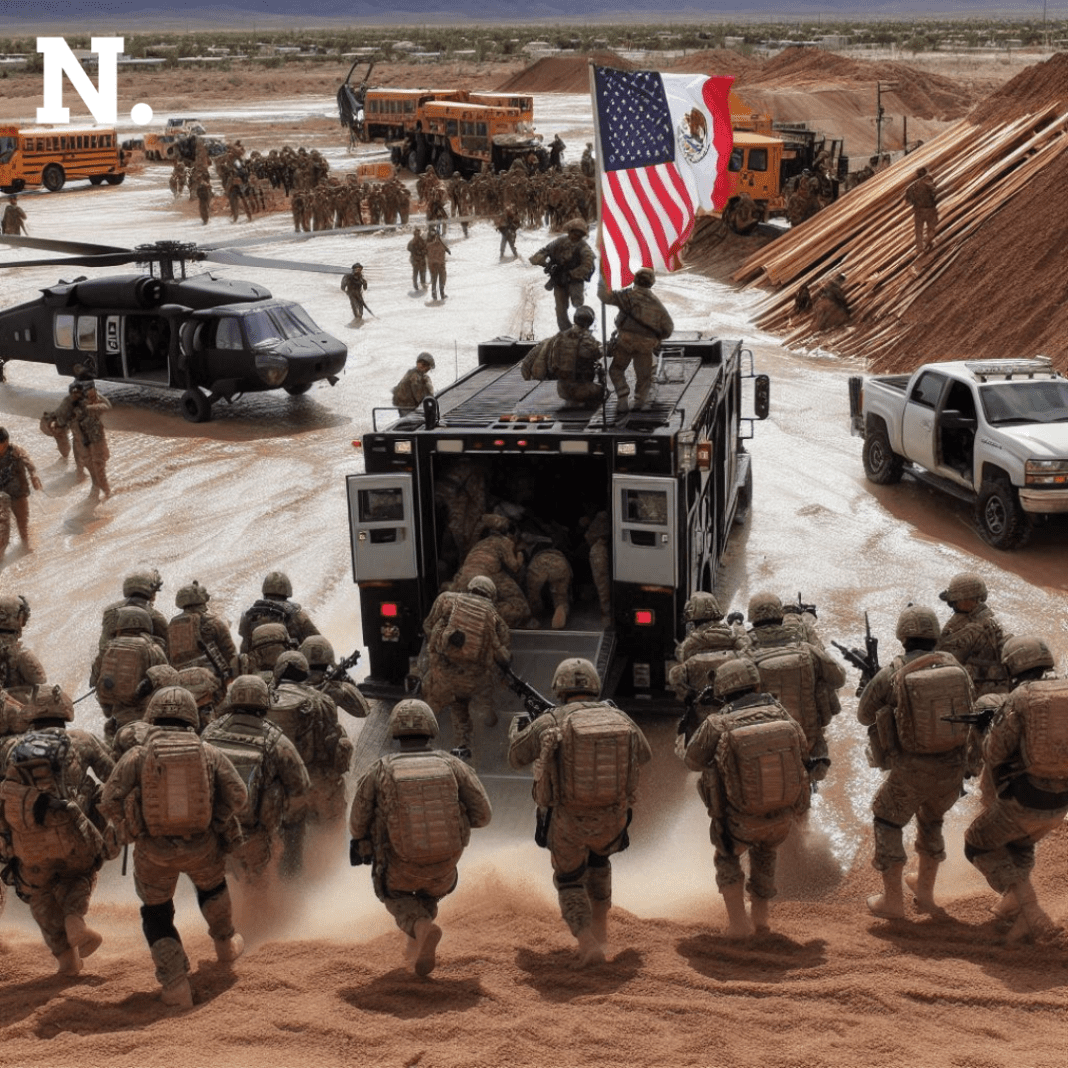
The U.S. and Mexican militaries resumed joint disaster-response training. Simulating a train derailment with a chemical spill Thursday in Downtown Juarez. The exercise aimed at moving forward collaborative emergency response capabilities between the two nations.

Prepared for Disaster: U.S. and Mexican Military Teams

The training exercise played out with soldiers administering care to people lying on the ground. Sitting or standing, pretending to be casualties of the simulated disaster. Heavy smoke billowed alongside parked tank cars on a rail line that passes through the heart of this city. And extends even to a railroad bridge into El Paso, Texas. Thirty passers were incapacitated or killed by noxious fumes from a chemical fire. That overwhelmed first responders and Juarez Red Cross paramedics, according to Mexican Army Maj. Jose Luis Cora Torres.

“We moved in to assume control. We assessed that the fire was quite big, so we requested air support,” Cora explained.

The Fuerzas Amigas 2024 training program demonstrates the collaboration between U.S. and Mexican militaries in handling mass-casualty events. That could overwhelm civil authorities on both sides of the border. The scenario underlined that in case of such an event, resources from both countries. Would be orchestrated to assist in relief efforts. If this were to happen on the U.S. side, Mexican troops would also stand at the ready.

Fuerzas Amigas : Troops Unite in Disaster Preparedness

Fuerzas Amigas 2024 promo A weeklong exercise to prepare for those catastrophic events that would impact border communities. For the first time, the exercises are outside a military base. In full view of civilians, and in locations where the actual mass-casualty events might happen. Other exercises included simulating a stadium collapse following an earthquake and medical evacuations using transport helicopters.

In this exercise, we simulated a chemical fire situation. The fumes from the fire are highly dangerous. And we had to handle the situation carefully due to its time-sensitivity. The simulation provided very valuable experience. For both U.S. and Mexican troops in handling complex disaster scenarios in an urban environment.

The joint training is part of a continuous exercise that builds up disaster-response coordination between the two nations. A detachment of Mexican soldiers attended similar training at Camp Pendleton, California, in 2022. In 2022, American troops crossed the border for exercises in Reynosa, Mexico. Both nations will ensure they are prepared to respond to emergencies affecting the border. Region through their cooperative efforts.

He said every resource should be employed in such a situation. “Population centers on either side of the U.S.-Mexico border must utilize all available resources when faced with potential mass-casualty events,” said Cora.

Final Day of Joint Exercises

The integration of efforts by the U.S. and Mexico is crucial to have operations. In disaster responses done on time and effectively. Both forces would work together in supporting each other with their capabilities and assets. Conducted training exercises advance the trust, communication, and coordination of the two military forces that are essential in disaster response.

On Friday, the last day of Fuerzas Amigas 2024. We will exercise different trainings and evaluate how we can improve our responses to catastrophes. We will assess the effectiveness of our strategies and identify areas for further development.

The joint disaster-response exercise held at Juarez, Mexico. Was a huge step toward the enhanced preparedness of both U.S. and Mexican troops. Against all odds of disaster. Trainings such as these will prepare both nations for any disaster that may hit their respective countries. And threaten the safety and welfare of their citizens, if conducted in a real-life-like situation.

International Cooperation in Action

As the week-long training program comes to a close, lessons learned from Fuerzas Amigas 2024 will contribute to efforts underway. To beef up disaster-response capabilities along the U.S.-Mexico border. It is an evident cooperation in every exercise that manifests. The commitment it entails to securing both nations’ border communities.

These training exercises, conducted by combined U.S. and Mexican troops. Underscore further the instance of international cooperation. To address their response to disasters. Both nations can respond to and reduce the impacts of such coming disasters through continued collaboration to save lives of their citizens. And maintain the stability of the border region.


Vedangi Verma
Vedangi Verma
Vedangi Verma is working as an journalism intern in 'newsinterpretation'. She has published articles that cover topics like military and security, national and international politics, cybersecurity, ecological conditions of the said area and so on.

TOP 10 TRENDING ON NEWSINTERPRETATION

Cyber Attacks on Space Infrastructure: Satellites, GPS and the Ground Systems Behind Them

From the Viasat KA-SAT hack to GPS jamming over the Baltic, a research guide to how attackers target satellites, navigation signals and ground stations, and why it matters on Earth.

How AI Agents Are Used in Cyber Attacks: From Assisted Hacking to AI-Orchestrated Espionage

Attackers now use AI agents to scan networks, write exploits and run extortion campaigns. A research guide to documented cases, including the first reported AI-orchestrated espionage campaign, and what defenders should do.

Cyber Attacks on AI and LLMs: How Attackers Target Large Language Models

Prompt injection, data poisoning, model theft and jailbreaks: a research guide to how attackers target AI systems and large language models, with real cases and defences.

French Supermarket Refrigeration Cyberattack: How Hacking the Cold Chain Can Endanger Lives

In October 2026 attackers heated refrigeration cabinets in hundreds of French supermarkets to as much as 50°C. No one was hurt, but the attack shows how hacking the cold chain can endanger lives through fire, food poisoning and spoiled medicines.

Cyberattacks on Nuclear Facilities: Stuxnet, Kudankulam and the Limits of Air Gaps

Stuxnet, the Davis-Besse worm and malware at India’s Kudankulam plant: what they show about cyber risk at nuclear facilities and the limits of air gaps.

Triton: When Hackers Target the Safety Systems That Prevent Industrial Disasters

The 2017 Triton attack targeted the safety systems that prevent industrial disasters. What happened, who was charged, and how plants protect their last line of defence.

Cybersecurity Risks in Smart Cities: When Connected Infrastructure Fails

How connecting traffic control, emergency alerts and utilities concentrates cyber risk in cities, what the Dallas and Atlanta incidents showed, and what governments recommend.

Weaponized Drones: Hijacking, GPS Spoofing and Emerging Cyber Warfare Risks

How drones can be hijacked, jammed or misled by GPS spoofing, what researchers have demonstrated, and why governments treat drone fleets as a security risk.

Ransomware Attacks on Hospitals: How Healthcare Cyberattacks Put Patients at Risk

How ransomware against hospitals and their suppliers delays care and endangers patients, what the Düsseldorf and WannaCry cases show, and what research says about deaths.

Operational blunder exposes massive Russian cyber espionage attack on Ukrainian prosecutors

A major cyberattack has compromised the email accounts of...

Cyber Attacks on Space Infrastructure: Satellites, GPS and the Ground Systems Behind Them

From the Viasat KA-SAT hack to GPS jamming over the Baltic, a research guide to how attackers target satellites, navigation signals and ground stations, and why it matters on Earth.

French Supermarket Refrigeration Cyberattack: How Hacking the Cold Chain Can Endanger Lives

In October 2026 attackers heated refrigeration cabinets in hundreds of French supermarkets to as much as 50°C. No one was hurt, but the attack shows how hacking the cold chain can endanger lives through fire, food poisoning and spoiled medicines.

Cyberattacks on Nuclear Facilities: Stuxnet, Kudankulam and the Limits of Air Gaps

Stuxnet, the Davis-Besse worm and malware at India’s Kudankulam plant: what they show about cyber risk at nuclear facilities and the limits of air gaps.

Triton: When Hackers Target the Safety Systems That Prevent Industrial Disasters

The 2017 Triton attack targeted the safety systems that prevent industrial disasters. What happened, who was charged, and how plants protect their last line of defence.

Cybersecurity Risks in Smart Cities: When Connected Infrastructure Fails

How connecting traffic control, emergency alerts and utilities concentrates cyber risk in cities, what the Dallas and Atlanta incidents showed, and what governments recommend.

Ransomware Attacks on Hospitals: How Healthcare Cyberattacks Put Patients at Risk

How ransomware against hospitals and their suppliers delays care and endangers patients, what the Düsseldorf and WannaCry cases show, and what research says about deaths.

FBI warns of AVrecon malware targeting outdated routers linked to proxy based cybercrime

A serious cybersecurity warning has been issued regarding commonly...

Related Articles

Popular Categories
