

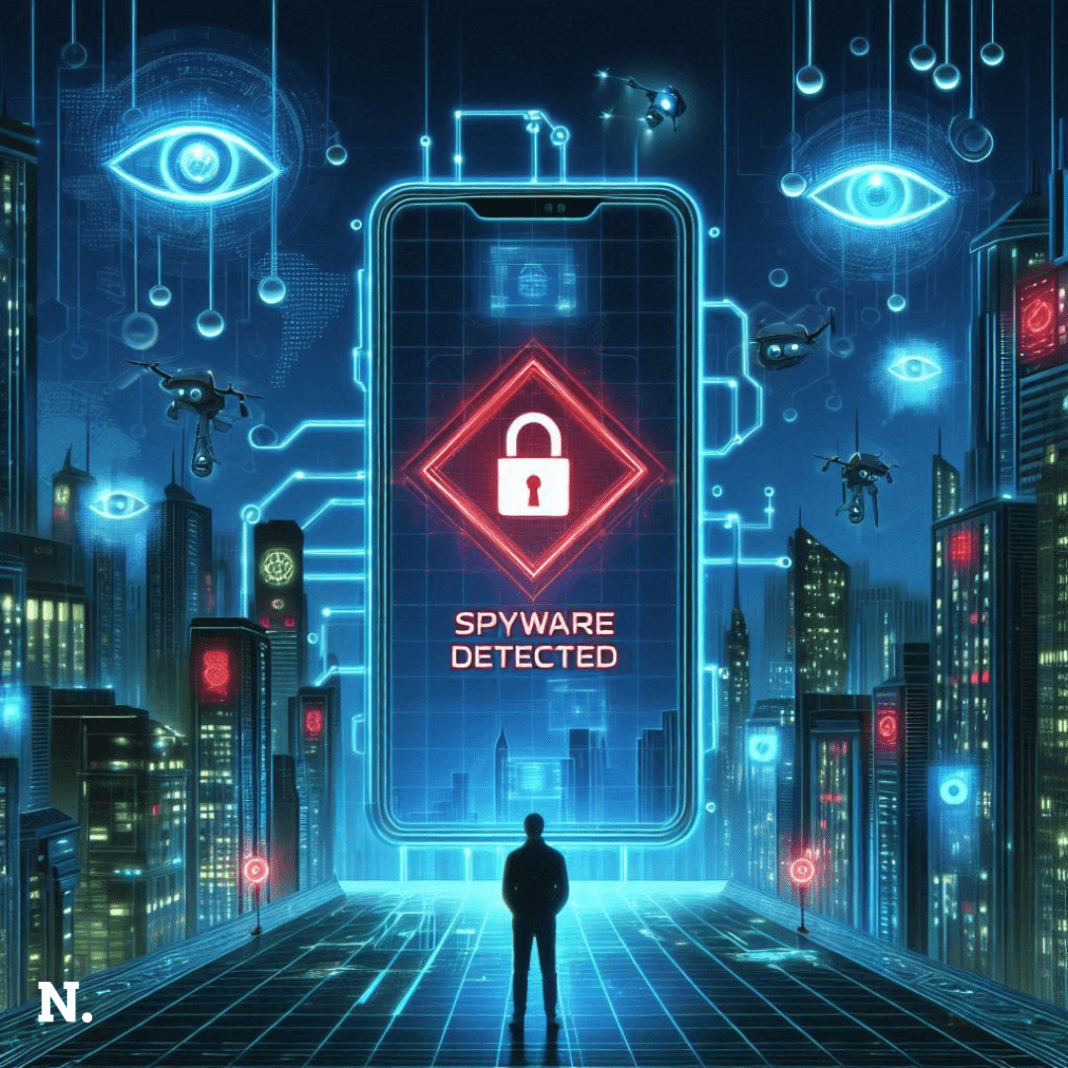
Western Allies Expose China-Linked Spyware Targeting Taiwan and Tibetan Activists

On April 8, six Western countries gave a strong warning about a growing cyber threat. These countries are the United States, United Kingdom, Canada, Australia, New Zealand, and Germany. Their intelligence agencies shared an alert together. They said a Chinese tech company is spreading harmful spyware.

This company is based in Chengdu, a city in China. It is believed to be working with China’s Ministry of Public Security. The spyware can spy on people without them knowing. The warning says this is a serious danger to privacy and safety.

The spyware is used to secretly watch people. It collects information without them knowing. It targets those who speak out against the Chinese government. This includes people who support Taiwan’s independence. It also targets those who fight for Tibetan and Uyghur rights. Members of the Falun Gong group are also at risk. Democracy activists, especially in Hong Kong, are being watched too.

The advisory says the threat is not limited to activists. The spyware spreads through apps and downloads. This means it can also infect the phones of journalists, business people, and charity workers. Even regular people who are not involved in politics could be at risk. Anyone could have their phone hacked without knowing.

Critical Vulnerabilities: The Dark Side of Pacemaker Technology

What the Spyware Can Do

This malicious software works by sneaking onto people’s phones through applications that seem safe but are actually dangerous. The spyware runs silently in the background after it installs itself, without alerting the user. It collects private data from the phone and can even give someone else control over the phone’s camera, microphone, and location services.

The advisory identifies two types of spyware. Experts call them BADBAZAAR and MOONSHINE. These programs steal personal information and give hackers remote access to the device. In simple terms, someone can use this software to spy on a person’s calls, location, and daily activities through their phone.

The company in Chengdu that made this spyware has done similar things before. Cybersecurity experts and reporters found proof of this in past cases. They say the company has worked with China’s security agency many times. The new warning adds to past reports. One report from January showed how this malware was used in older spying campaigns.

This isn’t a new type of threat, but what makes it more alarming now is the number of countries and agencies coming forward with a joint warning. It shows that there is a shared concern about the scale and seriousness of the spyware problem.

Cyber Attacks on Connected Cars

Who Is at Risk and Why It Matters

The spyware mainly targets people and groups who criticize the Chinese government or support freedom and human rights. These people use mobile phones to talk, plan events, and share important information. If hackers take control of their devices, they could put these people and others at risk.

But the spyware doesn’t stop at just those individuals. Because it can spread through links or downloads, anyone who accidentally interacts with the wrong app or website could become infected. This creates a much larger risk. People who work in sensitive fields like journalism, human rights, or international business may also unknowingly expose themselves or others.

The agencies involved are urging people to be extra careful about the apps they download and the links they click on. If spyware gets into a device, it can stay hidden and continue spying without being noticed. That’s what makes it so dangerous.
Renuka Bangale
Renuka Bangale
Renuka is a distinguished Chartered Accountant and a Certified Digital Threats Analyst from Riskpro, renowned for her expertise in cybersecurity. With a deep understanding of cybercrimes, malware, cyber warfare, and espionage, she has established herself as an authority in the field. Renuka combines her financial acumen with advanced knowledge of digital threats to provide unparalleled insights into the evolving landscape of information security. Her analytical prowess enables her to dissect complex cyber incidents, offering clarity on risks and mitigation strategies. As a key contributor to Newsinterpretation’s information security category, Renuka delivers authoritative articles that educate and inform readers about emerging threats and best practices.

TOP 10 TRENDING ON NEWSINTERPRETATION

Cyber Attacks on Space Infrastructure: Satellites, GPS and the Ground Systems Behind Them

From the Viasat KA-SAT hack to GPS jamming over the Baltic, a research guide to how attackers target satellites, navigation signals and ground stations, and why it matters on Earth.

How AI Agents Are Used in Cyber Attacks: From Assisted Hacking to AI-Orchestrated Espionage

Attackers now use AI agents to scan networks, write exploits and run extortion campaigns. A research guide to documented cases, including the first reported AI-orchestrated espionage campaign, and what defenders should do.

Cyber Attacks on AI and LLMs: How Attackers Target Large Language Models

Prompt injection, data poisoning, model theft and jailbreaks: a research guide to how attackers target AI systems and large language models, with real cases and defences.

French Supermarket Refrigeration Cyberattack: How Hacking the Cold Chain Can Endanger Lives

In October 2026 attackers heated refrigeration cabinets in hundreds of French supermarkets to as much as 50°C. No one was hurt, but the attack shows how hacking the cold chain can endanger lives through fire, food poisoning and spoiled medicines.

Cyberattacks on Nuclear Facilities: Stuxnet, Kudankulam and the Limits of Air Gaps

Stuxnet, the Davis-Besse worm and malware at India’s Kudankulam plant: what they show about cyber risk at nuclear facilities and the limits of air gaps.

Triton: When Hackers Target the Safety Systems That Prevent Industrial Disasters

The 2017 Triton attack targeted the safety systems that prevent industrial disasters. What happened, who was charged, and how plants protect their last line of defence.

Cybersecurity Risks in Smart Cities: When Connected Infrastructure Fails

How connecting traffic control, emergency alerts and utilities concentrates cyber risk in cities, what the Dallas and Atlanta incidents showed, and what governments recommend.

Weaponized Drones: Hijacking, GPS Spoofing and Emerging Cyber Warfare Risks

How drones can be hijacked, jammed or misled by GPS spoofing, what researchers have demonstrated, and why governments treat drone fleets as a security risk.

Ransomware Attacks on Hospitals: How Healthcare Cyberattacks Put Patients at Risk

How ransomware against hospitals and their suppliers delays care and endangers patients, what the Düsseldorf and WannaCry cases show, and what research says about deaths.

Operational blunder exposes massive Russian cyber espionage attack on Ukrainian prosecutors

A major cyberattack has compromised the email accounts of...

Cyber Attacks on Space Infrastructure: Satellites, GPS and the Ground Systems Behind Them

From the Viasat KA-SAT hack to GPS jamming over the Baltic, a research guide to how attackers target satellites, navigation signals and ground stations, and why it matters on Earth.

French Supermarket Refrigeration Cyberattack: How Hacking the Cold Chain Can Endanger Lives

In October 2026 attackers heated refrigeration cabinets in hundreds of French supermarkets to as much as 50°C. No one was hurt, but the attack shows how hacking the cold chain can endanger lives through fire, food poisoning and spoiled medicines.

Cyberattacks on Nuclear Facilities: Stuxnet, Kudankulam and the Limits of Air Gaps

Stuxnet, the Davis-Besse worm and malware at India’s Kudankulam plant: what they show about cyber risk at nuclear facilities and the limits of air gaps.

Triton: When Hackers Target the Safety Systems That Prevent Industrial Disasters

The 2017 Triton attack targeted the safety systems that prevent industrial disasters. What happened, who was charged, and how plants protect their last line of defence.

Cybersecurity Risks in Smart Cities: When Connected Infrastructure Fails

How connecting traffic control, emergency alerts and utilities concentrates cyber risk in cities, what the Dallas and Atlanta incidents showed, and what governments recommend.

Ransomware Attacks on Hospitals: How Healthcare Cyberattacks Put Patients at Risk

How ransomware against hospitals and their suppliers delays care and endangers patients, what the Düsseldorf and WannaCry cases show, and what research says about deaths.

FBI warns of AVrecon malware targeting outdated routers linked to proxy based cybercrime

A serious cybersecurity warning has been issued regarding commonly...

Related Articles

Popular Categories
