

🌐 Spy Games in The Hague? ICC Targeted Again as Cyber Intrusions Escalate

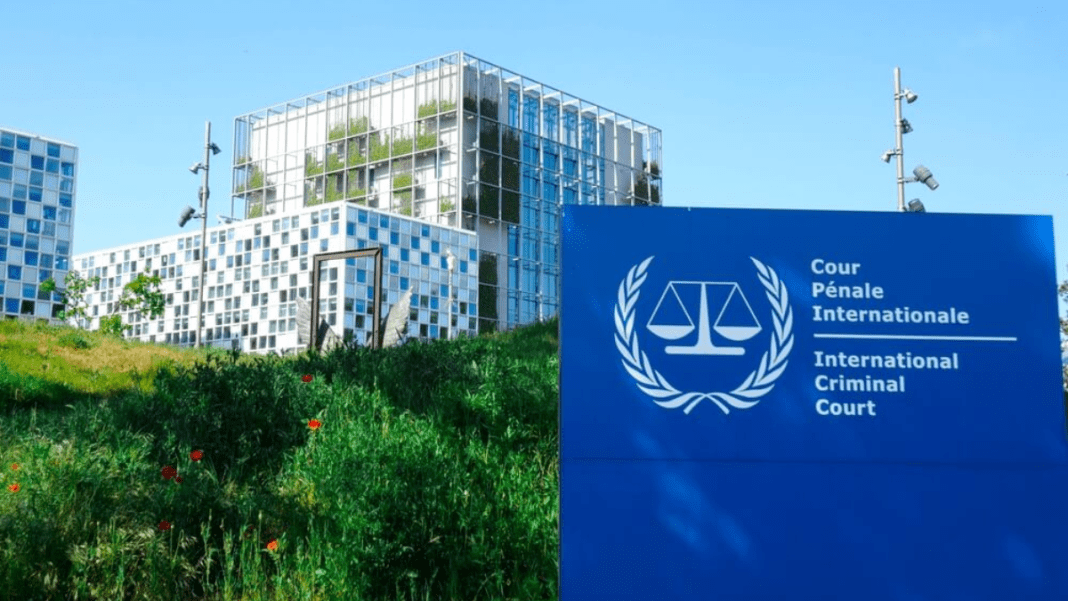
The International Criminal Court (ICC), which investigates serious global crimes, was recently hit by a powerful cyberattack. This happened during a major meeting of NATO leaders in The Hague last week. The ICC announced that it had been targeted by what it called a “sophisticated” cyberattack.

A Big Cyberattack at a Big Moment

Although the court did not say who might be behind the attack or what exactly was affected, it confirmed that the problem has been contained. That means the attack has stopped spreading, and the team is now working to understand how much damage was done.

The ICC also said it is checking everything in its systems to make sure no further harm can come from the incident. A full investigation is underway to figure out exactly what the hackers were after. However, the court did not say whether any secret or personal information was stolen.

This is not the first time the ICC has faced this kind of trouble. In 2023, the court was also attacked by hackers. That earlier cyberattack was so serious that the ICC still doesn’t have fully working wifi in parts of its own building. These repeated attacks are making it harder for the ICC to carry out its important work.

What Does the ICC Do?

The International Criminal Court is based in The Hague, Netherlands. Its job is to look into and bring justice to people responsible for the world’s most serious crimes including war crimes, genocide, and crimes against humanity.

Right now, the ICC is working on several important investigations in different parts of the world. One of its biggest cases involves accusations of war crimes related to the conflict in Ukraine. In this investigation, the court has already issued arrest warrants for some high-level people, accusing them of being responsible for the forced movement of children.

Iran’s Crypto Exchange “Nobitex” Struggles to Recover After being hacked by Pro-Israel hackers

The court is also looking into what is happening in Gaza. It has issued arrest warrants for senior figures involved in that conflict, saying they may be responsible for serious violations of international law.

Because of its work, the ICC often finds itself in the middle of global political tension. Some governments strongly disagree with the court’s decisions and actions. This has made the ICC a target—not just of criticism, but of cyberattacks and even attempts to spy on it.

Tensions Around the ICC Are Growing

This recent cyberattack came at a very sensitive time—right during the NATO leaders’ summit. That’s a time when global security is already a top concern. The timing raises questions about whether the attack was an attempt to disrupt the ICC’s work or to send a political message. However, the court has not made any claims about who might be responsible.

Just a few years ago, a spy using a fake Brazilian identity tried to enter the ICC as an intern. That person was later revealed to be working for another country and was stopped by Dutch intelligence before gaining access to the court’s systems. This shows how much effort some actors are willing to put into getting inside the ICC.

“Gemini AI Is Watching—Even When You Say No”: Google Update Sparks Privacy Panic

Recently, the court and its staff have also been facing pressure in other ways. A few months ago, sanctions were placed on top officials at the ICC, including judges and prosecutors. These sanctions came from countries unhappy with the court’s investigations.

The ICC is not saying much about what kind of information the hackers were looking for in this latest attack. But with so many active cases and sensitive files, even the possibility of a breach is worrying. For now, the court says it is taking strong action to protect its systems and limit the damage.

Despite the challenges, the ICC continues its work. But this latest cyberattack highlights how vulnerable even the world’s top legal institutions can be in a time when digital threats are becoming more common and more dangerous.


Renuka Bangale
Renuka Bangale
Renuka is a distinguished Chartered Accountant and a Certified Digital Threats Analyst from Riskpro, renowned for her expertise in cybersecurity. With a deep understanding of cybercrimes, malware, cyber warfare, and espionage, she has established herself as an authority in the field. Renuka combines her financial acumen with advanced knowledge of digital threats to provide unparalleled insights into the evolving landscape of information security. Her analytical prowess enables her to dissect complex cyber incidents, offering clarity on risks and mitigation strategies. As a key contributor to Newsinterpretation’s information security category, Renuka delivers authoritative articles that educate and inform readers about emerging threats and best practices.

TOP 10 TRENDING ON NEWSINTERPRETATION

Cyber Attacks on Space Infrastructure: Satellites, GPS and the Ground Systems Behind Them

From the Viasat KA-SAT hack to GPS jamming over the Baltic, a research guide to how attackers target satellites, navigation signals and ground stations, and why it matters on Earth.

How AI Agents Are Used in Cyber Attacks: From Assisted Hacking to AI-Orchestrated Espionage

Attackers now use AI agents to scan networks, write exploits and run extortion campaigns. A research guide to documented cases, including the first reported AI-orchestrated espionage campaign, and what defenders should do.

Cyber Attacks on AI and LLMs: How Attackers Target Large Language Models

Prompt injection, data poisoning, model theft and jailbreaks: a research guide to how attackers target AI systems and large language models, with real cases and defences.

French Supermarket Refrigeration Cyberattack: How Hacking the Cold Chain Can Endanger Lives

In October 2026 attackers heated refrigeration cabinets in hundreds of French supermarkets to as much as 50°C. No one was hurt, but the attack shows how hacking the cold chain can endanger lives through fire, food poisoning and spoiled medicines.

Cyberattacks on Nuclear Facilities: Stuxnet, Kudankulam and the Limits of Air Gaps

Stuxnet, the Davis-Besse worm and malware at India’s Kudankulam plant: what they show about cyber risk at nuclear facilities and the limits of air gaps.

Triton: When Hackers Target the Safety Systems That Prevent Industrial Disasters

The 2017 Triton attack targeted the safety systems that prevent industrial disasters. What happened, who was charged, and how plants protect their last line of defence.

Cybersecurity Risks in Smart Cities: When Connected Infrastructure Fails

How connecting traffic control, emergency alerts and utilities concentrates cyber risk in cities, what the Dallas and Atlanta incidents showed, and what governments recommend.

Weaponized Drones: Hijacking, GPS Spoofing and Emerging Cyber Warfare Risks

How drones can be hijacked, jammed or misled by GPS spoofing, what researchers have demonstrated, and why governments treat drone fleets as a security risk.

Ransomware Attacks on Hospitals: How Healthcare Cyberattacks Put Patients at Risk

How ransomware against hospitals and their suppliers delays care and endangers patients, what the Düsseldorf and WannaCry cases show, and what research says about deaths.

Operational blunder exposes massive Russian cyber espionage attack on Ukrainian prosecutors

A major cyberattack has compromised the email accounts of...

Cyber Attacks on Space Infrastructure: Satellites, GPS and the Ground Systems Behind Them

From the Viasat KA-SAT hack to GPS jamming over the Baltic, a research guide to how attackers target satellites, navigation signals and ground stations, and why it matters on Earth.

French Supermarket Refrigeration Cyberattack: How Hacking the Cold Chain Can Endanger Lives

In October 2026 attackers heated refrigeration cabinets in hundreds of French supermarkets to as much as 50°C. No one was hurt, but the attack shows how hacking the cold chain can endanger lives through fire, food poisoning and spoiled medicines.

Cyberattacks on Nuclear Facilities: Stuxnet, Kudankulam and the Limits of Air Gaps

Stuxnet, the Davis-Besse worm and malware at India’s Kudankulam plant: what they show about cyber risk at nuclear facilities and the limits of air gaps.

Triton: When Hackers Target the Safety Systems That Prevent Industrial Disasters

The 2017 Triton attack targeted the safety systems that prevent industrial disasters. What happened, who was charged, and how plants protect their last line of defence.

Cybersecurity Risks in Smart Cities: When Connected Infrastructure Fails

How connecting traffic control, emergency alerts and utilities concentrates cyber risk in cities, what the Dallas and Atlanta incidents showed, and what governments recommend.

Ransomware Attacks on Hospitals: How Healthcare Cyberattacks Put Patients at Risk

How ransomware against hospitals and their suppliers delays care and endangers patients, what the Düsseldorf and WannaCry cases show, and what research says about deaths.

FBI warns of AVrecon malware targeting outdated routers linked to proxy based cybercrime

A serious cybersecurity warning has been issued regarding commonly...

Related Articles

Popular Categories