

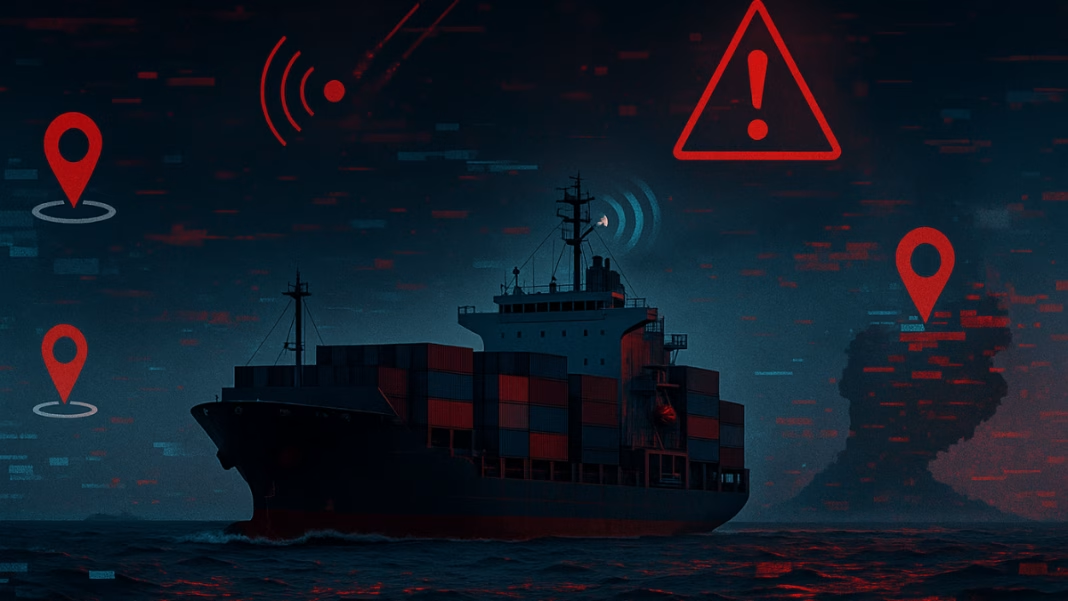
📡 GPS Terror at Sea—Houthi Rebels Launch Radio Signal Attacks, Ships Drift Blind in Red Sea

Ships sailing near the Red Sea are facing a new kind of danger. It’s not from storms or pirates—but from the invisible world of radio signals. Known as radio frequency (RF) cyber-attacks, these incidents are now happening more often.

Many of these attacks are being blamed on the Houthi rebels operating near Yemen. They are reportedly using signal-jamming and GPS spoofing to confuse ships. This means that ships can suddenly appear to be moving at super-fast speeds or even show up on land instead of at sea. Some vessels have even been seen circling certain spots repeatedly—usually close to areas where armed groups are active.

This type of attack is more than just confusing—it’s dangerous. It takes away a ship’s ability to know where it is, how fast it’s going, or even how to send out emergency distress messages. This leaves ship crews feeling helpless, and it puts both cargo and lives at risk.

Distress Signals and Navigation Systems Getting Hit

The systems that help ships send distress alerts—known as GMDSS (Global Maritime Distress and Safety System)—are also being affected. Without these systems working correctly, a ship in trouble might not be able to call for help.

💻 Digital Espionage Crisis—China-Linked Hackers Slip Past Microsoft Defenses, Steal Encryption Keys

Marlink, a company that provides ship communication services, says the number of ships reporting problems has skyrocketed. In the past, they might get one or two calls every two weeks. But now, they are hearing from more than 150 vessels in just one day.

Satellite signals that ships depend on are part of the problem. These signals come from very far away—so far that by the time they reach a ship, they are already weak. This makes them easy targets for people trying to block or fake them.

Even new satellites, like those from Starlink and Inmarsat, rely on GPS to work properly. If that GPS data is wrong, the entire system can become unreliable.

How Ships Are Trying to Stay Safe

Modern ships often use several systems to track their location. They switch between GPS, Glonass, Galileo, and Beidou satellites. But during an attack, even these systems can get confused. One solution is to double-check data from one satellite system with another, to spot anything unusual.

Marlink advises against shutting down all systems during an attack. That might seem like a smart move, but it doesn’t help much. If a fake GPS signal is already being used, turning everything off won’t fix the issue. In fact, the fake signal usually comes from an area where real satellite signals can’t reach, making it even harder to recover.

Satellite antennas on ships always try to connect with the strongest signal nearby. When that strong signal is coming from land instead of space, it can trick the ship into broadcasting the wrong position.

👀 Kremlin espionage reaches Latin America: 21-year-old Russian hacker arrested in Colombia over drone sabotage plot

To fight back, Marlink is working on new technology that can tell whether a signal comes from the sky or from the ground. This helps ship crews and operators decide which signals to trust.

By carefully watching ship locations and tracking strange behavior—like ships moving too fast or appearing inland—engineers can block fake signals and make sure only essential satellite connections are used.


Mohit Kumbhar
Mohit Kumbharhttps://www.linkedin.com/in/mohitkumar99/
Mohit Kumbhar is the editor of Newsinterpretation. He edits the site’s news coverage and writes on artificial intelligence, AI search and how publishers become visible to AI assistants such as ChatGPT, Claude, Gemini and Perplexity. He also writes about NI Geovanta, the AI visibility tool for WordPress developed by Newsinterpretation.

TOP 10 TRENDING ON NEWSINTERPRETATION

Cyber Attacks on Space Infrastructure: Satellites, GPS and the Ground Systems Behind Them

From the Viasat KA-SAT hack to GPS jamming over the Baltic, a research guide to how attackers target satellites, navigation signals and ground stations, and why it matters on Earth.

How AI Agents Are Used in Cyber Attacks: From Assisted Hacking to AI-Orchestrated Espionage

Attackers now use AI agents to scan networks, write exploits and run extortion campaigns. A research guide to documented cases, including the first reported AI-orchestrated espionage campaign, and what defenders should do.

Cyber Attacks on AI and LLMs: How Attackers Target Large Language Models

Prompt injection, data poisoning, model theft and jailbreaks: a research guide to how attackers target AI systems and large language models, with real cases and defences.

French Supermarket Refrigeration Cyberattack: How Hacking the Cold Chain Can Endanger Lives

In October 2026 attackers heated refrigeration cabinets in hundreds of French supermarkets to as much as 50°C. No one was hurt, but the attack shows how hacking the cold chain can endanger lives through fire, food poisoning and spoiled medicines.

Cyberattacks on Nuclear Facilities: Stuxnet, Kudankulam and the Limits of Air Gaps

Stuxnet, the Davis-Besse worm and malware at India’s Kudankulam plant: what they show about cyber risk at nuclear facilities and the limits of air gaps.

Triton: When Hackers Target the Safety Systems That Prevent Industrial Disasters

The 2017 Triton attack targeted the safety systems that prevent industrial disasters. What happened, who was charged, and how plants protect their last line of defence.

Cybersecurity Risks in Smart Cities: When Connected Infrastructure Fails

How connecting traffic control, emergency alerts and utilities concentrates cyber risk in cities, what the Dallas and Atlanta incidents showed, and what governments recommend.

Weaponized Drones: Hijacking, GPS Spoofing and Emerging Cyber Warfare Risks

How drones can be hijacked, jammed or misled by GPS spoofing, what researchers have demonstrated, and why governments treat drone fleets as a security risk.

Ransomware Attacks on Hospitals: How Healthcare Cyberattacks Put Patients at Risk

How ransomware against hospitals and their suppliers delays care and endangers patients, what the Düsseldorf and WannaCry cases show, and what research says about deaths.

Operational blunder exposes massive Russian cyber espionage attack on Ukrainian prosecutors

A major cyberattack has compromised the email accounts of...

Cyber Attacks on Space Infrastructure: Satellites, GPS and the Ground Systems Behind Them

From the Viasat KA-SAT hack to GPS jamming over the Baltic, a research guide to how attackers target satellites, navigation signals and ground stations, and why it matters on Earth.

French Supermarket Refrigeration Cyberattack: How Hacking the Cold Chain Can Endanger Lives

In October 2026 attackers heated refrigeration cabinets in hundreds of French supermarkets to as much as 50°C. No one was hurt, but the attack shows how hacking the cold chain can endanger lives through fire, food poisoning and spoiled medicines.

Cyberattacks on Nuclear Facilities: Stuxnet, Kudankulam and the Limits of Air Gaps

Stuxnet, the Davis-Besse worm and malware at India’s Kudankulam plant: what they show about cyber risk at nuclear facilities and the limits of air gaps.

Triton: When Hackers Target the Safety Systems That Prevent Industrial Disasters

The 2017 Triton attack targeted the safety systems that prevent industrial disasters. What happened, who was charged, and how plants protect their last line of defence.

Cybersecurity Risks in Smart Cities: When Connected Infrastructure Fails

How connecting traffic control, emergency alerts and utilities concentrates cyber risk in cities, what the Dallas and Atlanta incidents showed, and what governments recommend.

Ransomware Attacks on Hospitals: How Healthcare Cyberattacks Put Patients at Risk

How ransomware against hospitals and their suppliers delays care and endangers patients, what the Düsseldorf and WannaCry cases show, and what research says about deaths.

FBI warns of AVrecon malware targeting outdated routers linked to proxy based cybercrime

A serious cybersecurity warning has been issued regarding commonly...

Related Articles

Popular Categories
