

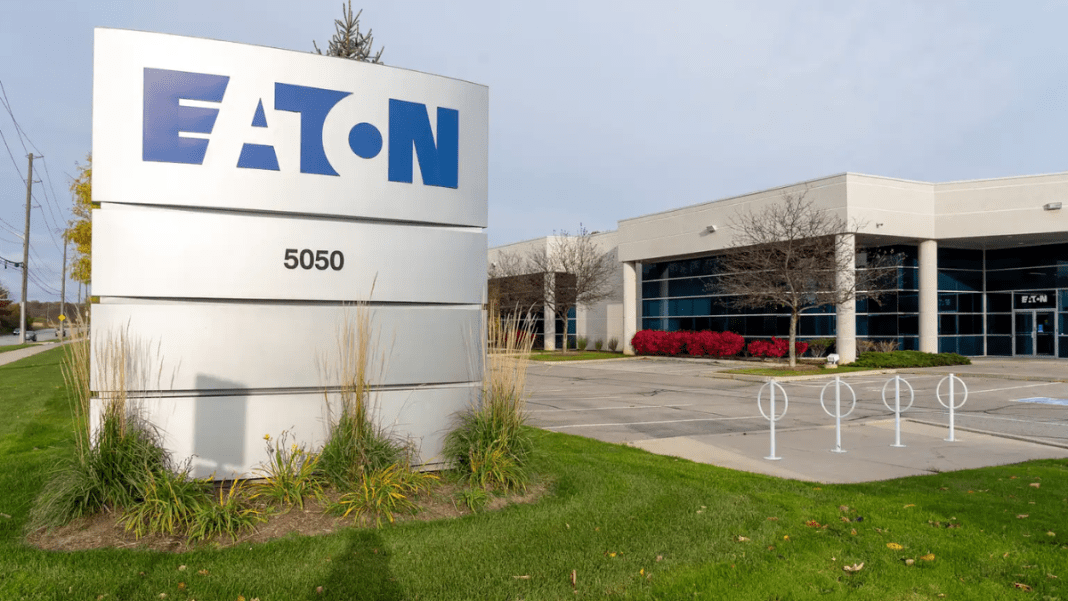
Insider revenge cyberattack freezes 1,000 workers — Eaton hit with massive disruption and losses

A case of insider sabotage has ended with a former software developer being sentenced to four years in prison. The developer, once trusted with key responsibilities inside Eaton Corp., secretly planted malicious code that disrupted the company’s global computer systems.

How the sabotage unfolded

The story began after the developer faced a demotion in 2018. Once a senior figure in the team, his role was reduced during a company restructuring. Investigators later found that this change in position became the turning point.

Instead of moving on, he began planting harmful code inside Eaton’s systems. This was not a single act but a series of steps planned over months. The code worked like a hidden time bomb. It was designed to remain silent until a specific event occurred. That event was tied to his own work login.

The malicious program checked whether his personal account inside the company’s Active Directory was still active. As long as his login worked, nothing happened. But when he was terminated in 2019 and his account was disabled, the hidden malware activated.

The “kill switch” went live and chaos followed. Computers across Eaton’s global Windows network began to fail. Employees were locked out, systems crashed, and critical operations stopped. At least 1,000 workers were affected.

The malware created endless loops that froze machines. It deleted user profiles and made logins impossible. At the same time, key logs were erased to make it harder for the company to understand what had happened.

These disruptions were not just inconvenient. They cost Eaton hundreds of thousands of dollars in downtime, recovery, and emergency IT support.

The investigation and trial

Eaton quickly realized the seriousness of the problem and reported the matter to authorities. Federal investigators, including the FBI, took over the case. Through forensic work, they traced the malware back to the former developer. Evidence included code signatures and IP addresses that led directly to his home network.

Prosecutors revealed more disturbing details in court. Some of the hidden scripts were given mocking names, almost as if to taunt the company’s IT team. One script even asked, “IsDavisLuEnabledInActiveDirectory?” which checked whether his account was still valid.

The investigation showed that the sabotage was carefully planned, not a spur-of-the-moment reaction. Witnesses testified that the harmful code had been quietly placed long before his termination.

How Cyber Attacks on Industrial Control Systems Can Endanger Lives ?

In March 2025, after a full trial, a jury found him guilty of damaging a protected computer system under the Computer Fraud and Abuse Act. This federal law is used in serious cases where computer systems are intentionally harmed.

He faced a possible maximum sentence of 10 years. In the end, the judge handed down four years in federal prison. He will also serve three years of supervised release after prison and must pay restitution for the financial losses caused.

The cost of insider threats

For Eaton, headquartered in Ohio with offices around the world, the sabotage was more than just a financial hit. Work was disrupted globally. Employees could not log in, business operations were delayed, and IT teams had to rush in with emergency fixes. External experts were also brought in, adding to the costs.

The case has also become an example of how insider threats differ from outside cyberattacks. While companies spend large sums defending against hackers from the outside, insiders can often bypass protections because they already know how the systems work.

🚨 Malware nightmare: cloned banking apps rob Android users of cash and data

Similar incidents have been reported in recent years. In one case, a cloud engineer erased his employer’s repositories and was sentenced to two years. In another, a system administrator destroyed databases and received seven years. These cases show that insider revenge attacks are a growing problem for businesses.

The sentencing in this case was handed down on August 21, 2025. The developer, aged 55, will now serve his time in prison while Eaton continues to deal with the aftermath of the sabotage.

Renuka Bangale
Renuka Bangale
Renuka is a distinguished Chartered Accountant and a Certified Digital Threats Analyst from Riskpro, renowned for her expertise in cybersecurity. With a deep understanding of cybercrimes, malware, cyber warfare, and espionage, she has established herself as an authority in the field. Renuka combines her financial acumen with advanced knowledge of digital threats to provide unparalleled insights into the evolving landscape of information security. Her analytical prowess enables her to dissect complex cyber incidents, offering clarity on risks and mitigation strategies. As a key contributor to Newsinterpretation’s information security category, Renuka delivers authoritative articles that educate and inform readers about emerging threats and best practices.

TOP 10 TRENDING ON NEWSINTERPRETATION

Cyber Attacks on Space Infrastructure: Satellites, GPS and the Ground Systems Behind Them

From the Viasat KA-SAT hack to GPS jamming over the Baltic, a research guide to how attackers target satellites, navigation signals and ground stations, and why it matters on Earth.

How AI Agents Are Used in Cyber Attacks: From Assisted Hacking to AI-Orchestrated Espionage

Attackers now use AI agents to scan networks, write exploits and run extortion campaigns. A research guide to documented cases, including the first reported AI-orchestrated espionage campaign, and what defenders should do.

Cyber Attacks on AI and LLMs: How Attackers Target Large Language Models

Prompt injection, data poisoning, model theft and jailbreaks: a research guide to how attackers target AI systems and large language models, with real cases and defences.

French Supermarket Refrigeration Cyberattack: How Hacking the Cold Chain Can Endanger Lives

In October 2026 attackers heated refrigeration cabinets in hundreds of French supermarkets to as much as 50°C. No one was hurt, but the attack shows how hacking the cold chain can endanger lives through fire, food poisoning and spoiled medicines.

Cyberattacks on Nuclear Facilities: Stuxnet, Kudankulam and the Limits of Air Gaps

Stuxnet, the Davis-Besse worm and malware at India’s Kudankulam plant: what they show about cyber risk at nuclear facilities and the limits of air gaps.

Triton: When Hackers Target the Safety Systems That Prevent Industrial Disasters

The 2017 Triton attack targeted the safety systems that prevent industrial disasters. What happened, who was charged, and how plants protect their last line of defence.

Cybersecurity Risks in Smart Cities: When Connected Infrastructure Fails

How connecting traffic control, emergency alerts and utilities concentrates cyber risk in cities, what the Dallas and Atlanta incidents showed, and what governments recommend.

Weaponized Drones: Hijacking, GPS Spoofing and Emerging Cyber Warfare Risks

How drones can be hijacked, jammed or misled by GPS spoofing, what researchers have demonstrated, and why governments treat drone fleets as a security risk.

Ransomware Attacks on Hospitals: How Healthcare Cyberattacks Put Patients at Risk

How ransomware against hospitals and their suppliers delays care and endangers patients, what the Düsseldorf and WannaCry cases show, and what research says about deaths.

Operational blunder exposes massive Russian cyber espionage attack on Ukrainian prosecutors

A major cyberattack has compromised the email accounts of...

Cyber Attacks on Space Infrastructure: Satellites, GPS and the Ground Systems Behind Them

From the Viasat KA-SAT hack to GPS jamming over the Baltic, a research guide to how attackers target satellites, navigation signals and ground stations, and why it matters on Earth.

French Supermarket Refrigeration Cyberattack: How Hacking the Cold Chain Can Endanger Lives

In October 2026 attackers heated refrigeration cabinets in hundreds of French supermarkets to as much as 50°C. No one was hurt, but the attack shows how hacking the cold chain can endanger lives through fire, food poisoning and spoiled medicines.

Cyberattacks on Nuclear Facilities: Stuxnet, Kudankulam and the Limits of Air Gaps

Stuxnet, the Davis-Besse worm and malware at India’s Kudankulam plant: what they show about cyber risk at nuclear facilities and the limits of air gaps.

Triton: When Hackers Target the Safety Systems That Prevent Industrial Disasters

The 2017 Triton attack targeted the safety systems that prevent industrial disasters. What happened, who was charged, and how plants protect their last line of defence.

Cybersecurity Risks in Smart Cities: When Connected Infrastructure Fails

How connecting traffic control, emergency alerts and utilities concentrates cyber risk in cities, what the Dallas and Atlanta incidents showed, and what governments recommend.

Ransomware Attacks on Hospitals: How Healthcare Cyberattacks Put Patients at Risk

How ransomware against hospitals and their suppliers delays care and endangers patients, what the Düsseldorf and WannaCry cases show, and what research says about deaths.

FBI warns of AVrecon malware targeting outdated routers linked to proxy based cybercrime

A serious cybersecurity warning has been issued regarding commonly...

Related Articles

Popular Categories
