

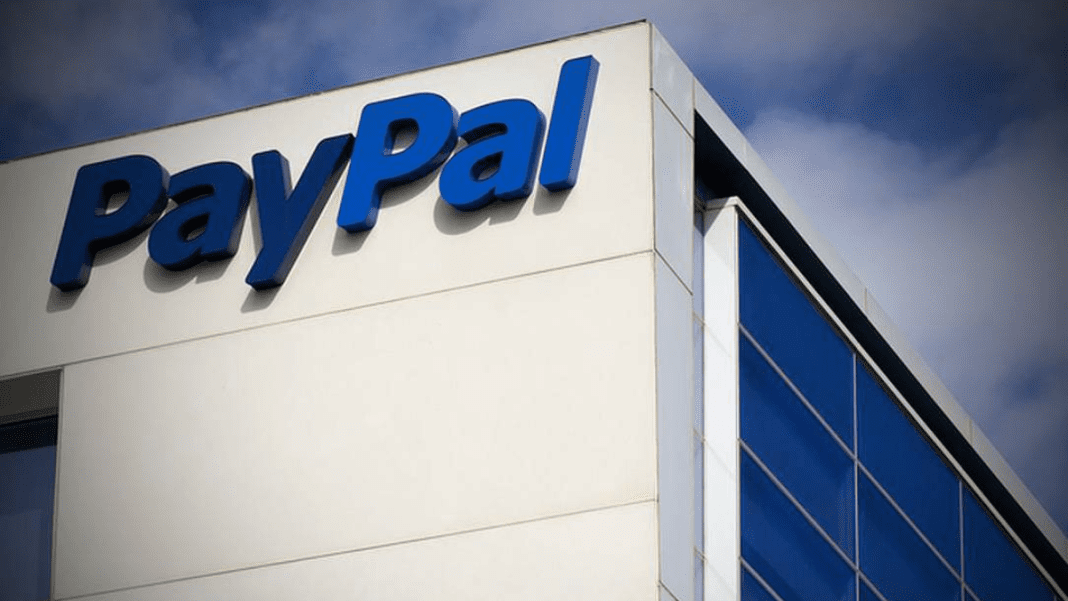
PayPal denies breach after hacker claims leak of 15.8 million credentials on dark web

In mid-August 2025, panic spread online after a hacker claimed to leak more than 15.8 million PayPal account credentials. The leak, advertised on dark web forums, included email addresses, passwords, and related login links.

The news created fear among users and businesses that depend on PayPal for daily transactions. However, PayPal has denied that its systems were hacked this year. The company says the leaked data does not come from a new breach but from older attacks where stolen credentials were reused.

Hacker leak raises global alarm

The leaked database appeared on underground websites where stolen information is often sold. What surprised experts and users was the price. The hacker offered the entire dataset for only two dollars. Such a low price led to suspicion about the authenticity of the leak.

Cybersecurity researchers who checked parts of the dataset reported that the information seems to have come from infostealer malware. These are programs that secretly capture passwords and account details when people type them on infected devices. Instead of being stolen directly from PayPal servers, the leaked data was likely collected from different sources over time and then packaged together.

This is not the first time PayPal has faced claims of stolen data. In 2022, credential-stuffing attacks exposed user details when criminals used passwords stolen from other sites to try logging in to PayPal. Security experts say the newly leaked data may also include information recycled from such earlier incidents.

While the hacker claimed it was a fresh dump, researchers could not confirm if the data was recent. Still, the leak contained PayPal-specific login points, including links for sign-ins and mobile apps. This suggests that the information could still be useful for fraud attempts.

PayPal response and risks for users

PayPal quickly responded to the reports. In statements shared with media, the company stressed that there is no evidence of a new hack in 2025. Internal investigations showed that PayPal’s systems were not breached. The company said the data was most likely taken from past malware infections or older attacks outside PayPal’s own platform.

Even though PayPal denied a fresh breach, security experts warn that the leak still poses    risks. Many people use the same passwords across different platforms. This makes it easy for criminals to attempt login with stolen details. If the leaked information includes reused passwords, hackers could access PayPal accounts, linked bank accounts, or credit cards.

DaVita Under Siege: Cyberattack Hits Dialysis Giant, Put 2.7 Million Lives at Risk

Social media platforms quickly filled with worried posts. Some users said they rushed to change their passwords. Others urged people to enable two-factor authentication, which adds another layer of security. Many cybersecurity pages highlighted the need to use unique, strong passwords and avoid reusing the same password for different sites.

This is not the first time PayPal has had to defend its security record. In the past, breaches or attacks linked to the company or its subsidiaries have raised concerns. Older cases showed that outdated or recycled data can still be dangerous if users have not updated their account protections.

What users should do now

Experts and online security communities are urging PayPal users to act cautiously. Even if the leaked database is old, the information can still be misused. People who reuse passwords or have not updated their login details for years are at the highest risk.

Security professionals advise that PayPal users should immediately change their account passwords and make sure they are unique. They also recommend turning on two-factor authentication, preferably using an authentication app instead of text messages. Checking personal email addresses on breach monitoring sites is another way to know if credentials have been exposed in earlier leaks.

Orange confirms ransomware breach with 4 GB of customer data exposed on dark web

Using a password manager is also suggested by experts, since it helps generate and store strong, unique passwords for every account. PayPal itself has advised users to keep an eye on their accounts and watch for unusual activity. Any unauthorized charges or strange login attempts should be reported without delay.

For businesses, the leak has raised wider concerns. PayPal’s statement that no new breach has occurred has not completely erased fears. With over 15 million account details circulating on the dark web, the possibility of fraud and identity theft remains a major issue.

Renuka Bangale
Renuka Bangale
Renuka is a distinguished Chartered Accountant and a Certified Digital Threats Analyst from Riskpro, renowned for her expertise in cybersecurity. With a deep understanding of cybercrimes, malware, cyber warfare, and espionage, she has established herself as an authority in the field. Renuka combines her financial acumen with advanced knowledge of digital threats to provide unparalleled insights into the evolving landscape of information security. Her analytical prowess enables her to dissect complex cyber incidents, offering clarity on risks and mitigation strategies. As a key contributor to Newsinterpretation’s information security category, Renuka delivers authoritative articles that educate and inform readers about emerging threats and best practices.

TOP 10 TRENDING ON NEWSINTERPRETATION

Cyber Attacks on Space Infrastructure: Satellites, GPS and the Ground Systems Behind Them

From the Viasat KA-SAT hack to GPS jamming over the Baltic, a research guide to how attackers target satellites, navigation signals and ground stations, and why it matters on Earth.

How AI Agents Are Used in Cyber Attacks: From Assisted Hacking to AI-Orchestrated Espionage

Attackers now use AI agents to scan networks, write exploits and run extortion campaigns. A research guide to documented cases, including the first reported AI-orchestrated espionage campaign, and what defenders should do.

Cyber Attacks on AI and LLMs: How Attackers Target Large Language Models

Prompt injection, data poisoning, model theft and jailbreaks: a research guide to how attackers target AI systems and large language models, with real cases and defences.

French Supermarket Refrigeration Cyberattack: How Hacking the Cold Chain Can Endanger Lives

In October 2026 attackers heated refrigeration cabinets in hundreds of French supermarkets to as much as 50°C. No one was hurt, but the attack shows how hacking the cold chain can endanger lives through fire, food poisoning and spoiled medicines.

Cyberattacks on Nuclear Facilities: Stuxnet, Kudankulam and the Limits of Air Gaps

Stuxnet, the Davis-Besse worm and malware at India’s Kudankulam plant: what they show about cyber risk at nuclear facilities and the limits of air gaps.

Triton: When Hackers Target the Safety Systems That Prevent Industrial Disasters

The 2017 Triton attack targeted the safety systems that prevent industrial disasters. What happened, who was charged, and how plants protect their last line of defence.

Cybersecurity Risks in Smart Cities: When Connected Infrastructure Fails

How connecting traffic control, emergency alerts and utilities concentrates cyber risk in cities, what the Dallas and Atlanta incidents showed, and what governments recommend.

Weaponized Drones: Hijacking, GPS Spoofing and Emerging Cyber Warfare Risks

How drones can be hijacked, jammed or misled by GPS spoofing, what researchers have demonstrated, and why governments treat drone fleets as a security risk.

Ransomware Attacks on Hospitals: How Healthcare Cyberattacks Put Patients at Risk

How ransomware against hospitals and their suppliers delays care and endangers patients, what the Düsseldorf and WannaCry cases show, and what research says about deaths.

Operational blunder exposes massive Russian cyber espionage attack on Ukrainian prosecutors

A major cyberattack has compromised the email accounts of...

Cyber Attacks on Space Infrastructure: Satellites, GPS and the Ground Systems Behind Them

From the Viasat KA-SAT hack to GPS jamming over the Baltic, a research guide to how attackers target satellites, navigation signals and ground stations, and why it matters on Earth.

French Supermarket Refrigeration Cyberattack: How Hacking the Cold Chain Can Endanger Lives

In October 2026 attackers heated refrigeration cabinets in hundreds of French supermarkets to as much as 50°C. No one was hurt, but the attack shows how hacking the cold chain can endanger lives through fire, food poisoning and spoiled medicines.

Cyberattacks on Nuclear Facilities: Stuxnet, Kudankulam and the Limits of Air Gaps

Stuxnet, the Davis-Besse worm and malware at India’s Kudankulam plant: what they show about cyber risk at nuclear facilities and the limits of air gaps.

Triton: When Hackers Target the Safety Systems That Prevent Industrial Disasters

The 2017 Triton attack targeted the safety systems that prevent industrial disasters. What happened, who was charged, and how plants protect their last line of defence.

Cybersecurity Risks in Smart Cities: When Connected Infrastructure Fails

How connecting traffic control, emergency alerts and utilities concentrates cyber risk in cities, what the Dallas and Atlanta incidents showed, and what governments recommend.

Ransomware Attacks on Hospitals: How Healthcare Cyberattacks Put Patients at Risk

How ransomware against hospitals and their suppliers delays care and endangers patients, what the Düsseldorf and WannaCry cases show, and what research says about deaths.

FBI warns of AVrecon malware targeting outdated routers linked to proxy based cybercrime

A serious cybersecurity warning has been issued regarding commonly...

Related Articles

Popular Categories
