

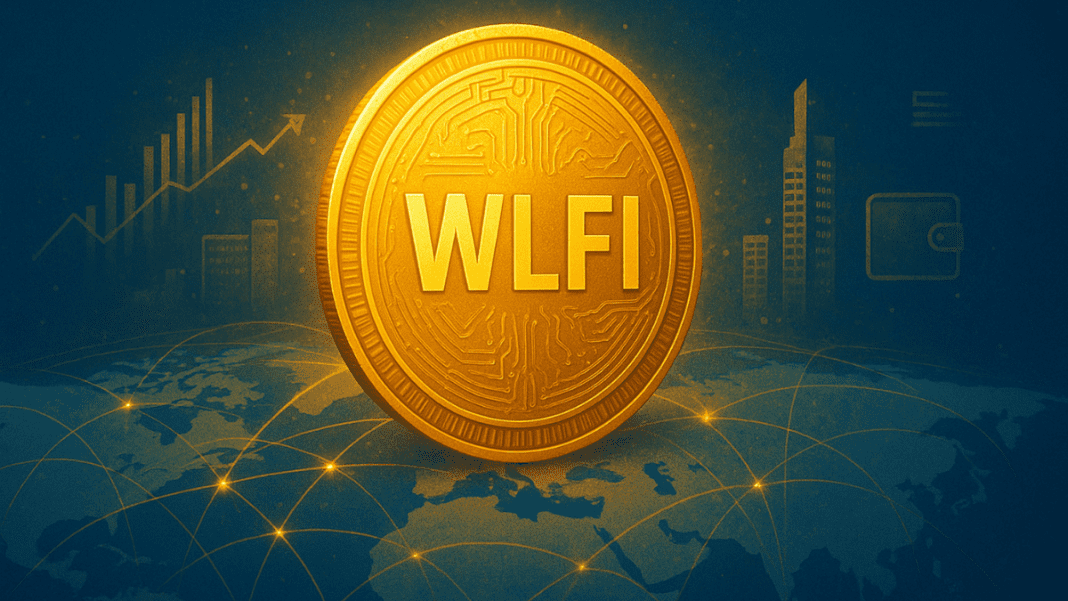
Chinese Tycoon Pours $100 Million Into Trump Family Crypto Empire — Ethics Watchdogs Sound Alarm

U.S. President Donald J. Trump and his family have built a new source of massive income through cryptocurrency. Their company, World Liberty Financial (WLFI), began selling digital tokens called WLFI in late 2024. These tokens were promoted by Eric Trump and Donald Trump Jr. as a way for people to join the “future of finance.” The company lists Barron Trump and real estate investor Steven Witkoff, along with his sons Zach and Alex Witkoff, as co-founders. The Trump brothers have traveled around the world meeting investors and promoting their digital ventures.

World Liberty Financial also launched a stablecoin called USD1. A stablecoin is a digital coin that keeps its value tied to real money, like the U.S. dollar. On paper, the project looked promising, but experts say the technology behind it is basic. Many buyers joined mainly because the tokens were linked to the Trump name. Even without a strong product, the company quickly attracted millions of dollars in investments from across the world.

In just six months, the Trump Organization’s income soared from $51 million to more than $860 million. More than 90% of that came from the family’s crypto businesses. The rest came from golf resorts, hotels, and licensing deals. Most of the family’s crypto money came from selling WLFI tokens and a meme coin named $TRUMP. The numbers show that digital assets have become the family’s biggest money-maker by far.

Trump dynasty bets big on crypto — American Bitcoin’s latest $163 million purchase reshapes digital finance

Global Deals and Foreign Investors

The crypto business drew attention from investors in Asia, the Middle East, and Europe. Large purchases of WLFI tokens were made by overseas companies. One of the biggest deals came from the Aqua1 Foundation, linked to Chinese businessman Guren “Bobby” Zhou, which reportedly bought $100 million worth of tokens. Many investors saw the Trump family’s name as a guarantee of success. For them, it was a chance to be part of a powerful brand closely tied to the U.S. president.

Other companies also joined the movement. A blockchain services firm called Alt5 Sigma said it spent $750 million buying WLFI tokens, making it one of the largest investors. This single deal brought hundreds of millions of dollars in income to the Trump family. Another major partnership involved the USD1 stablecoin, which was used in a $2 billion international investment deal with the MGX state investment company from the United Arab Emirates. The stablecoin was used to buy an equity stake in Binance, one of the world’s biggest crypto exchanges. This move linked the Trump family’s coin directly to some of the largest financial players in global crypto markets.

The scale of these deals has been enormous. Experts like Carter Davis and Seoyoung Kim say this marks a huge shift in how the family earns its money. The business model now depends less on hotels and real estate and more on digital finance. Even small price swings in their tokens can change the family’s wealth by millions of dollars overnight.

‘Tell me why not’: Trump dodges questions about third run, sparks firestorm over 22nd Amendment

Ethics Concerns and Political Links

The rise of the Trump family’s crypto empire has caused concern among government ethics experts, including Kathleen Clark and Richard Painter. They say the family’s growing digital wealth could create a serious conflict of interest. While Eric Trump and Donald Trump Jr. are promoting token sales abroad, their father, President Trump, is responsible for shaping U.S. crypto policies. Critics say investors may be buying tokens not just for profit, but in hopes of gaining favor with the most powerful office in the country.

So far, there is no proof of any laws being broken. The family’s lawyer, Timothy Parlatore, says that their tokens are legal and that buyers are not promised any political advantage. However, experts warn that the situation is “legal but unethical.” They point out that much of the money flowing into Trump-linked crypto ventures comes from overseas sources, including known investors like Justin Sun, who has faced legal action from the U.S. Securities and Exchange Commission.

World Liberty Financial’s website lists Donald J. Trump as a “co-founder emeritus,” giving the impression of a direct link to the White House, even though it notes he stepped down from business roles after taking office. With token sales continuing, the family’s crypto earnings have now reached close to $1 billion, turning their digital ventures into one of the most profitable family businesses in modern American politics.

T U Deshmukh
T U Deshmukh
T U Deshmukh is the leading voice on the subject of Jobs, AI, Data and layoffs and she regularly contributes a column on Jobs for Newsinterpretation.

TOP 10 TRENDING ON NEWSINTERPRETATION

Cyber Attacks on Space Infrastructure: Satellites, GPS and the Ground Systems Behind Them

From the Viasat KA-SAT hack to GPS jamming over the Baltic, a research guide to how attackers target satellites, navigation signals and ground stations, and why it matters on Earth.

How AI Agents Are Used in Cyber Attacks: From Assisted Hacking to AI-Orchestrated Espionage

Attackers now use AI agents to scan networks, write exploits and run extortion campaigns. A research guide to documented cases, including the first reported AI-orchestrated espionage campaign, and what defenders should do.

Cyber Attacks on AI and LLMs: How Attackers Target Large Language Models

Prompt injection, data poisoning, model theft and jailbreaks: a research guide to how attackers target AI systems and large language models, with real cases and defences.

French Supermarket Refrigeration Cyberattack: How Hacking the Cold Chain Can Endanger Lives

In October 2026 attackers heated refrigeration cabinets in hundreds of French supermarkets to as much as 50°C. No one was hurt, but the attack shows how hacking the cold chain can endanger lives through fire, food poisoning and spoiled medicines.

Cyberattacks on Nuclear Facilities: Stuxnet, Kudankulam and the Limits of Air Gaps

Stuxnet, the Davis-Besse worm and malware at India’s Kudankulam plant: what they show about cyber risk at nuclear facilities and the limits of air gaps.

Triton: When Hackers Target the Safety Systems That Prevent Industrial Disasters

The 2017 Triton attack targeted the safety systems that prevent industrial disasters. What happened, who was charged, and how plants protect their last line of defence.

Cybersecurity Risks in Smart Cities: When Connected Infrastructure Fails

How connecting traffic control, emergency alerts and utilities concentrates cyber risk in cities, what the Dallas and Atlanta incidents showed, and what governments recommend.

Weaponized Drones: Hijacking, GPS Spoofing and Emerging Cyber Warfare Risks

How drones can be hijacked, jammed or misled by GPS spoofing, what researchers have demonstrated, and why governments treat drone fleets as a security risk.

Ransomware Attacks on Hospitals: How Healthcare Cyberattacks Put Patients at Risk

How ransomware against hospitals and their suppliers delays care and endangers patients, what the Düsseldorf and WannaCry cases show, and what research says about deaths.

Operational blunder exposes massive Russian cyber espionage attack on Ukrainian prosecutors

A major cyberattack has compromised the email accounts of...

Cyber Attacks on Space Infrastructure: Satellites, GPS and the Ground Systems Behind Them

From the Viasat KA-SAT hack to GPS jamming over the Baltic, a research guide to how attackers target satellites, navigation signals and ground stations, and why it matters on Earth.

French Supermarket Refrigeration Cyberattack: How Hacking the Cold Chain Can Endanger Lives

In October 2026 attackers heated refrigeration cabinets in hundreds of French supermarkets to as much as 50°C. No one was hurt, but the attack shows how hacking the cold chain can endanger lives through fire, food poisoning and spoiled medicines.

Cyberattacks on Nuclear Facilities: Stuxnet, Kudankulam and the Limits of Air Gaps

Stuxnet, the Davis-Besse worm and malware at India’s Kudankulam plant: what they show about cyber risk at nuclear facilities and the limits of air gaps.

Triton: When Hackers Target the Safety Systems That Prevent Industrial Disasters

The 2017 Triton attack targeted the safety systems that prevent industrial disasters. What happened, who was charged, and how plants protect their last line of defence.

Cybersecurity Risks in Smart Cities: When Connected Infrastructure Fails

How connecting traffic control, emergency alerts and utilities concentrates cyber risk in cities, what the Dallas and Atlanta incidents showed, and what governments recommend.

Ransomware Attacks on Hospitals: How Healthcare Cyberattacks Put Patients at Risk

How ransomware against hospitals and their suppliers delays care and endangers patients, what the Düsseldorf and WannaCry cases show, and what research says about deaths.

FBI warns of AVrecon malware targeting outdated routers linked to proxy based cybercrime

A serious cybersecurity warning has been issued regarding commonly...

Related Articles

Popular Categories
