
Overview of the Operations
On September 27, 2024, a significant announcement came from police officials regarding recent discoveries made in Manipur. Security forces have recovered a substantial cache of arms and explosives in the Kangpokpi and Churachandpur districts. These operations are part of ongoing efforts to maintain peace and security in the region, which has faced challenges related to illegal arms and unrest.
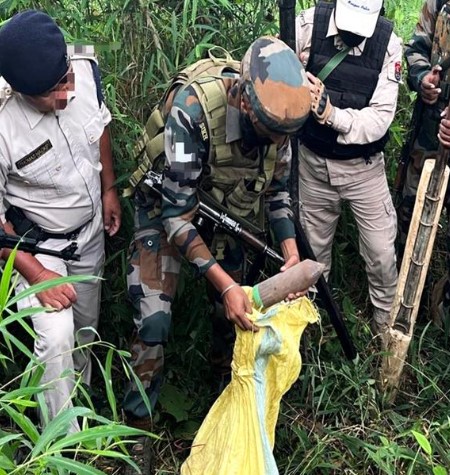
The operations took place on September 26, 2024, when a joint team consisting of the Manipur Police and the Central Reserve Police Force (CRPF) focused their efforts on the Haraothel and Lambung hilltops in the Kangpokpi district. This initiative aimed to locate and seize hidden weapons, which could pose a threat to local communities and law enforcement.
Details of the Kangpokpi Recovery
During the Kangpokpi operation, the security forces uncovered several dangerous items. Among these was an improvised projectile launcher, commonly known as a “pumpi.” This type of weapon is particularly concerning because it can launch explosives at a distance, posing a significant risk to anyone nearby.
Additionally, the team recovered 11 unused bombs, with each bomb weighing approximately 1.5 kilograms. These explosives, if detonated, could cause serious harm to people and property. The presence of these bombs indicates a readiness to use violence, heightening concerns about safety in the area.
The operation also yielded 10 empty shell cases. Shell cases are remnants from firearms that have been fired, and their presence suggests that weapons have been used in the area. This discovery raises alarms about ongoing conflicts and the potential for further violence.
The police highlighted the significance of these findings. They pointed out that recovering such weapons is crucial for preventing violence and ensuring the safety of local residents. The operation underscores the determination of law enforcement agencies to combat illegal arms and maintain peace in the region.
Churachandpur Operations and Additional Discoveries
In a separate operation in Churachandpur district, security forces continued their mission to uncover illegal arms. This operation involved a collaborative effort between local police and the Assam Rifles. The focus was on the Suangdai area, where the team made several important discoveries.
Among the weapons recovered were a homemade 9 mm pistol and a single-barrel shotgun. Homemade firearms are especially alarming because they can be produced with relative ease and may not be detected by standard security measures. The existence of such weapons raises serious concerns about the safety of the community.
In addition to the firearms, the team found Myanmar currency during this operation. The presence of foreign currency suggests potential links to illegal trade and trafficking across borders. Manipur shares a border with Myanmar, a country that has faced challenges related to arms trafficking and illegal activities.
Along with the currency, security forces also seized a bulletproof jacket and camouflage uniforms. These items could be used by individuals involved in illegal activities to protect themselves or disguise their identities during operations. The combination of weapons and tactical gear indicates a serious threat to the security of the region.
IED Recovery and Ongoing Efforts
On September 25, 2024, a separate operation was conducted by the Assam Rifles in the Thoubal district. They discovered an improvised explosive device (IED) during the operation. The IED was found in Salam Patong village. This village falls under the jurisdiction of the Nongpok Sekmai police station.
IEDs are particularly dangerous because they can be detonated remotely, making them a preferred choice for those looking to instill fear or cause destruction without direct confrontation. The recovery of an IED highlights the ongoing threats faced by local communities and the importance of vigilant law enforcement.
The actions taken by security forces in both Kangpokpi and Churachandpur demonstrate a focused effort to address the challenges posed by illegal arms and explosives. The discovery of these weapons is a crucial step in ensuring the safety of residents and preventing potential violence.
The recent operations carried out by the Manipur Police, CRPF, and Assam Rifles underscore the ongoing commitment to combating illegal arms and protecting communities. The discoveries of various weapons, explosives, and related materials reveal a pressing issue that requires continuous attention and action from law enforcement agencies. These operations are vital for maintaining peace and stability in a region that has faced significant challenges.