

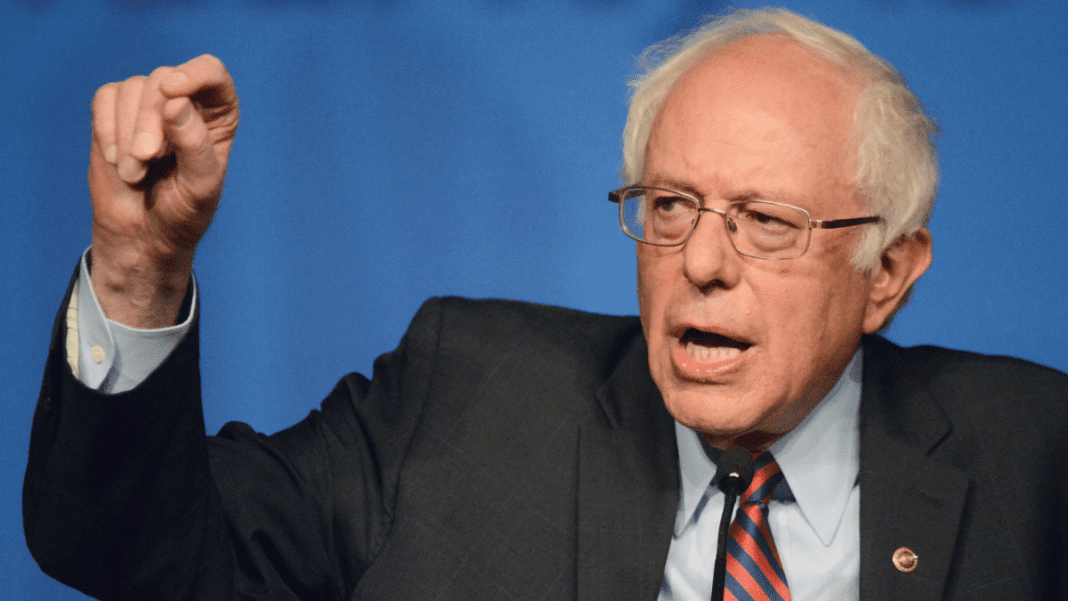
Sanders blasts oligarchy of information—calls out billionaires’ iron fist on U.S. media

Senator Bernie Sanders has raised concerns about the growing concentration of media ownership in the hands of a few billionaires.

Sanders Points to Control of Media by the Richest Americans

In a recent post on X, Sanders highlighted how some of the wealthiest men in the world own or control the largest media platforms that millions of Americans rely on every day.

He pointed out that Elon Musk, the wealthiest person in the world, owns the social media platform X. Larry Ellison, the co-founder of Oracle and currently the second-richest man, owns Paramount, which includes CBS, and is reportedly moving toward a possible takeover of TikTok and CNN.

Sanders also named Amazon founder Jeff Bezos, who owns the Washington Post and the streaming platform Twitch. Mark Zuckerberg, the head of Meta, controls Facebook and Instagram, two of the most widely used platforms worldwide.

Sanders summed up his warning by noting that the top five richest men in the world are all media owners or executives. For him, this represents not just an issue of wealth inequality but also a problem of power over what information Americans see, hear, and read.

Billionaires at the Center of U.S. Media

Elon Musk’s acquisition of X (formerly Twitter) in 2022 changed the landscape of online conversations. Since then, X has been one of the most active platforms for political debate, news updates, and public discussions. Musk has often said he wants the platform to support free speech, but critics argue his personal influence shapes the kind of content that is allowed or amplified.

Larry Ellison’s role in media has grown rapidly. Paramount Global, which owns CBS, MTV, Nickelodeon, and several other networks, has long been a major player in entertainment and news. Reports suggest Ellison is also interested in acquiring TikTok, the video-sharing platform with millions of young users, as well as CNN, one of the biggest cable news outlets. If these deals go through, Ellison would become one of the most powerful figures in both traditional and digital media.

Heated Clash as Rand Paul Confronts Bernie Sanders and Former CDC Director Over Infant Vaccines

Jeff Bezos entered the media world in 2013 when he purchased the Washington Post. Under his ownership, the paper has expanded its digital reach and become one of the leading online news sites. Bezos also owns Twitch, a streaming service popular with younger audiences, especially in gaming and live content.

Mark Zuckerberg’s influence is even broader. As CEO of Meta, he controls Facebook and Instagram, two platforms used by billions globally. They are not just social networking apps but also key sources of news, advertising, and information flow for the public.

Together, these billionaires have a massive share of control over the platforms where Americans consume news, entertainment, and cultural content.

Oligarchy and Media Influence

Bernie Sanders described this trend as a form of oligarchy. Traditionally, the term refers to a system where power is concentrated in the hands of a few wealthy individuals. In this case, Sanders argues it is not just wealth and income inequality but also control of information that affects democracy.

Media ownership plays a powerful role in shaping public opinion. When a few people control the biggest newspapers, TV channels, and online platforms, it makes people wonder how free the news really is. Sanders says this power can decide what people learn, how stories are told, and which voices are heard or ignored.

From Trump stronghold to Sanders territory? West Virginia coal country sparks political earthquake

He warned that Americans should be aware that the country’s richest individuals are also deciding the media landscape. According to Sanders, this means that control is not only about economic dominance but also about cultural and political influence.

For everyday people, this concentration of media power can shape everything from political debates to cultural conversations. Whether it is breaking news, entertainment, or social media trends, a small group of billionaires now play a central role in deciding what content reaches the public.

Renuka Bangale
Renuka Bangale
Renuka is a distinguished Chartered Accountant and a Certified Digital Threats Analyst from Riskpro, renowned for her expertise in cybersecurity. With a deep understanding of cybercrimes, malware, cyber warfare, and espionage, she has established herself as an authority in the field. Renuka combines her financial acumen with advanced knowledge of digital threats to provide unparalleled insights into the evolving landscape of information security. Her analytical prowess enables her to dissect complex cyber incidents, offering clarity on risks and mitigation strategies. As a key contributor to Newsinterpretation’s information security category, Renuka delivers authoritative articles that educate and inform readers about emerging threats and best practices.

TOP 10 TRENDING ON NEWSINTERPRETATION

Cyber Attacks on Space Infrastructure: Satellites, GPS and the Ground Systems Behind Them

From the Viasat KA-SAT hack to GPS jamming over the Baltic, a research guide to how attackers target satellites, navigation signals and ground stations, and why it matters on Earth.

How AI Agents Are Used in Cyber Attacks: From Assisted Hacking to AI-Orchestrated Espionage

Attackers now use AI agents to scan networks, write exploits and run extortion campaigns. A research guide to documented cases, including the first reported AI-orchestrated espionage campaign, and what defenders should do.

Cyber Attacks on AI and LLMs: How Attackers Target Large Language Models

Prompt injection, data poisoning, model theft and jailbreaks: a research guide to how attackers target AI systems and large language models, with real cases and defences.

French Supermarket Refrigeration Cyberattack: How Hacking the Cold Chain Can Endanger Lives

In October 2026 attackers heated refrigeration cabinets in hundreds of French supermarkets to as much as 50°C. No one was hurt, but the attack shows how hacking the cold chain can endanger lives through fire, food poisoning and spoiled medicines.

Cyberattacks on Nuclear Facilities: Stuxnet, Kudankulam and the Limits of Air Gaps

Stuxnet, the Davis-Besse worm and malware at India’s Kudankulam plant: what they show about cyber risk at nuclear facilities and the limits of air gaps.

Triton: When Hackers Target the Safety Systems That Prevent Industrial Disasters

The 2017 Triton attack targeted the safety systems that prevent industrial disasters. What happened, who was charged, and how plants protect their last line of defence.

Cybersecurity Risks in Smart Cities: When Connected Infrastructure Fails

How connecting traffic control, emergency alerts and utilities concentrates cyber risk in cities, what the Dallas and Atlanta incidents showed, and what governments recommend.

Weaponized Drones: Hijacking, GPS Spoofing and Emerging Cyber Warfare Risks

How drones can be hijacked, jammed or misled by GPS spoofing, what researchers have demonstrated, and why governments treat drone fleets as a security risk.

Ransomware Attacks on Hospitals: How Healthcare Cyberattacks Put Patients at Risk

How ransomware against hospitals and their suppliers delays care and endangers patients, what the Düsseldorf and WannaCry cases show, and what research says about deaths.

Operational blunder exposes massive Russian cyber espionage attack on Ukrainian prosecutors

A major cyberattack has compromised the email accounts of...

Cyber Attacks on Space Infrastructure: Satellites, GPS and the Ground Systems Behind Them

From the Viasat KA-SAT hack to GPS jamming over the Baltic, a research guide to how attackers target satellites, navigation signals and ground stations, and why it matters on Earth.

French Supermarket Refrigeration Cyberattack: How Hacking the Cold Chain Can Endanger Lives

In October 2026 attackers heated refrigeration cabinets in hundreds of French supermarkets to as much as 50°C. No one was hurt, but the attack shows how hacking the cold chain can endanger lives through fire, food poisoning and spoiled medicines.

Cyberattacks on Nuclear Facilities: Stuxnet, Kudankulam and the Limits of Air Gaps

Stuxnet, the Davis-Besse worm and malware at India’s Kudankulam plant: what they show about cyber risk at nuclear facilities and the limits of air gaps.

Triton: When Hackers Target the Safety Systems That Prevent Industrial Disasters

The 2017 Triton attack targeted the safety systems that prevent industrial disasters. What happened, who was charged, and how plants protect their last line of defence.

Cybersecurity Risks in Smart Cities: When Connected Infrastructure Fails

How connecting traffic control, emergency alerts and utilities concentrates cyber risk in cities, what the Dallas and Atlanta incidents showed, and what governments recommend.

Ransomware Attacks on Hospitals: How Healthcare Cyberattacks Put Patients at Risk

How ransomware against hospitals and their suppliers delays care and endangers patients, what the Düsseldorf and WannaCry cases show, and what research says about deaths.

FBI warns of AVrecon malware targeting outdated routers linked to proxy based cybercrime

A serious cybersecurity warning has been issued regarding commonly...

Related Articles

Popular Categories
