

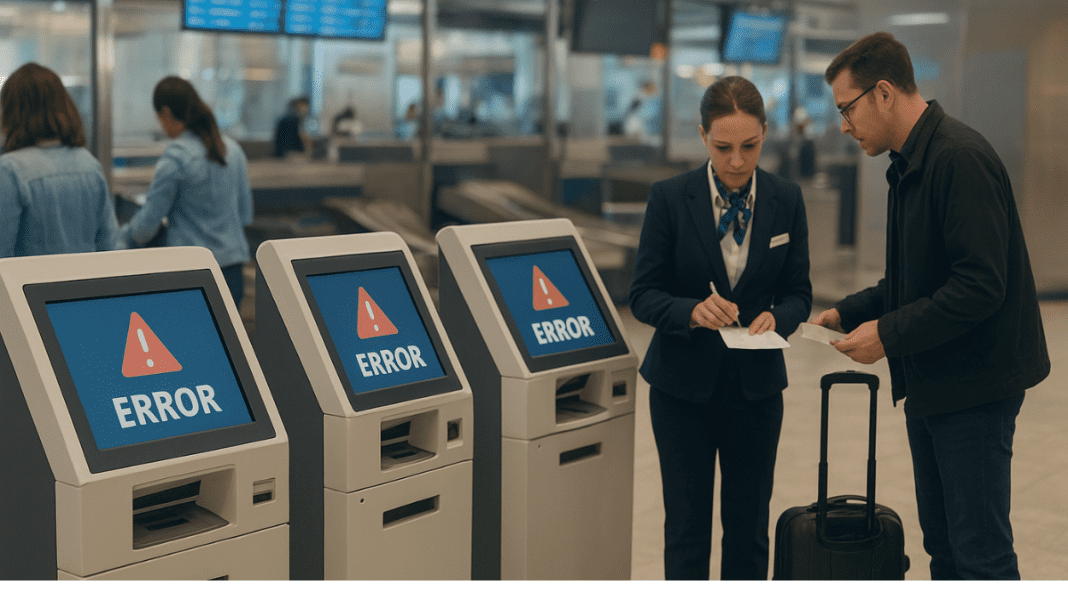

Air travel was thrown into disarray last weekend after a cyber attack hit a key check-in software system used by more than 100 airlines and 100 airports worldwide. The system, known as Muse, suddenly went offline, forcing airports to fall back on manual check-in and luggage tagging.
Major Disruption Hits Passenger Travel
The impact was immediate and visible. London Heathrow, one of the busiest airports in the world, slowed to a crawl. Long lines formed at check-in counters, while passengers struggled with delays and uncertainty. Other European hubs, including Brussels Airport and Berlin Brandenburg Airport, also reported longer waiting times and widespread disruption.
Muse is an “off-the-shelf” airport software solution that airlines and airports rely on when they do not have their own in-house systems. The application is designed to allow airlines to share check-in counters, kiosks, and boarding infrastructure through a single, unified platform. On Saturday, attackers managed to cripple that system, leaving airlines scrambling to maintain order.
The incident showed just how dependent modern air travel has become on digital platforms. A single failure brought entire airport operations to near standstill. Passengers faced hours of waiting, missed flights, and confusion across terminals.
What Is the Muse System
Muse, also known by its full name ARINC vMUSE, was developed by Collins Aerospace, a company owned by RTX. The system is widely praised in the aviation industry for its flexibility and scalability. It can fit the needs of both small regional airlines and large international carriers.
The software integrates several airport functions into one seamless service. It connects with flight information displays, baggage management systems, resource management tools, and operational databases. It even supports biometric verification by linking passenger boarding passes to passport details.
Chaos Hits Brussels Airport as Nearly 140 Flights Cancelled Amid Europe Cyberattack
Airports use the platform to maximize efficiency. Shared workstations mean multiple airlines can process passengers from the same desks, helping save space and resources. For years, it has been seen as a reliable backbone for smooth passenger flow.
But the recent cyber incident revealed a major weakness. When the system was targeted and taken down, thousands of passengers across multiple countries were immediately affected. Collins Aerospace described the event as a “cyber-related disruption” and deployed resources to restore services as fast as possible. The company has built a strong reputation in aviation technology, and the scale of the disruption highlights just how crucial its systems have become in modern airports.
A Growing Pattern of Cyber Attacks
The attack on airport systems did not happen in isolation. It comes amid a wave of cyber incidents hitting major businesses in recent months. In the same week, a leading automaker was forced to halt production because of a cyber incident. The company stated it was still conducting a forensic investigation and that restarting global operations would take time.
A major retailer also revealed earlier this year that it had been the victim of a cyberattack. The event disrupted food supplies and left store shelves bare, with losses estimated to cut deeply into annual profits.
Cyberattack cripples MUSE systems, throwing Berlin and Heathrow airports into travel chaos
These cases, combined with the airport software disruption, show how cyber threats are no longer confined to the digital world. They are now directly impacting essential services like transportation, food supply, and industrial production.
For air passengers, the sight of long lines and grounded check-in kiosks was a reminder of how dependent modern travel has become on secure technology. The Muse cyber attack may have lasted only hours, but its ripple effects were felt by thousands of people moving through airports on a busy weekend.