

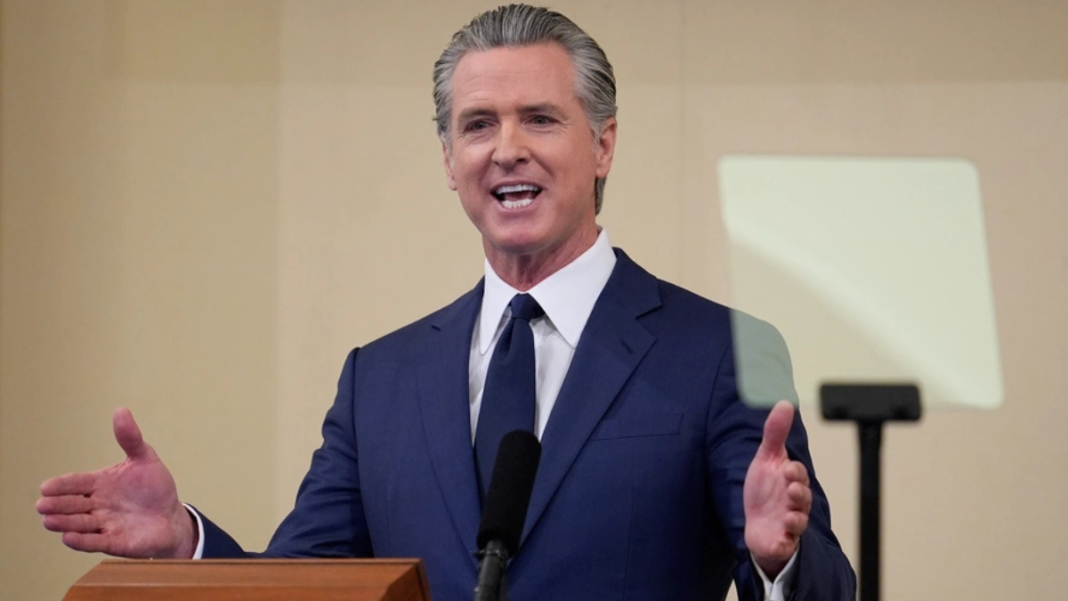

California is facing a heated political and economic debate after a proposed tax targeting billionaires triggered strong reactions across Silicon Valley and the state’s leadership. The proposal has sparked concern among business leaders, divided Democrats, and placed Governor Gavin Newsom in a difficult position as he works to stop the measure from moving forward.
At the center of the controversy is a plan backed by a major health care labor union to raise money for health services serving low-income residents. While supporters describe the proposal as a necessary step to protect hospitals and emergency care, critics warn it could damage California’s economy by driving away wealth and investment. Even though the proposal is still in the early stages, it has already set off political battles and public arguments across the state.
How the Billionaires’ Tax Proposal Works
The proposed measure would impose a one-time 5 percent tax on individuals classified as billionaires who live in California. Unlike income taxes, it would be based on total assets, including stocks, businesses, artwork, collectibles, and intellectual property. Supporters say this structure is designed to target extreme concentrations of wealth rather than everyday earnings.
After years of turbulence, Newsom promises steady school funding in $248 billion budget
California has more billionaires than any other state, with estimates placing the number in the hundreds. The state also relies heavily on its highest earners for revenue, with nearly half of personal income tax collections coming from the top 1 percent of taxpayers. This revenue is a key source of funding for public services supported by the state’s nearly $350 billion budget.
The proposal is backed by the Service Employees International Union–United Healthcare Workers West. Suzanne Jimenez, the union’s chief of staff, said the tax is intended to offset federal cuts to health care funding signed into law by President Donald Trump last year. To appear on the November ballot, the measure must collect more than 870,000 valid petition signatures, and it would apply retroactively to residents as of January 1, raising questions about how residency would be determined for wealthy individuals with homes in multiple states.
Silicon Valley Pushback and Fears of an Exodus
The proposal has drawn strong opposition from Silicon Valley leaders and business groups. Aaron Levie, the CEO of Box, warned that the tax could push entrepreneurs to launch companies outside California. He said the plan risks discouraging innovation, even among people who support efforts to help lower-income residents.
Critics say the tax could lead to a “hollowing out” of Silicon Valley if billionaires shift assets or move their primary residences to other states. Analysts note that even a small number of departures could cost California hundreds of millions of dollars in lost tax revenue.
The California Business Roundtable is leading the campaign against the measure. The group argues that the tax would harm the state’s economy, drive investment away, and increase costs for working families. Political spending has intensified, with millions of dollars flowing into committees on both sides, including a $3 million contribution from investor Peter Thiel to a group opposing the tax.
Concerns about California’s business climate predate the proposal. High living costs and strict regulations have already pushed some companies and wealthy individuals to leave. Elon Musk moved Tesla’s headquarters to Austin, Texas, and reports say Google co-founders Larry Page and Sergey Brin have shifted more assets to Florida, though Google has not commented on those moves.
Political Divisions and Pressure on Gov. Newsom
Governor Gavin Newsom has long opposed state-level wealth taxes, arguing that such measures could put California at a competitive disadvantage. As the state faces budget uncertainty, he is actively trying to stop the proposal from reaching voters, a move that has added pressure as he balances internal party divisions with broader economic concerns.
Legal firestorm erupts as judge says Trump cannot override Governors on National
Guard orders
Political scientist Jack Pitney of Claremont McKenna College said the proposal complicates Newsom’s position, especially with the size of the state’s budget deficit still unclear. He warned that a poorly structured wealth tax could backfire by reducing long-term tax revenue if high earners respond by shifting assets or leaving the state.
The proposal has revealed a clear divide within the Democratic Party. Senator Bernie Sanders has endorsed the tax, describing it as a necessary response to extreme inequality, while Representative Ro Khanna has also backed the measure, dismissing warnings from billionaires who oppose a tax aimed at funding health care for lower-income residents. Supporters say fears of a mass exit are overstated, while opponents argue California is already losing businesses and residents due to high costs and strict regulations.