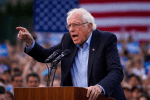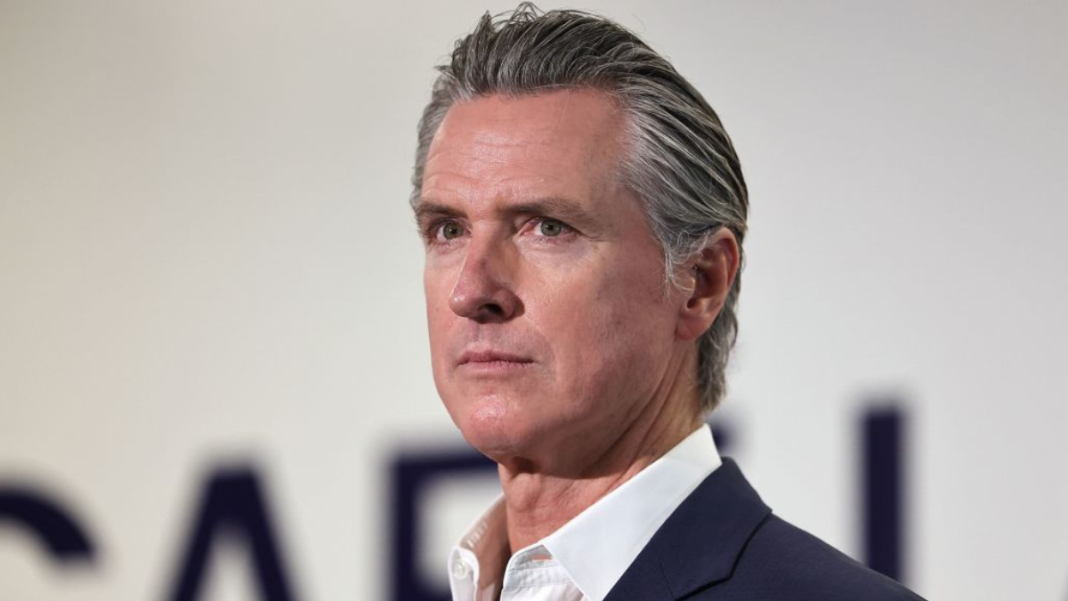

The political tension between President Donald Trump and California Governor Gavin Newsom became clearly visible during an international event held in Switzerland. What was meant to be a serious global discussion quickly turned into a moment that highlighted deep divisions in U.S. politics. The exchange drew attention not just because of who was involved, but because it happened on a world stage.
The situation unfolded during meetings linked to the World Economic Forum in Davos. Leaders from many countries were present to discuss global economic and political challenges. Instead of quiet diplomacy, the spotlight shifted to a public clash that mixed personal remarks, political criticism, and growing concerns about a possible fraud investigation involving California.
Public remarks spark visible tension.
During his speech in Switzerland, Trump openly referred to Newsom while discussing leadership and crime. Cameras showed Newsom in the audience smiling and appearing to chuckle as Trump spoke. The moment quickly circulated online and became a talking point across news channels.
Trump amplifies false criminal claims against Don Lemon, igniting a fresh political backlash
Trump spoke about federal support for states and referenced assistance given to Los Angeles in the past. He said that if he were a governor from the opposing party, he would still work closely with the federal government to improve public safety and results. His comments suggested that cooperation, rather than opposition, was key to effective leadership.
Newsom responded shortly after using social media. One post shared a video clip of the exchange with a short caption suggesting Trump was overly focused on him. In another post, Newsom criticized Trump’s economic leadership, saying the president was harming the American economy while seeking praise from global leaders.
Later, in an interview, Newsom described Trump’s speech as boring and unimportant. He said that even by Trump’s usual standards, the remarks lacked impact. Newsom also acknowledged that some parts of the speech were rude but added that they were not meaningful enough to matter.
The exchange stood out because such events are usually focused on international cooperation. Instead, personal political disputes took center stage, showing how domestic conflicts continue to surface even during global meetings.
Social media, sharp criticism, and named figures
The clash did not end with speeches. Trump had earlier posted on Truth Social, claiming that a fraud investigation into California had begun. This statement raised concerns and drew strong reactions from both supporters and critics.
Newsom’s tan suit throwback pulls Karoline Leavitt into a decade-old political fashion flashpoint
Soon after, U.S. Treasury Secretary Scott Bessent confirmed that federal authorities were examining potential waste, fraud, and abuse linked to California programs. He also criticized Newsom for being in Davos with Alex Soros, the son of Democratic donor George Soros.
Bessent made further remarks questioning Newsom’s understanding of economics and compared his knowledge unfavorably to that of Kamala Harris. These comments added a personal tone to what was already a politically charged situation.
The public nature of these statements fueled debate online and on television. Supporters of Trump viewed the remarks as accountability, while supporters of Newsom described them as distractions from real policy discussions.
Fraud allegations and official responses
The possible investigation centers on claims involving large sums of public money. One major issue raised was the allegation that $24 billion meant for homelessness programs in California could not be properly accounted for. These claims created confusion and concern among the public.
Another issue involved federal student aid. According to statements, Under Secretary of Education Nicholas Kent said some individuals enrolled in California community colleges only to receive financial aid. These so-called “ghost students” allegedly had no intention of attending classes or graduating, leading to losses of at least $10 million.
EU prepares €93bn trade retaliation as Trump escalates Greenland standoff
However, California’s 2024 state auditor report clarified the homelessness funding issue. The report did not say the $24 billion was missing. Instead, it stated that spending was not properly tracked. Newsom’s office responded by saying the funds are accounted for and that the state is investigating any real cases of fraud.
Despite these clarifications, the timing of the investigation claims and the public clash in Switzerland kept attention focused on California. The presence of U.S. political disputes at an international forum showed how financial oversight, political rivalry, and public messaging are now closely connected.