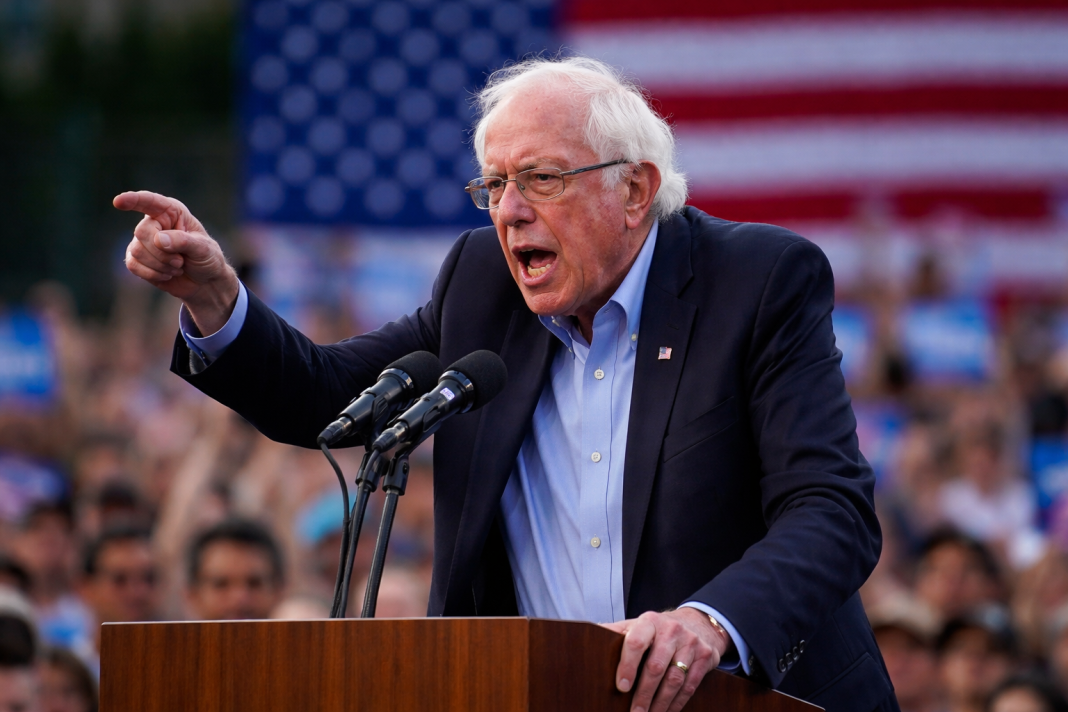

Vermont Senator Bernie Sanders sharply criticized President Donald Trump at a recent rally, calling him “narcissistic” and “mentally unstable.” He slammed Trump’s Greenland plan, saying it reflected personal disappointment after failing to win a Nobel Peace Prize, not sound strategy. Sanders also warned that Trumpism risks turning the United States into a major imperialist power and noted that growing numbers of Republicans are turning away from Trump.
Sanders Highlights Economic Inequality and Oligarch Control Under Trumpism
Beyond criticizing Trump personally, Sanders focused on income and wealth inequality, which he tied directly to Trumpism. He highlighted that the top 1% of Americans now own more wealth than the bottom 93%, with billionaires such as Elon Musk, Larry Ellison, Jeff Bezos, and Mark Zuckerberg controlling vast portions of the economy and media. Sanders also pointed out that Musk alone owns more wealth than the bottom 52% of American households combined.
Sanders emphasized that this extreme concentration of wealth has allowed the richest Americans to gain unprecedented power. “They don’t only want to control the economy. They also want to control our political system,” he said, criticizing the impact of the Citizens United Supreme Court decision, which allows billionaires to spend unlimited money on political campaigns. Sanders accused Musk of spending hundreds of millions to support Trump and influence elections, warning that the billionaire class is attempting to buy political outcomes and strengthen Trumpism.
New York’s nursing strike escalates as Mamdani and Sanders rally thousands in Manhattan
The senator also addressed the challenges faced by working-class Americans. He highlighted that 60% of people in the United States live paycheck to paycheck, struggling to cover essentials like rent, health care, childcare, and transportation. Sanders warned that the economic stress associated with low income and unstable work could have severe consequences on health and life expectancy, noting that working-class people die an average of seven years earlier than wealthy Americans.
Fighting Back Sanders Calls for Progressive Action
Sanders repeatedly stressed the importance of political action and uniting Americans to oppose Trumpism. He urged progressives to organize and fight for policies that support working-class families rather than the billionaire elite. “Our job now is to organize and to win this 2026 election,” Sanders said, adding that defeating Trumpism is only part of the goal. The senator called for creating an economy that benefits ordinary people, not just the rich.
Senate Overwhelmingly Rejects Sanders’ Bid to Block $8.8B Arms Deal
During the speech, Sanders outlined several areas of concern. He criticized the high cost of healthcare, pointing out that the U.S. spends more per person than any other nation but still leaves millions uninsured or underinsured. Sanders proposed a Medicare for All, single-payer system to ensure healthcare as a human right for every American. He also spoke about education, housing, and wages, arguing that rising costs in these areas have left working-class families in constant stress.
Standing Up to Trumpism and Protecting Workers
Sanders also addressed the growing impact of artificial intelligence and robotics on the workforce, warning that these technologies could replace millions of jobs unless policies are put in place to protect workers. He suggested reducing the workweek without cutting pay to match productivity gains. The senator also expressed concern about AI’s effect on mental health, particularly among young people relying on digital assistants and robots for emotional support.
Bernie Sanders Slams $10 Million Musk Donation, Warns Billionaires Are “Buying American Democracy”
Throughout his speech, Sanders highlighted historical examples of Americans fighting for justice, invoking the American Revolution, the Civil War, and the civil rights movement. He urged Americans to remember the power of standing together against oppression and injustice. “The wealth, the oligarchs, and Trump and his friends—they’ve got power. But you know what we got? We got the people,” Sanders said to enthusiastic cheers.
In his concluding remarks, Sanders framed the fight against Trumpism as a moral and political necessity. He called on Americans to reject authoritarianism, support democracy, and build a society where ordinary working people can thrive. He also emphasized that Trumpism cannot succeed if people unite and demand a fairer economy.