
Families across the United States are feeling increasingly unsettled after recent changes were made to the childhood health schedule. For many parents, this guidance has always been something they could rely on — a steady system designed to keep their children safe from serious illness. When that guidance shifts without much explanation, it leaves families anxious, especially those caring for newborns and young children who depend on the protection that the vaccine program provides.
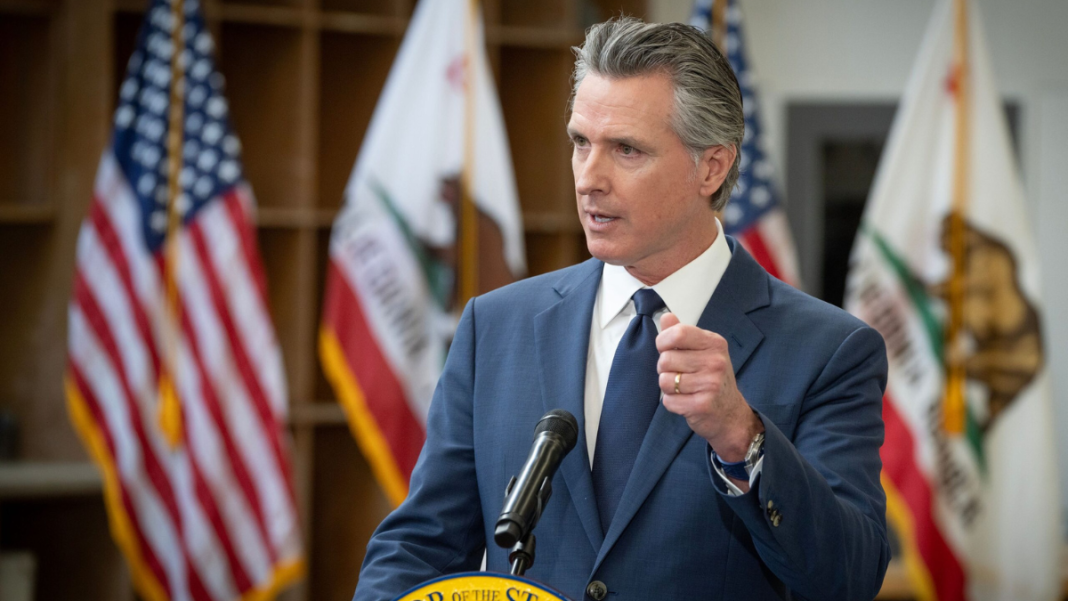
In California, Governor Gavin Newsom spoke out about the situation. He warned that decisions made under the Trump administration to scale back certain childhood recommendations could put the lives of infants, children, and caregivers at risk. According to Newsom, weakening long-standing medical standards does not just affect policy — it damages public trust and places the most vulnerable members of society in danger, including those who rely on routine vaccine coverage for early protection.
The governor also criticized the growing influence of Robert F. Kennedy Jr. and others who challenge established medical science. He said the original guidance developed by the Centers for Disease Control and Prevention was based on decades of research and real-world experience that protected millions of families. Replacing that foundation with political ideology, he argued, is a dangerous step backward.
Heated Clash as Rand Paul Confronts Bernie Sanders and Former CDC Director Over Infant Vaccines
Why Early Protection Matters for Children
For doctors and pediatric specialists, early protection is one of the most important parts of keeping children healthy. The recommended care schedule works like a roadmap, helping families and medical providers understand when each stage of protection should occur as a child grows. These timelines are carefully designed around how children’s immune systems develop and when certain illnesses pose the greatest risk. When that structure is disrupted without strong medical justification, it can leave dangerous gaps, especially for babies whose immune defenses are still forming and who depend heavily on timely vaccine access.
Parents, above all else, want clarity. They want to feel confident that the vaccine guidance they follow truly keeps their children safe. Over the years, the healthcare system earned that confidence by helping eliminate or control diseases that once devastated families, such as measles and polio. When those protections appear uncertain, even briefly, fear quickly takes hold and families begin to question whether their children are still receiving the right level of protection.
The National Debate Over Child Health
The issue has now grown into a national debate. A recent confrontation involving Senator Rand Paul, Senator Bernie Sanders, and a former CDC director revealed how deeply divided leaders have become on matters of child health. At the same time, reports suggesting that Donald Trump and RFK Jr. may soon move to scale back COVID protections have further unsettled the public and raised new concerns about the future of vaccine policy in the country.
Donald Trump and RFK Jr. plan dramatic move to pull COVID vaccine within months
Medical professionals caution that confusion itself can be harmful. When parents hear conflicting messages, some postpone care while others avoid it entirely. Even a small drop in participation can allow diseases that were once under control to resurface and spread through schools and neighborhoods. Children with chronic illnesses or weakened immune systems face the highest danger, as infections that might seem minor to others can quickly become life-threatening for them.
How California Is Responding
California’s leadership says it will not wait for federal direction to protect families. Governor Newsom recently launched the Public Health Network Innovation Exchange, or PHNIX, a state-led effort focused on modernizing public health systems and strengthening trust in science-based decision-making. The program brings together respected voices in medicine, including former CDC Director Dr. Susan Monarez, former CDC Chief Medical Officer Dr. Debra Houry, and Dr. Katelyn Jetelina, founder of Your Local Epidemiologist.
In October, Newsom also joined 14 other governors to form the Governors Public Health Alliance, a non-partisan group dedicated to improving emergency preparedness, sharing data, and coordinating responses to future health threats. California is also working closely with Oregon, Washington, and Hawaii through the West Coast Health Alliance, ensuring families across the region receive consistent medical guidance regardless of shifting federal policies.
Texas Pharmacist Dehshid Nourian Gets 17-Year Prison Term for $145M HealthCare Scam
Earlier this fall, Newsom signed AB 144, allowing California to base its health guidance on independent medical organizations rather than relying solely on a federal advisory committee that many now view as increasingly politicized. That same day, the West Coast Health Alliance released coordinated winter recommendations for COVID-19, flu, and RSV protection for the 2025–26 season.
For California’s leaders, the mission is straightforward: keep children safe, support families, and ensure that every vaccine decision remains rooted in science, experience, and public trust.