

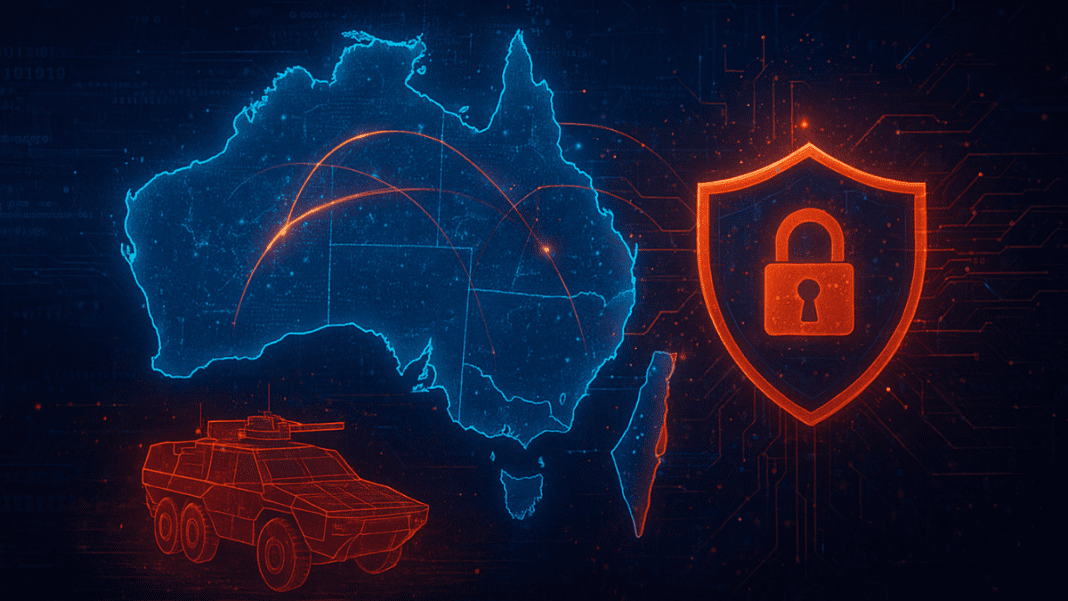
Cyber Toufan strikes again —secret data on Iron Dome, Jericho missiles, and Australia’s Land 400 project exposed

A hacking group believed to have ties to Iran has claimed responsibility for a massive cyberattack that exposed information linked to Australia’s $7 billion Land 400 defence program. The group, known as Cyber Toufan, says it accessed the data after breaching several Israeli defence companies.

Cyber Toufan, a pro-Hamas group, shared the stolen material on Telegram. Among the leaked files were images and details about the Australian Defence Force’s (ADF) Land 400 upgrade program, which includes the Redback infantry fighting vehicle being developed by Hanwha Defence Australia, a subsidiary of South Korea’s Hanwha Defence.

The hackers claimed to have breached 17 organisations linked to Israel’s defence industry, stealing tens of terabytes of personal, technical, and administrative data, including audio and video recordings.
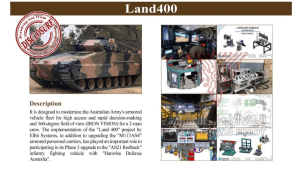
Cyber Toufan claims breach of Israeli firms, leaks ADF Land 400 project data

How the Cyberattack Happened

According to Cyber Toufan, the intrusion began through Maya Engineering, an Israeli firm that works closely with defence contractors. The group said it had full access to Maya’s network for more than a year, exploring its systems and connected devices before reaching larger companies, including Elbit Systems and Rafael Advanced Defense Systems.

In their posts, the hackers said they had breached phones, routers, printers, and cameras, and even recorded internal meetings with sound and video. They claimed to have reached QNAP archives containing information from Elbit and Rafael.

South Korea rocked by scandal — gang extorts victims with ‘secret-camera’ hoax via hacked massage apps

Cyber Toufan published security camera images, office photos, and personnel footage from Maya Engineering and its partners. The group alleged these included employees from Elbit, Rafael, Israel Aerospace Industries (IAI), and the Israeli Ministry of Defense, describing them as part of a “blacklist.”

The hackers also claimed to have accessed and downloaded data about major Israeli defence systems such as the Iron Dome, Laser Dome, David’s Sling, and Arrow, along with missile programs like Jericho, Spike, Gabriel, and Sea Breaker. They said they also obtained information about Israeli tanks, drones, and armoured vehicles, including the Achzarit and Leopard.

Leaked ADF Program Details and Global Concerns

Among the leaked material, Cyber Toufan posted details of the ADF’s Land 400 program, showing images of the Redback armoured vehicle, its Iron Vision system, and remotely operated turret. The group also shared what appeared to be blueprints of vehicle components, claiming these came from Maya Engineering’s archives.

Cyber Toufan said the designs they obtained were linked to projects developed in cooperation with several countries and valued at hundreds of millions of dollars. They added that only part of the data had been released and warned that more could follow.

Russian hacker group ‘RansomHouse’ claims massive cyberattack on Japan’s Askul — 1.1 terabytes of data stolen

Cyber Toufan emerged in November 2023 and has since been linked by analysts to state-backed Iranian activity. Cybersecurity company SOCRadar noted that the group’s sophistication and technical reach suggest significant resources and coordination, typical of government-supported cyber operations.

The Australian Department of Defence and Elbit Systems have not commented on the claims. Hanwha Defence Australia has declined to comment.

Security Implications and Ongoing Investigation

Experts say there is no confirmed evidence that classified Australian defence data has been leaked, but the mention of the Land 400 project raises concerns about supply chain security. Sensitive data shared among international partners can become vulnerable if one connected system is compromised.

Cyber Toufan stated that their intention was to expose companies involved in weapons design and manufacturing. They claimed to have monitored Israeli defence systems and international projects for more than a year.

The hacking collective continues to post parts of the stolen data online and has said this is “just the beginning.” Cybersecurity experts warn that such leaks, even if they don’t include classified material, can still threaten defence industries by revealing technical details and system designs.

T U Deshmukh
T U Deshmukh
T U Deshmukh is the leading voice on the subject of Jobs, AI, Data and layoffs and she regularly contributes a column on Jobs for Newsinterpretation.

TOP 10 TRENDING ON NEWSINTERPRETATION

Cyber Attacks on Space Infrastructure: Satellites, GPS and the Ground Systems Behind Them

From the Viasat KA-SAT hack to GPS jamming over the Baltic, a research guide to how attackers target satellites, navigation signals and ground stations, and why it matters on Earth.

How AI Agents Are Used in Cyber Attacks: From Assisted Hacking to AI-Orchestrated Espionage

Attackers now use AI agents to scan networks, write exploits and run extortion campaigns. A research guide to documented cases, including the first reported AI-orchestrated espionage campaign, and what defenders should do.

Cyber Attacks on AI and LLMs: How Attackers Target Large Language Models

Prompt injection, data poisoning, model theft and jailbreaks: a research guide to how attackers target AI systems and large language models, with real cases and defences.

French Supermarket Refrigeration Cyberattack: How Hacking the Cold Chain Can Endanger Lives

In October 2026 attackers heated refrigeration cabinets in hundreds of French supermarkets to as much as 50°C. No one was hurt, but the attack shows how hacking the cold chain can endanger lives through fire, food poisoning and spoiled medicines.

Cyberattacks on Nuclear Facilities: Stuxnet, Kudankulam and the Limits of Air Gaps

Stuxnet, the Davis-Besse worm and malware at India’s Kudankulam plant: what they show about cyber risk at nuclear facilities and the limits of air gaps.

Triton: When Hackers Target the Safety Systems That Prevent Industrial Disasters

The 2017 Triton attack targeted the safety systems that prevent industrial disasters. What happened, who was charged, and how plants protect their last line of defence.

Cybersecurity Risks in Smart Cities: When Connected Infrastructure Fails

How connecting traffic control, emergency alerts and utilities concentrates cyber risk in cities, what the Dallas and Atlanta incidents showed, and what governments recommend.

Weaponized Drones: Hijacking, GPS Spoofing and Emerging Cyber Warfare Risks

How drones can be hijacked, jammed or misled by GPS spoofing, what researchers have demonstrated, and why governments treat drone fleets as a security risk.

Ransomware Attacks on Hospitals: How Healthcare Cyberattacks Put Patients at Risk

How ransomware against hospitals and their suppliers delays care and endangers patients, what the Düsseldorf and WannaCry cases show, and what research says about deaths.

Operational blunder exposes massive Russian cyber espionage attack on Ukrainian prosecutors

A major cyberattack has compromised the email accounts of...

Cyber Attacks on Space Infrastructure: Satellites, GPS and the Ground Systems Behind Them

From the Viasat KA-SAT hack to GPS jamming over the Baltic, a research guide to how attackers target satellites, navigation signals and ground stations, and why it matters on Earth.

French Supermarket Refrigeration Cyberattack: How Hacking the Cold Chain Can Endanger Lives

In October 2026 attackers heated refrigeration cabinets in hundreds of French supermarkets to as much as 50°C. No one was hurt, but the attack shows how hacking the cold chain can endanger lives through fire, food poisoning and spoiled medicines.

Cyberattacks on Nuclear Facilities: Stuxnet, Kudankulam and the Limits of Air Gaps

Stuxnet, the Davis-Besse worm and malware at India’s Kudankulam plant: what they show about cyber risk at nuclear facilities and the limits of air gaps.

Triton: When Hackers Target the Safety Systems That Prevent Industrial Disasters

The 2017 Triton attack targeted the safety systems that prevent industrial disasters. What happened, who was charged, and how plants protect their last line of defence.

Cybersecurity Risks in Smart Cities: When Connected Infrastructure Fails

How connecting traffic control, emergency alerts and utilities concentrates cyber risk in cities, what the Dallas and Atlanta incidents showed, and what governments recommend.

Ransomware Attacks on Hospitals: How Healthcare Cyberattacks Put Patients at Risk

How ransomware against hospitals and their suppliers delays care and endangers patients, what the Düsseldorf and WannaCry cases show, and what research says about deaths.

FBI warns of AVrecon malware targeting outdated routers linked to proxy based cybercrime

A serious cybersecurity warning has been issued regarding commonly...

Related Articles

Popular Categories
