

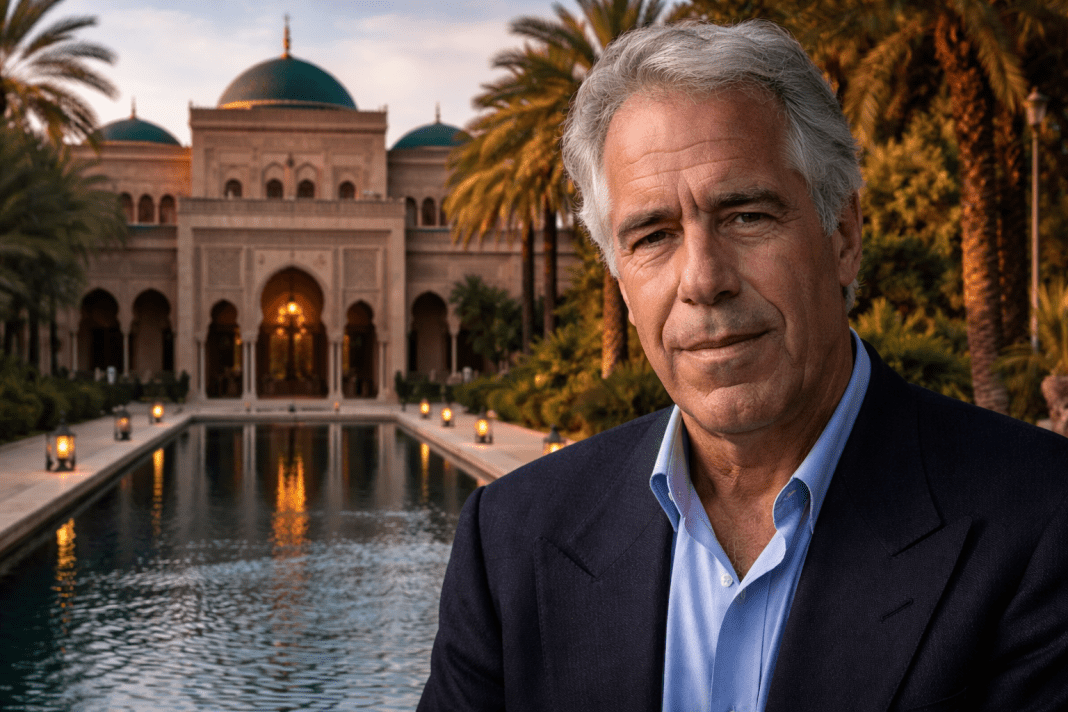

Newly released records from the US Department of Justice show that Jeffrey Epstein was in the middle of a major luxury property purchase just days before his arrest in 2019. The documents describe a plan to buy a grand palace in Morocco through an offshore company that owned the estate.
The timing of the deal has drawn attention because financial activity continued right up to the moment authorities acted. The palace, known as Bin Ennakhil, sits in the upscale Palmeraie district of Marrakech, a neighbourhood famous for high-end villas, privacy, and wealthy international residents.
A Luxury Palace Deal Near Arrest
The Bin Ennakhil palace has been described as an architectural landmark. Reports say it was built by around 1,300 craftsmen and features carved woodwork, detailed mosaics, courtyards, and landscaped gardens. The estate reflects traditional Moroccan design combined with modern luxury.
Epstein case escalates globally as UN experts cite possible crimes against humanity
Documents indicate that Epstein had been trying to acquire the property since around 2011. Negotiations took years because of disagreements over price and how the purchase would be structured. Instead of buying the palace directly, the plan involved purchasing the offshore company that held ownership.
On 5 July 2019, Epstein signed a wire transfer worth about $14.95 million as part of a deal valued at roughly €18 million. This transfer occurred one day before his arrest in New York on sex trafficking charges. Investigators later described the payment as his final major financial transaction before authorities intervened.
Three days after the arrest, Epstein’s accountant Richard Kahn cancelled the transfer. As a result, the palace purchase was never completed and ownership of Bin Ennakhil remained unchanged.
Speculation About Motivation
Because Morocco does not have an extradition treaty with the United States, some observers questioned whether the palace might have been considered a possible place to stay if legal pressure increased. Media discussions highlighted how the location could offer privacy and distance from ongoing investigations.
However, the released files do not show direct evidence that Epstein planned to use Morocco as a refuge. There is no written record of conversations describing the country as a safe destination. Some accounts included in the documents suggested he may not have expected an arrest at that time.
Bill Gates moves to step back from Delhi AI summit speech as new Epstein emails remain unverified
The situation shows how large property deals can overlap with legal developments. Even during periods of uncertainty, financial arrangements often continue until authorities step in. In this case, the cancellation happened only after the arrest became public.
The documents emphasise that appearing in records connected to the investigation does not automatically mean involvement in wrongdoing. Officials repeatedly note that many people were referenced simply because of social, professional, or property connections.
Long-Standing Connections to Morocco
The files suggest Epstein’s interest in Morocco stretched back many years. One of his most prominent accusers, Virginia Giuffre, wrote that she travelled with Epstein and Ghislaine Maxwell to Tangier to look at interior design ideas for luxury properties. Moroccan style later influenced renovations of his private island.
Historical links also appear in social records. In 2002, Epstein attended the wedding of Morocco’s King Mohammed VI alongside Maxwell after reportedly receiving an invitation connected to former US President Bill Clinton.
Following earlier legal issues in the late 2000s, documents show Epstein explored the possibility of establishing a base in Marrakech. Correspondence indicates he asked former UK politician Peter Mandelson to help find an assistant who could locate housing in the city.
Petra bill ignites firestorm over Epstein’s $170M link to Peter Thiel
Travel records show periodic visits from 2012 onward, often involving stays in the Palmeraie district. The neighbourhood includes high-profile residents such as Jabor al Thani, a member of the Qatari royal family whom Epstein described in correspondence as a close associate.
The attempted purchase of Bin Ennakhil appears to fit into this broader pattern of visits, property searches, and design interests connected to Morocco. What stands out in the released files is the timing: a multimillion-dollar transaction was initiated hours before an arrest that would become a major international story, and the deal was reversed within days.