
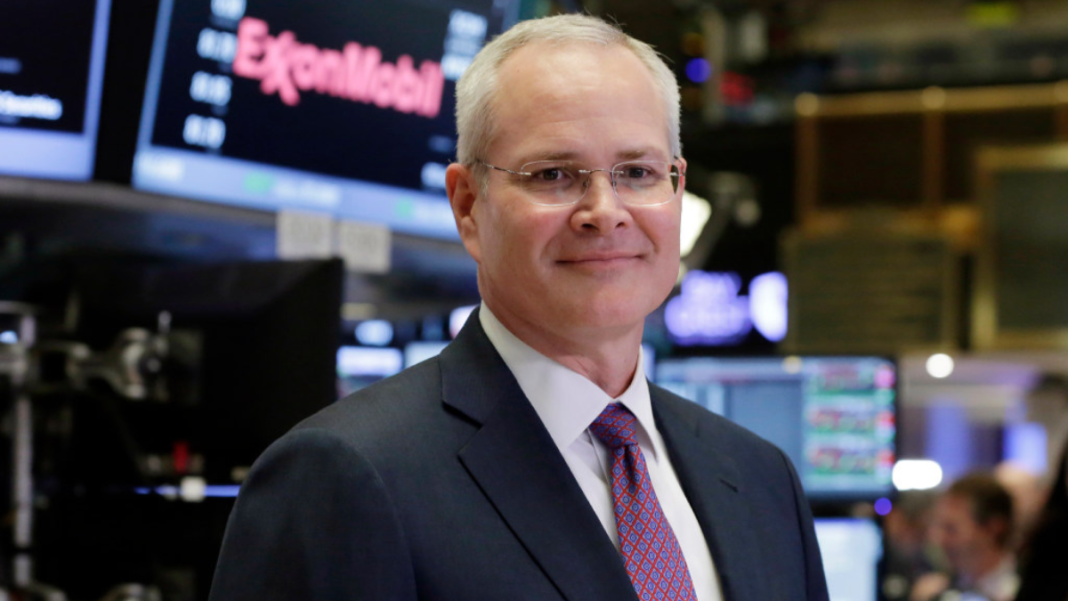

In a political climate where many business leaders carefully choose their words around powerful figures, one oil executive took a different approach. During a recent White House meeting, Exxon Mobil CEO Darren Woods openly disagreed with President Donald Trump over plans to invest heavily in Venezuela’s oil industry. His comments were direct, cautious, and rooted in Exxon Mobil’s long-standing business philosophy.
The exchange quickly became public and drew attention because it showed a rare moment of resistance from a major corporate leader. While President Trump has encouraged companies to support his economic and geopolitical goals, Woods chose to focus on business risks rather than political expectations. His response highlighted the tension between government ambitions and corporate responsibility.
A White House Meeting That Sparked Friction
President Donald Trump recently hosted senior executives from major U.S. oil companies at the White House. The meeting focused on Venezuela, a country with massive oil reserves but a weakened energy sector after years of political and economic instability. The administration discussed whether American oil companies could invest billions of dollars to help restart oil production quickly.
During the discussion, Darren Woods clearly stated that Exxon Mobil could not support such an investment under current conditions. He described Venezuela as “uninvestable” without long-term reforms, stable laws, and predictable business rules. Exxon has past experience in the country, including losing assets when the Venezuelan government took control of oil operations years ago. That history played a key role in Woods’ cautious stance.
President Trump reacted strongly to Woods’ comments. Days later, he publicly criticized Exxon Mobil, calling the company “too cute.” He also said he was inclined to keep Exxon out of Venezuela altogether, signaling frustration with the company’s unwillingness to move quickly. Despite this criticism, Exxon Mobil’s stock price slipped only slightly, showing limited concern among investors.
Darren Woods and the Discipline of the Exxon Way
Darren Woods became CEO of Exxon Mobil in 2017, taking over from Rex Tillerson, who left the company to serve as U.S. secretary of state. Woods is a longtime Exxon employee and is known for strictly following what is often called the “Exxon way.” This approach emphasizes discipline, detailed analysis, and long-term planning over fast or politically driven decisions.
“Pure gaslighting”: Kamala Harris blasts Trump administration over fatal ICE shooting in Minneapolis
Woods has a reputation for being polite but blunt. He has previously said Exxon focuses on oil and gas rather than renewable electricity, often summarizing the company’s strategy as working with “molecules, not electrons.” He has also rejected claims that oil companies alone should be blamed for climate change, arguing that global energy demand drives production.
This same straightforward style was visible in his exchange with President Trump. Woods did not attack the administration, but he refused to commit Exxon Mobil to a high-risk investment that could harm shareholders. His priority remained protecting the company’s financial stability rather than aligning with political pressure.
Industry Reaction and the Limits of Political Pressure
Energy analysts say Woods’ comments reflected a broader industry view. Jim Wicklund, a veteran oil analyst and managing director at PPHB, said that among the executives present, Woods was the only one willing to clearly state what many were thinking. According to Wicklund, there is little urgency within the oil industry to return to Venezuela.
The risks, analysts say, are not just financial but political. Even if investment terms are improved, uncertainty around government control and policy changes remains a major concern. From a business standpoint, these risks outweigh potential rewards by a large margin.
After Venezuela intervention, U.S. shifts tone toward Colombia to calm Latin
America
Wicklund noted that Exxon Mobil’s size and financial strength give it leverage. The company does not need to rush into unstable markets and can afford to wait. This dynamic shifts the balance of power, showing that even strong political pressure does not always lead to corporate compliance.
As reported by Fortune energy editor Jordan Blum, the situation illustrates how Exxon’s disciplined culture can clash with political urgency. Woods’ refusal to move quickly did not change policy or announce new investments, but it revealed how major corporations weigh risk, responsibility, and independence when facing pressure from the highest levels of government.