



Galactic Leap of Earth: Harnessing the Power of Spacetech

Introduction

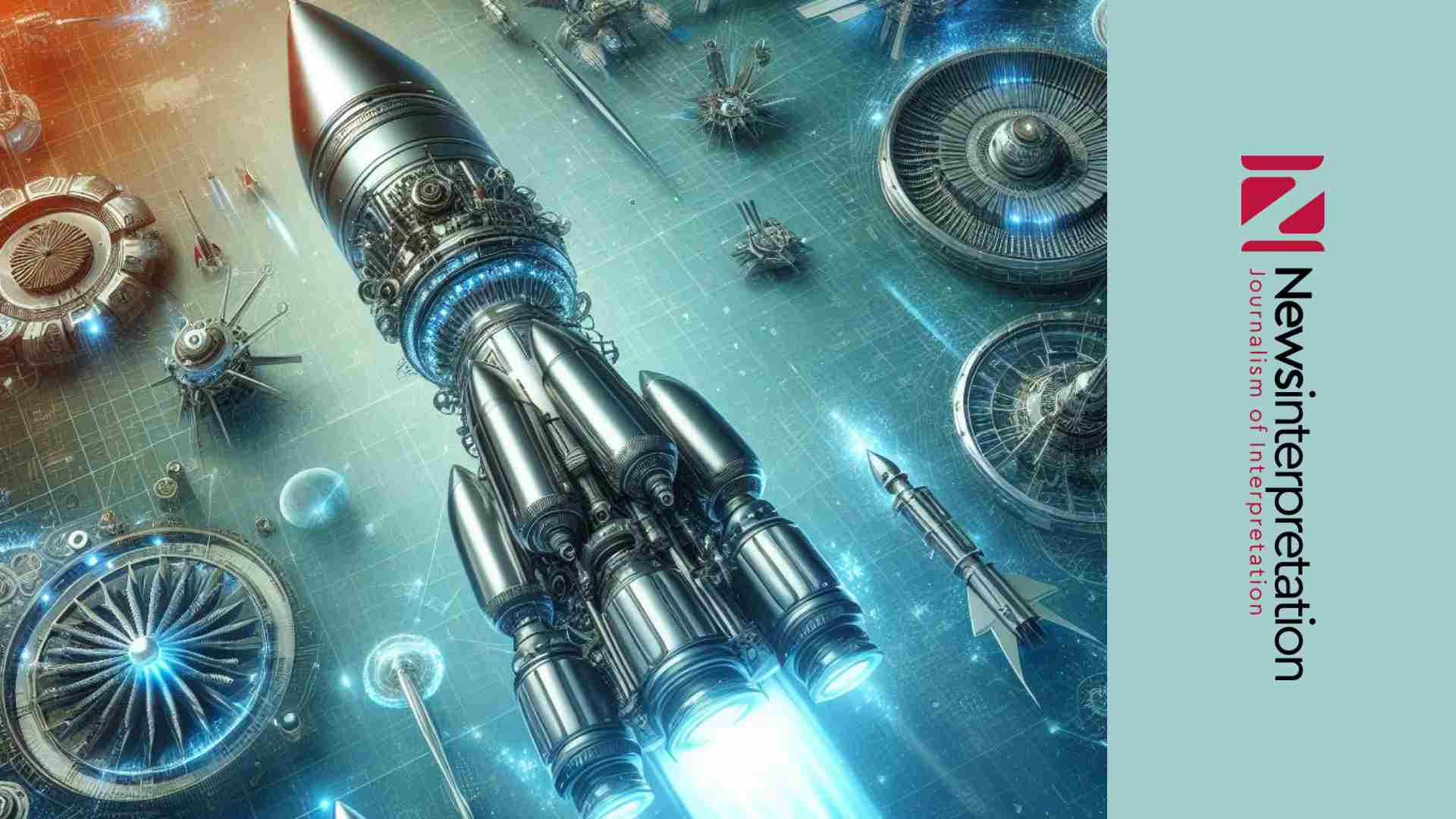
Spacetech is now a commonly heard word, isn’t it? But what exactly is Spacetech which has been advancing a lot these days? Spacetech short for Space technology, has a wide range of scientific projects, and engineering focused on space exploration, examining habitable conditions and understanding space in a better way.
Spacetech provides the necessary information about many important aspects considering the factors affecting the habitable conditions provided through technology. From satellite communication to observatories based on Earth to potential colonization and exploration of the planets. With the pace technology has been advancing, in a few years we are likely to be very close to reaching our goal of possibly living in space. In short, it is a useful technology that will potentially make us a Type II or Type III civilization according to Kardeshev’s scale.

A Brief History

Everything has a starting and a turning point. Sputnik 1 was the first artificial satellite which was launched into space. It was in orbit of the earth for three months till the 4th of January which travelled 70 million miles. The Space Race between the Soviet Union and the United States gave quite a headstart to the advancements in rocketry, satellite technology and human spaceflights.

Memorable Achievements

These Spacetech achievements will always hold a special place in people’s hearts.

  • The Soviet Union achieved a remarkable milestone with the piloted Vostok I spaceflight by cosmonaut Yuri Gagarin in 1961.
  • In 1962, NASA and AT&T launched a communications satellite named Telstar, which played a crucial role in improving global telecommunications.
  • NASA had several spaceflights lined up, including the Apollo 11 mission, which was the first crewed journey to the moon.
  •  In 1962, the probe named Mariner 2 started its mission to Venus.
  • In 1965, the flyby towards Mars took place with the help of Mariner 4.

Advancements in Space Technology

As years went by spacetech has advanced.

  • Progress in satellite technology led to the construction of space stations, such as the ISS, Mir, and Skylab.
  • Companies like SpaceX and Blue Origin have boosted Spacetech, introducing the concept of Reusable Rockets which is an Environment-friendly concept.

The more we learn about the universe, the more profound our admiration and the more we take a humble attitude towards our place in the universe.” This quote by Max Tegmark inspires us and helps us understand why Spacetech is important.

Spacetech is vital in domains like Communications, Navigation, Earth Observation, Scientific Research, National Security, etc.

  • Communications: Satellites related to communications are very helpful. They make International Communications faster, including broadcasting television networks, internet services telecommunication, and mobile connections.
  • Navigations: Special satellites focused on navigation have been very helpful in navigating the maps instead of predictions. They help in navigation systems like GPS (Global Positioning System). They give precise location tracking for transports, personal navigation systems, and logistics.
  • Earth Observation: Satellites are positioned high above the Earth giving us a much better view of the planet.
  • National Security: Did you know Spacetech plays a crucial role in missile detection and surveillance? It’s incredible how this advanced technology helps to keep us safe and secure.
  • Scientific research: Space missions provide vital data for astronomy, astrophysics, planetary science, and fundamental physics and the universe. This knowledge helps us explore the universe and uncover its mysteries.

Space Technology will potentially lead us to interplanetary habitats very soon.
Aahana M Joshi
Aahana M Joshi
Aahana Joshi is the youngest contributor at News Interpretation, bringing a fresh perspective to the platform. Her writing spans a wide range of topics, with a particular focus on Science and Space Technology. Aahana's insightful articles make complex subjects accessible and engaging for readers, showcasing her talent and passion for Space Technology.

TOP 10 TRENDING ON NEWSINTERPRETATION

Cyber Attacks on Space Infrastructure: Satellites, GPS and the Ground Systems Behind Them

From the Viasat KA-SAT hack to GPS jamming over the Baltic, a research guide to how attackers target satellites, navigation signals and ground stations, and why it matters on Earth.

How AI Agents Are Used in Cyber Attacks: From Assisted Hacking to AI-Orchestrated Espionage

Attackers now use AI agents to scan networks, write exploits and run extortion campaigns. A research guide to documented cases, including the first reported AI-orchestrated espionage campaign, and what defenders should do.

Cyber Attacks on AI and LLMs: How Attackers Target Large Language Models

Prompt injection, data poisoning, model theft and jailbreaks: a research guide to how attackers target AI systems and large language models, with real cases and defences.

French Supermarket Refrigeration Cyberattack: How Hacking the Cold Chain Can Endanger Lives

In October 2026 attackers heated refrigeration cabinets in hundreds of French supermarkets to as much as 50°C. No one was hurt, but the attack shows how hacking the cold chain can endanger lives through fire, food poisoning and spoiled medicines.

Cyberattacks on Nuclear Facilities: Stuxnet, Kudankulam and the Limits of Air Gaps

Stuxnet, the Davis-Besse worm and malware at India’s Kudankulam plant: what they show about cyber risk at nuclear facilities and the limits of air gaps.

Triton: When Hackers Target the Safety Systems That Prevent Industrial Disasters

The 2017 Triton attack targeted the safety systems that prevent industrial disasters. What happened, who was charged, and how plants protect their last line of defence.

Cybersecurity Risks in Smart Cities: When Connected Infrastructure Fails

How connecting traffic control, emergency alerts and utilities concentrates cyber risk in cities, what the Dallas and Atlanta incidents showed, and what governments recommend.

Weaponized Drones: Hijacking, GPS Spoofing and Emerging Cyber Warfare Risks

How drones can be hijacked, jammed or misled by GPS spoofing, what researchers have demonstrated, and why governments treat drone fleets as a security risk.

Ransomware Attacks on Hospitals: How Healthcare Cyberattacks Put Patients at Risk

How ransomware against hospitals and their suppliers delays care and endangers patients, what the Düsseldorf and WannaCry cases show, and what research says about deaths.

Operational blunder exposes massive Russian cyber espionage attack on Ukrainian prosecutors

A major cyberattack has compromised the email accounts of...

Cyber Attacks on Space Infrastructure: Satellites, GPS and the Ground Systems Behind Them

From the Viasat KA-SAT hack to GPS jamming over the Baltic, a research guide to how attackers target satellites, navigation signals and ground stations, and why it matters on Earth.

French Supermarket Refrigeration Cyberattack: How Hacking the Cold Chain Can Endanger Lives

In October 2026 attackers heated refrigeration cabinets in hundreds of French supermarkets to as much as 50°C. No one was hurt, but the attack shows how hacking the cold chain can endanger lives through fire, food poisoning and spoiled medicines.

Cyberattacks on Nuclear Facilities: Stuxnet, Kudankulam and the Limits of Air Gaps

Stuxnet, the Davis-Besse worm and malware at India’s Kudankulam plant: what they show about cyber risk at nuclear facilities and the limits of air gaps.

Triton: When Hackers Target the Safety Systems That Prevent Industrial Disasters

The 2017 Triton attack targeted the safety systems that prevent industrial disasters. What happened, who was charged, and how plants protect their last line of defence.

Cybersecurity Risks in Smart Cities: When Connected Infrastructure Fails

How connecting traffic control, emergency alerts and utilities concentrates cyber risk in cities, what the Dallas and Atlanta incidents showed, and what governments recommend.

Ransomware Attacks on Hospitals: How Healthcare Cyberattacks Put Patients at Risk

How ransomware against hospitals and their suppliers delays care and endangers patients, what the Düsseldorf and WannaCry cases show, and what research says about deaths.

FBI warns of AVrecon malware targeting outdated routers linked to proxy based cybercrime

A serious cybersecurity warning has been issued regarding commonly...

Related Articles

Popular Categories
