

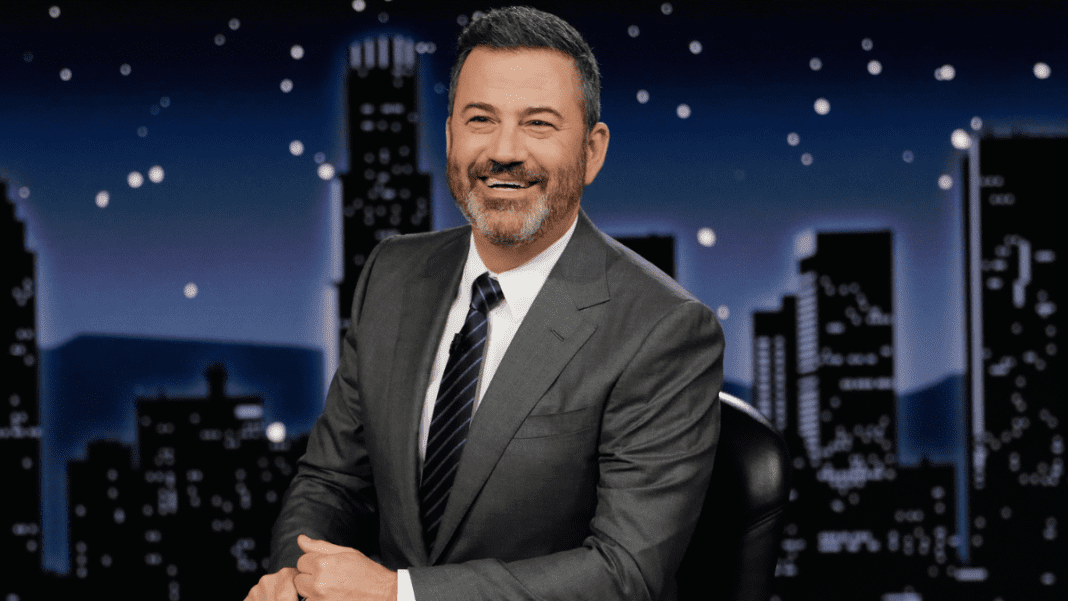
Gavin Newsom warns of coordinated effort after ABC halts Jimmy Kimmel Live citing FCC pressure

ABC announced on Wednesday that it would stop airing new episodes of Jimmy Kimmel Live! “indefinitely.” The move came after host Jimmy Kimmel made comments about the man accused of killing conservative activist Charlie Kirk. In his monologue, Kimmel said the “MAGA gang” was trying to spin the suspect’s image to score political points.

These remarks sparked outrage from conservatives and drew attention from FCC Chair Brendan Carr. Carr told YouTuber Benny Johnson that he was considering pulling ABC’s affiliate licenses, claiming Kimmel wrongly tied the killer to MAGA supporters.

“Broadcasters have licenses from the FCC, and those come with obligations to operate in the public interest,” Carr said. “When we see stuff like this, companies can either make changes, or the FCC will act.”

Soon after, Nexstar Media, which owns many local stations, said it would stop airing Kimmel’s show. ABC followed by halting production altogether. President Donald Trump celebrated the decision on his Truth Social account, calling it “great news for America” and labeling Kimmel “talentless.” Trump also urged NBC to cancel its other late-night hosts, Jimmy Fallon and Seth Meyers.

Hollywood and Political Leaders Speak Out

The decision quickly sparked a wave of criticism from artists, unions, and politicians. California Governor Gavin Newsom said the cancellation was part of a bigger pattern. He pointed to the firing of MSNBC commentator Matthew Dowd, Trump allies gaining influence over TikTok, and the earlier cancellation of Stephen Colbert’s show. “Buying and controlling media platforms. Firing commentators. Canceling shows. These aren’t coincidences,” Newsom wrote. “It’s coordinated. And it’s dangerous.”

California Senator Adam Schiff also defended Kimmel. He compared the situation to Colbert’s cancellation and mentioned lawsuits filed by Trump against The New York Times, The Wall Street Journal, and 60 Minutes. “This administration is responsible for the most blatant attacks on the free press in American history,” Schiff said.

Newsom recalls son’s admiration for Kirk as debate over masculinity resurfaces

Illinois Governor JB Pritzker called the cancellation “an attack on free speech.” He urged other elected officials to speak up. “A free and democratic society cannot silence comedians because the President doesn’t like what they say,” Pritzker said.

Actor Ben Stiller joined in, simply writing “This isn’t right” while sharing a report about the decision. Author Joyce Carol Oates also expressed disappointment. “Humor is edgy, surreal, exaggerated, and can’t be fact-checked,” she said. “If a joke falls flat, the audience’s silence is punishment enough.”

Comedian Kathy Griffin, who has faced backlash in her own career, told her followers it was vital to support Kimmel. “Please, take it from me, it is very important to have Jimmy Kimmel’s back right now,” Griffin wrote.

Writers and Musicians Defend Kimmel

Two major entertainment unions also took strong stands. The Writers Guild of America (WGA), which represents Kimmel’s writers, condemned both the FCC and ABC. According to the guild, “the essence of what it means to be a free people is the freedom to express our opinions and to disagree with one another—to disturb, even.” It cannot be disputed. Not via acts of corporate cowardice, not through the misuse of political authority, and not through violence.

The American Federation of Musicians, which represents Kimmel’s house band, released a statement as well. “Trump’s FCC identified speech it did not like and threatened ABC with extreme reprisals,” the group said. “This is state censorship.”

Newsom recalls son’s admiration for Kirk as debate over masculinity resurfaces

MSNBC host Chris Hayes highlighted Carr’s role in the controversy. “It’s not even close to the most direct attack on free speech by state actors I’ve ever seen in my life,” he said.

The cancellation of Jimmy Kimmel Live! has now become more than just a late-night TV issue. It has turned into a flashpoint between politics, media companies, entertainers, and free speech advocates.

Renuka Bangale
Renuka Bangale
Renuka is a distinguished Chartered Accountant and a Certified Digital Threats Analyst from Riskpro, renowned for her expertise in cybersecurity. With a deep understanding of cybercrimes, malware, cyber warfare, and espionage, she has established herself as an authority in the field. Renuka combines her financial acumen with advanced knowledge of digital threats to provide unparalleled insights into the evolving landscape of information security. Her analytical prowess enables her to dissect complex cyber incidents, offering clarity on risks and mitigation strategies. As a key contributor to Newsinterpretation’s information security category, Renuka delivers authoritative articles that educate and inform readers about emerging threats and best practices.

TOP 10 TRENDING ON NEWSINTERPRETATION

Cyber Attacks on Space Infrastructure: Satellites, GPS and the Ground Systems Behind Them

From the Viasat KA-SAT hack to GPS jamming over the Baltic, a research guide to how attackers target satellites, navigation signals and ground stations, and why it matters on Earth.

How AI Agents Are Used in Cyber Attacks: From Assisted Hacking to AI-Orchestrated Espionage

Attackers now use AI agents to scan networks, write exploits and run extortion campaigns. A research guide to documented cases, including the first reported AI-orchestrated espionage campaign, and what defenders should do.

Cyber Attacks on AI and LLMs: How Attackers Target Large Language Models

Prompt injection, data poisoning, model theft and jailbreaks: a research guide to how attackers target AI systems and large language models, with real cases and defences.

French Supermarket Refrigeration Cyberattack: How Hacking the Cold Chain Can Endanger Lives

In October 2026 attackers heated refrigeration cabinets in hundreds of French supermarkets to as much as 50°C. No one was hurt, but the attack shows how hacking the cold chain can endanger lives through fire, food poisoning and spoiled medicines.

Cyberattacks on Nuclear Facilities: Stuxnet, Kudankulam and the Limits of Air Gaps

Stuxnet, the Davis-Besse worm and malware at India’s Kudankulam plant: what they show about cyber risk at nuclear facilities and the limits of air gaps.

Triton: When Hackers Target the Safety Systems That Prevent Industrial Disasters

The 2017 Triton attack targeted the safety systems that prevent industrial disasters. What happened, who was charged, and how plants protect their last line of defence.

Cybersecurity Risks in Smart Cities: When Connected Infrastructure Fails

How connecting traffic control, emergency alerts and utilities concentrates cyber risk in cities, what the Dallas and Atlanta incidents showed, and what governments recommend.

Weaponized Drones: Hijacking, GPS Spoofing and Emerging Cyber Warfare Risks

How drones can be hijacked, jammed or misled by GPS spoofing, what researchers have demonstrated, and why governments treat drone fleets as a security risk.

Ransomware Attacks on Hospitals: How Healthcare Cyberattacks Put Patients at Risk

How ransomware against hospitals and their suppliers delays care and endangers patients, what the Düsseldorf and WannaCry cases show, and what research says about deaths.

Operational blunder exposes massive Russian cyber espionage attack on Ukrainian prosecutors

A major cyberattack has compromised the email accounts of...

Cyber Attacks on Space Infrastructure: Satellites, GPS and the Ground Systems Behind Them

From the Viasat KA-SAT hack to GPS jamming over the Baltic, a research guide to how attackers target satellites, navigation signals and ground stations, and why it matters on Earth.

French Supermarket Refrigeration Cyberattack: How Hacking the Cold Chain Can Endanger Lives

In October 2026 attackers heated refrigeration cabinets in hundreds of French supermarkets to as much as 50°C. No one was hurt, but the attack shows how hacking the cold chain can endanger lives through fire, food poisoning and spoiled medicines.

Cyberattacks on Nuclear Facilities: Stuxnet, Kudankulam and the Limits of Air Gaps

Stuxnet, the Davis-Besse worm and malware at India’s Kudankulam plant: what they show about cyber risk at nuclear facilities and the limits of air gaps.

Triton: When Hackers Target the Safety Systems That Prevent Industrial Disasters

The 2017 Triton attack targeted the safety systems that prevent industrial disasters. What happened, who was charged, and how plants protect their last line of defence.

Cybersecurity Risks in Smart Cities: When Connected Infrastructure Fails

How connecting traffic control, emergency alerts and utilities concentrates cyber risk in cities, what the Dallas and Atlanta incidents showed, and what governments recommend.

Ransomware Attacks on Hospitals: How Healthcare Cyberattacks Put Patients at Risk

How ransomware against hospitals and their suppliers delays care and endangers patients, what the Düsseldorf and WannaCry cases show, and what research says about deaths.

FBI warns of AVrecon malware targeting outdated routers linked to proxy based cybercrime

A serious cybersecurity warning has been issued regarding commonly...

Related Articles

Popular Categories
