

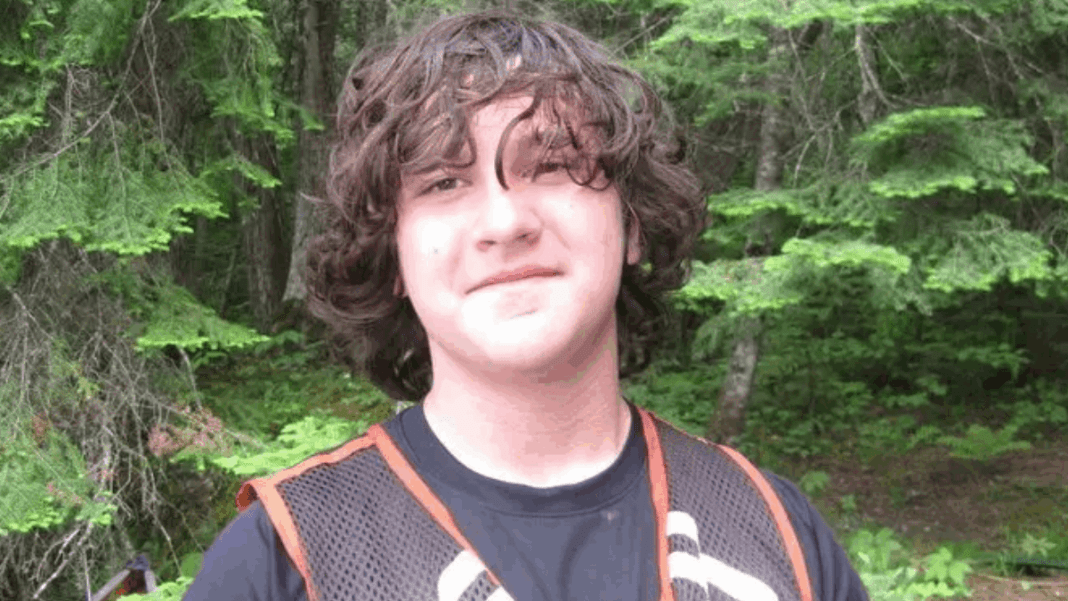

FBI uncovers ‘terrorize ICE’ note, but Joshua Jahn’s family disputes anti-ICE narrative

On September 24, 2025, Joshua Jahn, a 29-year-old from Fairview, Texas, opened fire from a rooftop near a Dallas Immigration and Customs Enforcement (ICE) facility. The attack resulted in the death of one detainee and left two others critically injured. Jahn then died from a self-inflicted gunshot wound.

FBI Unveils Disturbing Evidence in Dallas ICE Shooting

The FBI’s investigation revealed that Jahn had meticulously planned the assault. Officials discovered a handwritten note in his belongings stating his intent to “terrorize” ICE agents. The note included chilling lines such as, “Hopefully this will give ICE agents real terror, to think, ‘is there a sniper with AP [armor-piercing] rounds on that roof?'”

Additionally, investigators found a bullet casing inscribed with “ANTI-ICE” and noted that Jahn had downloaded a document listing Department of Homeland Security facilities. His online activity also showed searches for apps that track ICE agents and videos related to the assassination of conservative commentator Charlie Kirk .

These findings suggest that Jahn’s actions were not impulsive but rather the result of careful planning and a clear ideological motive. The use of a sniper position and armor-piercing rounds indicates a deliberate attempt to cause maximum harm to ICE personnel. The presence of the “ANTI-ICE” inscription on the bullet casing further underscores the targeted nature of the attack.

Family Asserts Jahn Was Not Politically Motivated

Despite the evidence suggesting a politically charged motive, Jahn’s family maintains that he was not politically active. A relative, who was present during an FBI interview, stated that the family is “devastated” by the incident and emphasized that Jahn’s actions were not politically driven. The relative declined to elaborate on the statement, leaving the family’s perspective unclear.

Friends from Jahn’s past describe him as a laid-back individual with an interest in video games and marijuana, rather than someone with strong political views. One friend remarked, “Josh was the least political out of all the people I knew in high school.

Karoline Leavitt shares post linking Utah earthquake to Charlie Kirk death timing

He liked playing video games.” His former boss also noted that Jahn lacked a strong work ethic and had no apparent interest in politics at the time.

These personal accounts paint a picture of Jahn as an individual disconnected from political ideologies. However, the stark contrast between these descriptions and the evidence uncovered by the FBI raises questions about the complexity of his motivations. It suggests that while Jahn may not have been overtly political in his personal life, he may have been influenced by external factors or internal struggles that led to his violent actions.

Attack’s Impact and Ongoing Investigation

The shooting has raised significant concerns about politically motivated violence in the United States. While Jahn’s intended target was ICE agents, the victims were detainees, highlighting the unpredictable nature of such attacks. The FBI continues to investigate the incident, seeking to understand the full scope of Jahn’s motivations and any potential connections to larger extremist movements.

This tragic event underscores the complex interplay between individual actions and broader political climates, leaving both authorities and the public grappling with its implications.

Mary Kirk, once unknown as Charlie Kirk’s sister, now stands with Bernie Sanders’ progressive movement

In the aftermath, discussions have emerged about the role of social media and online platforms in radicalizing individuals. Jahn’s search history, which included videos related to the assassination of Charlie Kirk, suggests that online content may have played a role in shaping his views and actions.

Furthermore, the attack has sparked debates about the security measures in place at federal facilities. The fact that Jahn was able to position himself on a rooftop and carry out a sniper attack raises questions about the adequacy of current security protocols. Authorities are now reviewing security procedures at similar facilities to prevent future incidents.


Pearl Croft
Pearl Crofthttps://newsinterpretation.com
I am Pearl Croft I give “News Interpretation” an insight into the most recent news hitting the “Consumer Goods” sector in Wall Street. I have been an independent financial adviser for over 11 years in the city and in recent years turned my experience in finance and passion for journalism into a full time role. I perform analysis of Companies and publicize valuable information for shareholder community. But writing about the political developments is my hobby.

TOP 10 TRENDING ON NEWSINTERPRETATION

Cyber Attacks on Space Infrastructure: Satellites, GPS and the Ground Systems Behind Them

From the Viasat KA-SAT hack to GPS jamming over the Baltic, a research guide to how attackers target satellites, navigation signals and ground stations, and why it matters on Earth.

How AI Agents Are Used in Cyber Attacks: From Assisted Hacking to AI-Orchestrated Espionage

Attackers now use AI agents to scan networks, write exploits and run extortion campaigns. A research guide to documented cases, including the first reported AI-orchestrated espionage campaign, and what defenders should do.

Cyber Attacks on AI and LLMs: How Attackers Target Large Language Models

Prompt injection, data poisoning, model theft and jailbreaks: a research guide to how attackers target AI systems and large language models, with real cases and defences.

French Supermarket Refrigeration Cyberattack: How Hacking the Cold Chain Can Endanger Lives

In October 2026 attackers heated refrigeration cabinets in hundreds of French supermarkets to as much as 50°C. No one was hurt, but the attack shows how hacking the cold chain can endanger lives through fire, food poisoning and spoiled medicines.

Cyberattacks on Nuclear Facilities: Stuxnet, Kudankulam and the Limits of Air Gaps

Stuxnet, the Davis-Besse worm and malware at India’s Kudankulam plant: what they show about cyber risk at nuclear facilities and the limits of air gaps.

Triton: When Hackers Target the Safety Systems That Prevent Industrial Disasters

The 2017 Triton attack targeted the safety systems that prevent industrial disasters. What happened, who was charged, and how plants protect their last line of defence.

Cybersecurity Risks in Smart Cities: When Connected Infrastructure Fails

How connecting traffic control, emergency alerts and utilities concentrates cyber risk in cities, what the Dallas and Atlanta incidents showed, and what governments recommend.

Weaponized Drones: Hijacking, GPS Spoofing and Emerging Cyber Warfare Risks

How drones can be hijacked, jammed or misled by GPS spoofing, what researchers have demonstrated, and why governments treat drone fleets as a security risk.

Ransomware Attacks on Hospitals: How Healthcare Cyberattacks Put Patients at Risk

How ransomware against hospitals and their suppliers delays care and endangers patients, what the Düsseldorf and WannaCry cases show, and what research says about deaths.

Operational blunder exposes massive Russian cyber espionage attack on Ukrainian prosecutors

A major cyberattack has compromised the email accounts of...

Cyber Attacks on Space Infrastructure: Satellites, GPS and the Ground Systems Behind Them

From the Viasat KA-SAT hack to GPS jamming over the Baltic, a research guide to how attackers target satellites, navigation signals and ground stations, and why it matters on Earth.

French Supermarket Refrigeration Cyberattack: How Hacking the Cold Chain Can Endanger Lives

In October 2026 attackers heated refrigeration cabinets in hundreds of French supermarkets to as much as 50°C. No one was hurt, but the attack shows how hacking the cold chain can endanger lives through fire, food poisoning and spoiled medicines.

Cyberattacks on Nuclear Facilities: Stuxnet, Kudankulam and the Limits of Air Gaps

Stuxnet, the Davis-Besse worm and malware at India’s Kudankulam plant: what they show about cyber risk at nuclear facilities and the limits of air gaps.

Triton: When Hackers Target the Safety Systems That Prevent Industrial Disasters

The 2017 Triton attack targeted the safety systems that prevent industrial disasters. What happened, who was charged, and how plants protect their last line of defence.

Cybersecurity Risks in Smart Cities: When Connected Infrastructure Fails

How connecting traffic control, emergency alerts and utilities concentrates cyber risk in cities, what the Dallas and Atlanta incidents showed, and what governments recommend.

Ransomware Attacks on Hospitals: How Healthcare Cyberattacks Put Patients at Risk

How ransomware against hospitals and their suppliers delays care and endangers patients, what the Düsseldorf and WannaCry cases show, and what research says about deaths.

FBI warns of AVrecon malware targeting outdated routers linked to proxy based cybercrime

A serious cybersecurity warning has been issued regarding commonly...

Related Articles

Popular Categories
