

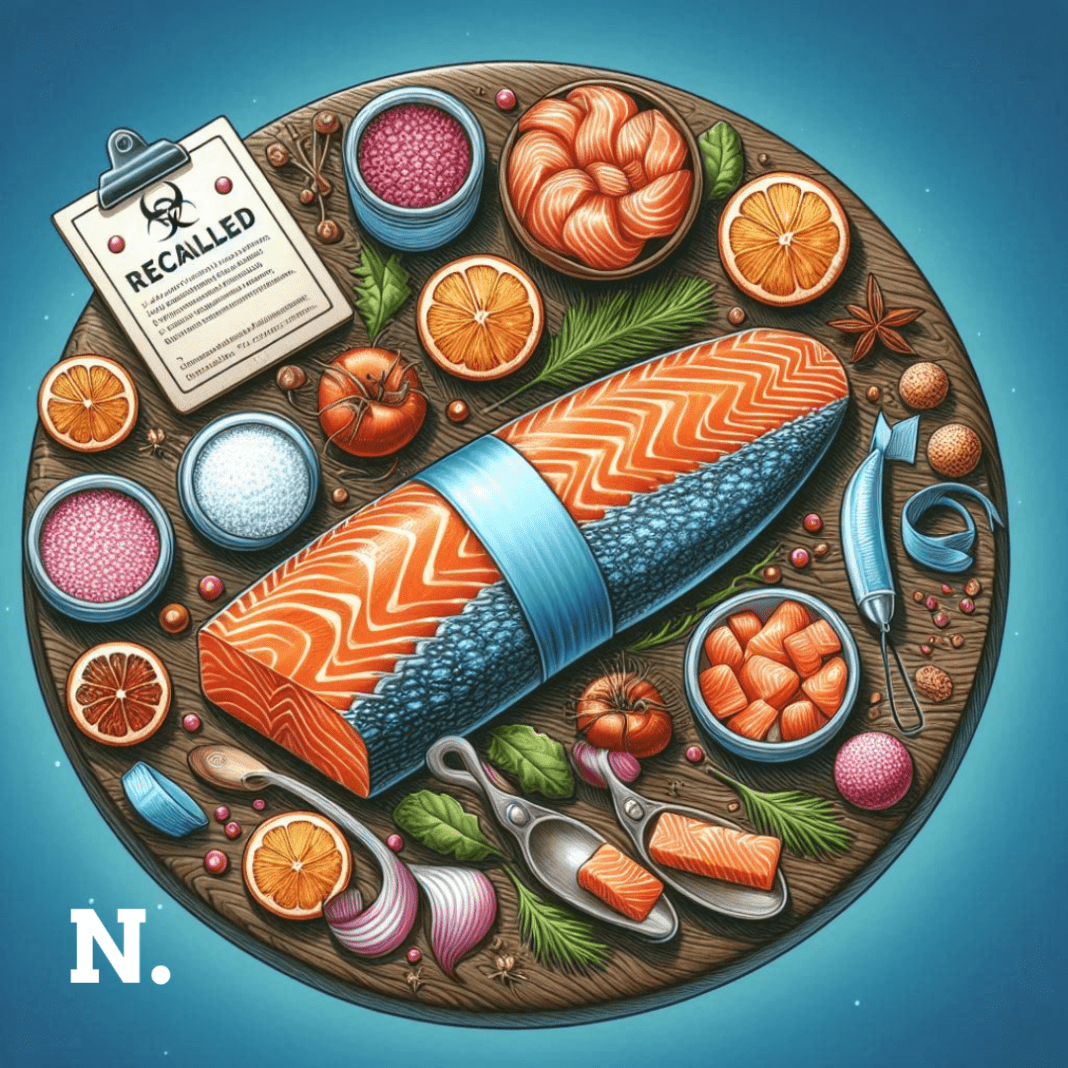

Listeria Alert: Foppen Smoked Salmon Recall issued

Foppen Paing En Zalm B.V., based in Harderwijk, The Netherlands, has issued a recall for its Smoked Norwegian Salmon Slices due to potential contamination with Listeria monocytogenes. The recall announcement did not clarify whether anyone has reported any illnesses in connection with the consumption of this product.

Foppen Product Description

Foppen packaged the affected product, Seafood Smoked Norwegian Salmon – Toast sized, in a black 8.1-ounce container. The container features a see-through window. Consumers can identify the product by the UPC number 8 40137 10000 2. This number is stamped on the label. The lot number is 412. It is visible through the clear plastic window cut out at the front of the package.

Kroger and Payless Supermarkets distributed and sold this product across multiple states, including Alabama, Arkansas, Georgia, Illinois, Indiana, Kentucky, Louisiana, Michigan, Missouri, Mississippi, Ohio, South Carolina, Tennessee, Texas, and West Virginia. Routine testing detected the presence of Listeria in Lot 412, prompting the recall.

Health Risks associated with the Foppen Product

It is recommended that consumers who have purchased this product not use it. Instead, they should dispose of it securely by double bagging it to prevent access by others and placing it in a trash can with a tight-fitting lid. Alternatively, the product can be returned to the store of purchase for a full refund.

Listeria monocytogenes poses significant health risks. Vulnerable populations are particularly at risk, including pregnant women, newborns, the older people, and those with weakened immune systems. Symptoms of listeriosis, the illness caused by Listeria, can include fever and muscle aches. Other symptoms are headache, stiff neck, confusion, loss of balance, and convulsions. These symptoms are sometimes preceded by diarrhea or other gastrointestinal symptoms.

If someone has consumed the recalled Foppen Smoked Norwegian Salmon Slices, it is crucial to monitor health for the symptoms of listeriosis over the next 70 days. Should any symptoms arise, it is imperative to seek medical attention promptly. Listeriosis can lead to severe complications, including meningitis and septicemia, and can be particularly dangerous for pregnant women, potentially causing miscarriages, stillbirths, or premature delivery.

Implications and Considerations

The recall of Foppen Smoked Norwegian Salmon highlights the ongoing challenges of ensuring food safety. It underscores the importance of stringent testing protocols to detect contaminants such as Listeria monocytogenes. This incident serves as a reminder of the critical need for consumers to stay informed about recalls. It also emphasizes the importance of food safety alerts. Additionally, it highlights the role of regulatory bodies in protecting public health.

Retailers must also be vigilant in removing recalled products from their shelves and informing customers about the recall. This helps to prevent the distribution of potentially harmful products and ensures that consumers are aware of the steps they need to take to safeguard their health.

Regulatory agencies encourage consumers to regularly check for updates on food recalls and to take any necessary precautions if they have purchased recalled products. The presence of Listeria in a food product is a serious concern, and taking proactive measures can significantly reduce the risk of illness.

Reflections on Food Safety

As the recall process unfolds, it is essential for companies to review and enhance their food safety practices. Regular and thorough testing of products, adherence to safety protocols, and prompt action when potential contaminants are detected are essential. Businesses may safeguard their reputations and clients by adhering to strict food safety regulations.

The broader impact of food recalls extends beyond immediate health concerns. It involves trust in food systems, regulatory effectiveness, and the ongoing efforts to improve food safety standards globally. Each recall serves as a case study for improving practices and preventing future occurrences, reinforcing the continuous need for vigilance and improvement in the food industry.

The Foppen Smoked Norwegian Salmon recall leaves much to ponder about the intricacies of food safety, the responsibilities of producers and regulators, and the proactive steps consumers can take to protect themselves from foodborne illnesses.

TOP 10 TRENDING ON NEWSINTERPRETATION

Cyber Attacks on Space Infrastructure: Satellites, GPS and the Ground Systems Behind Them

From the Viasat KA-SAT hack to GPS jamming over the Baltic, a research guide to how attackers target satellites, navigation signals and ground stations, and why it matters on Earth.

How AI Agents Are Used in Cyber Attacks: From Assisted Hacking to AI-Orchestrated Espionage

Attackers now use AI agents to scan networks, write exploits and run extortion campaigns. A research guide to documented cases, including the first reported AI-orchestrated espionage campaign, and what defenders should do.

Cyber Attacks on AI and LLMs: How Attackers Target Large Language Models

Prompt injection, data poisoning, model theft and jailbreaks: a research guide to how attackers target AI systems and large language models, with real cases and defences.

French Supermarket Refrigeration Cyberattack: How Hacking the Cold Chain Can Endanger Lives

In October 2026 attackers heated refrigeration cabinets in hundreds of French supermarkets to as much as 50°C. No one was hurt, but the attack shows how hacking the cold chain can endanger lives through fire, food poisoning and spoiled medicines.

Cyberattacks on Nuclear Facilities: Stuxnet, Kudankulam and the Limits of Air Gaps

Stuxnet, the Davis-Besse worm and malware at India’s Kudankulam plant: what they show about cyber risk at nuclear facilities and the limits of air gaps.

Triton: When Hackers Target the Safety Systems That Prevent Industrial Disasters

The 2017 Triton attack targeted the safety systems that prevent industrial disasters. What happened, who was charged, and how plants protect their last line of defence.

Cybersecurity Risks in Smart Cities: When Connected Infrastructure Fails

How connecting traffic control, emergency alerts and utilities concentrates cyber risk in cities, what the Dallas and Atlanta incidents showed, and what governments recommend.

Weaponized Drones: Hijacking, GPS Spoofing and Emerging Cyber Warfare Risks

How drones can be hijacked, jammed or misled by GPS spoofing, what researchers have demonstrated, and why governments treat drone fleets as a security risk.

Ransomware Attacks on Hospitals: How Healthcare Cyberattacks Put Patients at Risk

How ransomware against hospitals and their suppliers delays care and endangers patients, what the Düsseldorf and WannaCry cases show, and what research says about deaths.

Operational blunder exposes massive Russian cyber espionage attack on Ukrainian prosecutors

A major cyberattack has compromised the email accounts of...

Cyber Attacks on Space Infrastructure: Satellites, GPS and the Ground Systems Behind Them

From the Viasat KA-SAT hack to GPS jamming over the Baltic, a research guide to how attackers target satellites, navigation signals and ground stations, and why it matters on Earth.

French Supermarket Refrigeration Cyberattack: How Hacking the Cold Chain Can Endanger Lives

In October 2026 attackers heated refrigeration cabinets in hundreds of French supermarkets to as much as 50°C. No one was hurt, but the attack shows how hacking the cold chain can endanger lives through fire, food poisoning and spoiled medicines.

Cyberattacks on Nuclear Facilities: Stuxnet, Kudankulam and the Limits of Air Gaps

Stuxnet, the Davis-Besse worm and malware at India’s Kudankulam plant: what they show about cyber risk at nuclear facilities and the limits of air gaps.

Triton: When Hackers Target the Safety Systems That Prevent Industrial Disasters

The 2017 Triton attack targeted the safety systems that prevent industrial disasters. What happened, who was charged, and how plants protect their last line of defence.

Cybersecurity Risks in Smart Cities: When Connected Infrastructure Fails

How connecting traffic control, emergency alerts and utilities concentrates cyber risk in cities, what the Dallas and Atlanta incidents showed, and what governments recommend.

Ransomware Attacks on Hospitals: How Healthcare Cyberattacks Put Patients at Risk

How ransomware against hospitals and their suppliers delays care and endangers patients, what the Düsseldorf and WannaCry cases show, and what research says about deaths.

FBI warns of AVrecon malware targeting outdated routers linked to proxy based cybercrime

A serious cybersecurity warning has been issued regarding commonly...

Related Articles

Popular Categories
