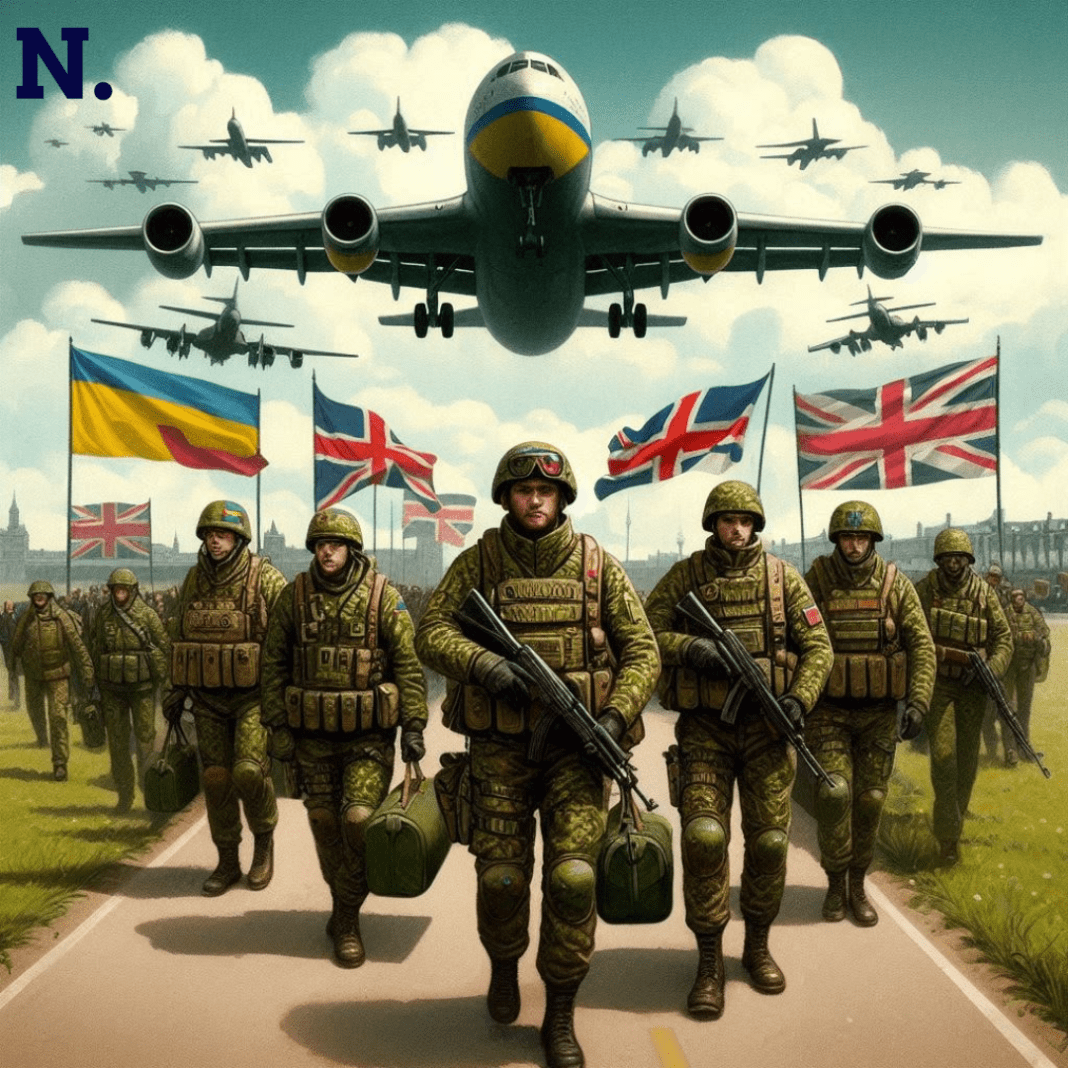

The fifth group of Lithuanian servicemen has departed to the United Kingdom as part of an international training mission to train Ukrainian forces preparing for combat operations. The mission, which started back in November 2022, seeks to provide Ukrainian soldiers with fundamental military knowledge and skills in order to conduct effective combat.
Lithuanina Serviceman: A Mission of Support and Professionalism
As the Lithuanian servicemen were about to leave for their mission, Lieutenant-Colonel Marius Kugauda, the Commander of the Training Regiment, expressed confidence in their mission: “I know and firmly believe that you will do your best to pass on your professionalism and knowledge to the Ukrainian Armed Forces.” He emphasized the role and Expectations placed on the instructors.
The participation of the Lithuanian military in this UK-led multinational training operation is part of a broader strategy aimed at supporting Ukraine in its ongoing conflict with Russia. This mission provides not just combat skills but also instills a sense of brotherhood and international cooperation through this exercise among its troops. The training encompasses all kinds of military educational activities to ensure that Ukrainian soldiers be prepared to stand up to every challenge that might appear on the battlefield.
Lithuanian Instructor: scope of training needs to expanded.
It is not the only area where Lithuania can be proud of its contribution to the development of Ukraine’s defense capabilities—the UK-led mission. The European Union Military Assistance Mission in support of Ukraine, EUMAM Ukraine, engages Lithuanian instructors in its work, with a focus on training junior commanders and specialists among Ukrainian military personnel in Lithuania. Dualism underpins comprehensiveness and pays special attention to the specific needs of the Ukrainian military.
At the end of May, the Lithuanian Prime Minister, Ingrida Šimonytė, stressed once again the country’s readiness to provide further assistance by sending military troops as trainers to Ukrainian territory. This move highlights Lithuania’s commitment to supporting Ukraine during difficult times and further strengthens the strategic commitment made by the country in terms of regional stability and security.
Appeals for Higher International Intervention
Lithuanian Foreign Minister Gabrielius Landsbergis called for the return of Western military instructors to reinforce Ukraine’s defense capabilities. They previously stationed in Ukraine before Russia’s full-scale invasion in 2022. According to Landsbergis, these experienced trainers could galvanize the training of new Ukrainian troops and thus increase the effectiveness and readiness of the Ukrainian Armed Forces.
This call to action mirrors a broader consensus among Western nations with regard to the continuous, firm support of Ukraine. The presence of international instructors provides not only better training quality but also conveys a strong and loud message of solidarity and commitment to Ukraine’s sovereignty and territorial integrity.
Broader Perspective on Security and Cooperation
Such proactive involvement by Lithuania in the training of Ukrainian forces forms part of a larger narrative of international cooperation and collective security. The Baltic country, itself having a historic experience with regional conflicts and security threats, clearly realizes the necessity for strong defense mechanisms with international alliances. Lithuania is playing an instrumental role in boosting the defense posture of a regional player with its contribution toward the training of Ukrainian soldiers.
What is more, this international training mission speaks volumes to actioning the multinational effort, especially against new threats to security. Nations cooperate, exchange competencies, and conduct combined training exercises, vividly illustrating the interconnected nature of global security. These missions stand as a badge of honor in unity and collective action in the face of aggression and instability.
The Way Forward
As the Lithuanian servicemen settle into this role of the United Kingdom-led training mission, their input will surely leave no one in doubt, marking indelibly on the preparedness and efficiency of the Ukrainian Armed Forces. The skills and knowledge transferred in the process of training will make the Ukrainian servicemen better equipped for defending their land and repelling aggression.
In this respect, continued support to Lithuania, as it were, against the backdrop of the broader international commitment, becomes very important in keeping Ukraine resilient and capable for its defense effort. There is more to the Lithuanian servicemen’s move than just traveling; it has overtones of solidarity, professionalism, and steadfastness in supporting the nation in distress.