

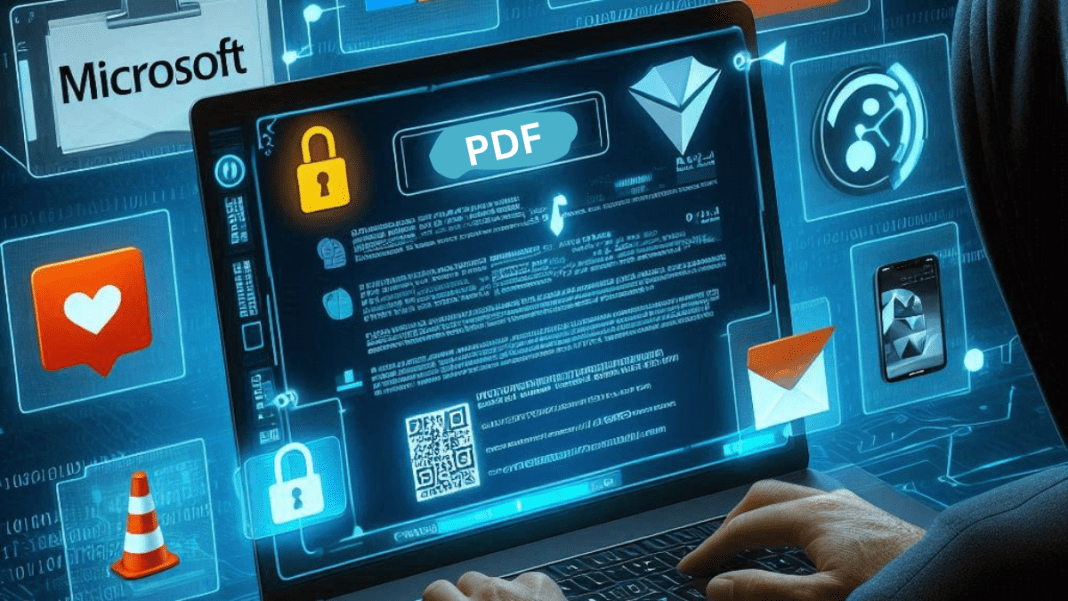
PDF Phishing Hits Hard as Cybercriminals Imitate Big Tech Brands like Microsoft, Adobe and more

Cybercriminals are now using a new and dangerous trick to fool people. They are sending fake PDF files that look like they come from well-known companies such as Microsoft, DocuSign, Dropbox, PayPal, and Adobe. These files are part of phishing attacks – a method used to steal login information, passwords, and even money.

What makes this threat more serious is that many people trust PDFs. They believe PDF files are safe because they are used in work and school every day. But hackers are taking advantage of that trust. They are hiding fake emails, invoices, and messages inside these PDFs to trick users into clicking dangerous links.

Once opened, these files often look very real. They might include company logos, urgent messages, or pretend to be from customer support. The goal is to make the user believe the file is genuine. Then, the victim is encouraged to click links or make a call – both of which can lead to stolen personal information or money loss.

Cisco Talos, a well-known cybersecurity group, has found that this type of attack is increasing fast. Between May 5 and June 5, 2025, attackers launched many such scams, mainly targeting people in the United States. They most frequently impersonated Microsoft and DocuSign in these attacks.

Hidden Tricks Inside PDF Files

The scammers are using advanced methods to hide their bad intentions. One common trick involves something called TOAD, which stands for “telephone-oriented attack delivery.” In this method, the PDF file includes fake invoices or warning messages that look urgent. These files ask the victim to call a number – which actually connects them to the scammer using internet-based phone numbers (VoIP). This allows the scammers to remain hidden and anonymous.

Another trick used in these attacks is embedding phishing emails inside the PDF file itself. This helps the scam bypass normal email security checks, which often scan the body of emails for harmful content. Since the real danger is inside the attached PDF, security software may not detect it right away.

Even more alarming is how hackers are using QR codes inside the PDFs. These QR codes are placed beside real-looking messages. When a victim scans the code with their phone, it sends them to a fake website. Some of these sites even include CAPTCHA pages – the kind that asks you to click on images or check a box – to make it seem more legitimate. Once the user goes through that step, they are asked to enter their login details, which go directly to the hackers.

In several PDF samples, attackers used smart hiding techniques. For example, they placed a visible link that looked trustworthy (like a link to Adobe’s own site), but hidden behind it was a dangerous link that led to the phishing page. This trick makes the file seem safe while still sending the victim to a fake site.

Fake E-Signatures and Global Spread

Scammers are even using Adobe’s own e-signature services to make their attacks more convincing. They create full fake documents and upload them through real Adobe systems. These documents are then shared with users, making it very hard to tell they’re fake.

This method shows just how clever these criminals have become. They are layering their attacks with fake brands, QR codes, phone numbers, and hidden URLs to catch users off guard. All of this is done inside simple PDF files that look completely normal at first glance.

🔐 Brazil’s Banking Backbone Breached: Major Cyberattack Hits C&M Software, Threatens Central Bank Links

These types of phishing attacks are not just local. They are happening around the world. But during the research period, most of the targets were in the United States. Cybercriminals also used brands like NortonLifeLock, PayPal, and Geek Squad from Best Buy in TOAD-related attacks.

People need to be extra careful with email attachments, especially PDFs. Even if the file appears to come from a trusted company, there is a chance it could be part of a scam. Always double-check links, avoid scanning unknown QR codes, and never call phone numbers from suspicious documents. This wave of PDF-based phishing shows how creative and dangerous cyber attackers have become.

Renuka Bangale
Renuka Bangale
Renuka is a distinguished Chartered Accountant and a Certified Digital Threats Analyst from Riskpro, renowned for her expertise in cybersecurity. With a deep understanding of cybercrimes, malware, cyber warfare, and espionage, she has established herself as an authority in the field. Renuka combines her financial acumen with advanced knowledge of digital threats to provide unparalleled insights into the evolving landscape of information security. Her analytical prowess enables her to dissect complex cyber incidents, offering clarity on risks and mitigation strategies. As a key contributor to Newsinterpretation’s information security category, Renuka delivers authoritative articles that educate and inform readers about emerging threats and best practices.

TOP 10 TRENDING ON NEWSINTERPRETATION

Cyber Attacks on Space Infrastructure: Satellites, GPS and the Ground Systems Behind Them

From the Viasat KA-SAT hack to GPS jamming over the Baltic, a research guide to how attackers target satellites, navigation signals and ground stations, and why it matters on Earth.

How AI Agents Are Used in Cyber Attacks: From Assisted Hacking to AI-Orchestrated Espionage

Attackers now use AI agents to scan networks, write exploits and run extortion campaigns. A research guide to documented cases, including the first reported AI-orchestrated espionage campaign, and what defenders should do.

Cyber Attacks on AI and LLMs: How Attackers Target Large Language Models

Prompt injection, data poisoning, model theft and jailbreaks: a research guide to how attackers target AI systems and large language models, with real cases and defences.

French Supermarket Refrigeration Cyberattack: How Hacking the Cold Chain Can Endanger Lives

In October 2026 attackers heated refrigeration cabinets in hundreds of French supermarkets to as much as 50°C. No one was hurt, but the attack shows how hacking the cold chain can endanger lives through fire, food poisoning and spoiled medicines.

Cyberattacks on Nuclear Facilities: Stuxnet, Kudankulam and the Limits of Air Gaps

Stuxnet, the Davis-Besse worm and malware at India’s Kudankulam plant: what they show about cyber risk at nuclear facilities and the limits of air gaps.

Triton: When Hackers Target the Safety Systems That Prevent Industrial Disasters

The 2017 Triton attack targeted the safety systems that prevent industrial disasters. What happened, who was charged, and how plants protect their last line of defence.

Cybersecurity Risks in Smart Cities: When Connected Infrastructure Fails

How connecting traffic control, emergency alerts and utilities concentrates cyber risk in cities, what the Dallas and Atlanta incidents showed, and what governments recommend.

Weaponized Drones: Hijacking, GPS Spoofing and Emerging Cyber Warfare Risks

How drones can be hijacked, jammed or misled by GPS spoofing, what researchers have demonstrated, and why governments treat drone fleets as a security risk.

Ransomware Attacks on Hospitals: How Healthcare Cyberattacks Put Patients at Risk

How ransomware against hospitals and their suppliers delays care and endangers patients, what the Düsseldorf and WannaCry cases show, and what research says about deaths.

Operational blunder exposes massive Russian cyber espionage attack on Ukrainian prosecutors

A major cyberattack has compromised the email accounts of...

Cyber Attacks on Space Infrastructure: Satellites, GPS and the Ground Systems Behind Them

From the Viasat KA-SAT hack to GPS jamming over the Baltic, a research guide to how attackers target satellites, navigation signals and ground stations, and why it matters on Earth.

French Supermarket Refrigeration Cyberattack: How Hacking the Cold Chain Can Endanger Lives

In October 2026 attackers heated refrigeration cabinets in hundreds of French supermarkets to as much as 50°C. No one was hurt, but the attack shows how hacking the cold chain can endanger lives through fire, food poisoning and spoiled medicines.

Cyberattacks on Nuclear Facilities: Stuxnet, Kudankulam and the Limits of Air Gaps

Stuxnet, the Davis-Besse worm and malware at India’s Kudankulam plant: what they show about cyber risk at nuclear facilities and the limits of air gaps.

Triton: When Hackers Target the Safety Systems That Prevent Industrial Disasters

The 2017 Triton attack targeted the safety systems that prevent industrial disasters. What happened, who was charged, and how plants protect their last line of defence.

Cybersecurity Risks in Smart Cities: When Connected Infrastructure Fails

How connecting traffic control, emergency alerts and utilities concentrates cyber risk in cities, what the Dallas and Atlanta incidents showed, and what governments recommend.

Ransomware Attacks on Hospitals: How Healthcare Cyberattacks Put Patients at Risk

How ransomware against hospitals and their suppliers delays care and endangers patients, what the Düsseldorf and WannaCry cases show, and what research says about deaths.

FBI warns of AVrecon malware targeting outdated routers linked to proxy based cybercrime

A serious cybersecurity warning has been issued regarding commonly...

Related Articles

Popular Categories