

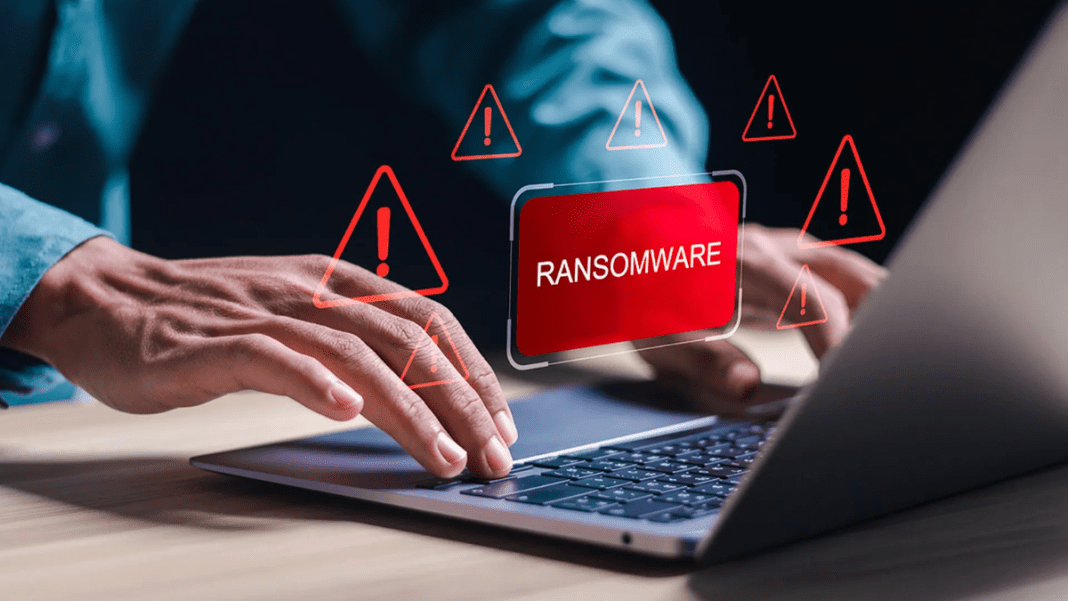
Shocking Vulnerability Exposed in Indian SMEs to Ransomware Attacks

Indian SMEs Are Still Easy Targets

In 2025, a new report by global cybersecurity firm Sophos revealed something alarming — small and medium-sized businesses (SMEs) in India are still very vulnerable to ransomware attacks. Despite some signs of progress, many of these companies are not well prepared to defend themselves against cybercriminals.

Until a ransom is paid, a malicious virus known as ransomware prevents access to a company’s data or systems.   Sophos studied 378 Indian companies that were hit by ransomware in the past year. The findings show that although awareness is growing, the vast majority of businesses still do not take strong action to protect themselves.

India has over 50 million SMEs. But only a small fraction of them are currently aware of cybersecurity threats and are taking steps to safeguard their data. Most others remain exposed. Sophos says that ransomware does not target only big companies — it goes after anyone it sees as a potential source of money. Since most SMEs don’t invest much in cybersecurity, they are much easier to attack.

Signs of Improvement but Big Gaps Remain

The report does show some positive changes. For instance, the average ransom demand in India has come down by 52%. It now stands at around $961,289. The actual amount paid by companies has fallen even more by 79% to an average of $481,636. This means fewer companies are giving in to ransom demands.

This year, just 53% of Indian businesses paid the ransom to recover their data. That’s better than last year when 65% ended up paying. More companies are now using data backups and preparing in advance, which helps them recover without paying criminals.

However, many gaps still remain. The report points out that exploited system weaknesses were the biggest reason for ransomware attacks. These were responsible for 29% of the cases. Other common entry points included stolen passwords (22%) and bad email links (21%).

Apart from technical issues, businesses also struggled with internal weaknesses. Around 41% of the companies said they didn’t have enough skilled people or good protection tools. Another 39% admitted that their companies lacked the right cybersecurity services and systems to fight back.

These weaknesses make it easy for cybercriminals to break into company systems and hold them hostage.

The Real Cost and Emotional Pressure

Ransomware attacks don’t just cost companies money. They also cause stress, loss of time, and emotional pressure. Even if a company decides not to pay the ransom, the cost of fixing the damage is huge. On average, Indian companies spent $1.01 million to recover from a ransomware attack. This includes the cost of network repairs, lost business time, recovery of devices, and the effort of the employees involved.

Many employees, especially in cybersecurity teams, reported feeling burnt out and anxious. About 46% of them said they constantly worry about the possibility of another attack. Another 42% felt that their top bosses were putting more pressure on them. Around 30% of professionals said they felt guilty for not being able to prevent the attack from happening in the first place.

🛑 Sanctions Slam Aeza! U.S. and UK Team Up to Shut Down Russia’s Ransomware Powerhouse

When looking at which industries were affected the most, the Banking, Financial Services, and Insurance (BFSI) sector stood out. This industry faced the highest number of ransomware incidents. However, experts warned that no industry is safe anymore. As hackers become smarter, every sector is at risk.

To fight back, companies are being urged to fix system flaws and improve staff knowledge. They should also set up strong antivirus systems, prepare clear emergency plans, and keep updated data backups in safe places.
Renuka Bangale
Renuka Bangale
Renuka is a distinguished Chartered Accountant and a Certified Digital Threats Analyst from Riskpro, renowned for her expertise in cybersecurity. With a deep understanding of cybercrimes, malware, cyber warfare, and espionage, she has established herself as an authority in the field. Renuka combines her financial acumen with advanced knowledge of digital threats to provide unparalleled insights into the evolving landscape of information security. Her analytical prowess enables her to dissect complex cyber incidents, offering clarity on risks and mitigation strategies. As a key contributor to Newsinterpretation’s information security category, Renuka delivers authoritative articles that educate and inform readers about emerging threats and best practices.

TOP 10 TRENDING ON NEWSINTERPRETATION

Cyber Attacks on Space Infrastructure: Satellites, GPS and the Ground Systems Behind Them

From the Viasat KA-SAT hack to GPS jamming over the Baltic, a research guide to how attackers target satellites, navigation signals and ground stations, and why it matters on Earth.

How AI Agents Are Used in Cyber Attacks: From Assisted Hacking to AI-Orchestrated Espionage

Attackers now use AI agents to scan networks, write exploits and run extortion campaigns. A research guide to documented cases, including the first reported AI-orchestrated espionage campaign, and what defenders should do.

Cyber Attacks on AI and LLMs: How Attackers Target Large Language Models

Prompt injection, data poisoning, model theft and jailbreaks: a research guide to how attackers target AI systems and large language models, with real cases and defences.

French Supermarket Refrigeration Cyberattack: How Hacking the Cold Chain Can Endanger Lives

In October 2026 attackers heated refrigeration cabinets in hundreds of French supermarkets to as much as 50°C. No one was hurt, but the attack shows how hacking the cold chain can endanger lives through fire, food poisoning and spoiled medicines.

Cyberattacks on Nuclear Facilities: Stuxnet, Kudankulam and the Limits of Air Gaps

Stuxnet, the Davis-Besse worm and malware at India’s Kudankulam plant: what they show about cyber risk at nuclear facilities and the limits of air gaps.

Triton: When Hackers Target the Safety Systems That Prevent Industrial Disasters

The 2017 Triton attack targeted the safety systems that prevent industrial disasters. What happened, who was charged, and how plants protect their last line of defence.

Cybersecurity Risks in Smart Cities: When Connected Infrastructure Fails

How connecting traffic control, emergency alerts and utilities concentrates cyber risk in cities, what the Dallas and Atlanta incidents showed, and what governments recommend.

Weaponized Drones: Hijacking, GPS Spoofing and Emerging Cyber Warfare Risks

How drones can be hijacked, jammed or misled by GPS spoofing, what researchers have demonstrated, and why governments treat drone fleets as a security risk.

Ransomware Attacks on Hospitals: How Healthcare Cyberattacks Put Patients at Risk

How ransomware against hospitals and their suppliers delays care and endangers patients, what the Düsseldorf and WannaCry cases show, and what research says about deaths.

Operational blunder exposes massive Russian cyber espionage attack on Ukrainian prosecutors

A major cyberattack has compromised the email accounts of...

Cyber Attacks on Space Infrastructure: Satellites, GPS and the Ground Systems Behind Them

From the Viasat KA-SAT hack to GPS jamming over the Baltic, a research guide to how attackers target satellites, navigation signals and ground stations, and why it matters on Earth.

French Supermarket Refrigeration Cyberattack: How Hacking the Cold Chain Can Endanger Lives

In October 2026 attackers heated refrigeration cabinets in hundreds of French supermarkets to as much as 50°C. No one was hurt, but the attack shows how hacking the cold chain can endanger lives through fire, food poisoning and spoiled medicines.

Cyberattacks on Nuclear Facilities: Stuxnet, Kudankulam and the Limits of Air Gaps

Stuxnet, the Davis-Besse worm and malware at India’s Kudankulam plant: what they show about cyber risk at nuclear facilities and the limits of air gaps.

Triton: When Hackers Target the Safety Systems That Prevent Industrial Disasters

The 2017 Triton attack targeted the safety systems that prevent industrial disasters. What happened, who was charged, and how plants protect their last line of defence.

Cybersecurity Risks in Smart Cities: When Connected Infrastructure Fails

How connecting traffic control, emergency alerts and utilities concentrates cyber risk in cities, what the Dallas and Atlanta incidents showed, and what governments recommend.

Ransomware Attacks on Hospitals: How Healthcare Cyberattacks Put Patients at Risk

How ransomware against hospitals and their suppliers delays care and endangers patients, what the Düsseldorf and WannaCry cases show, and what research says about deaths.

FBI warns of AVrecon malware targeting outdated routers linked to proxy based cybercrime

A serious cybersecurity warning has been issued regarding commonly...

Related Articles

Popular Categories
