

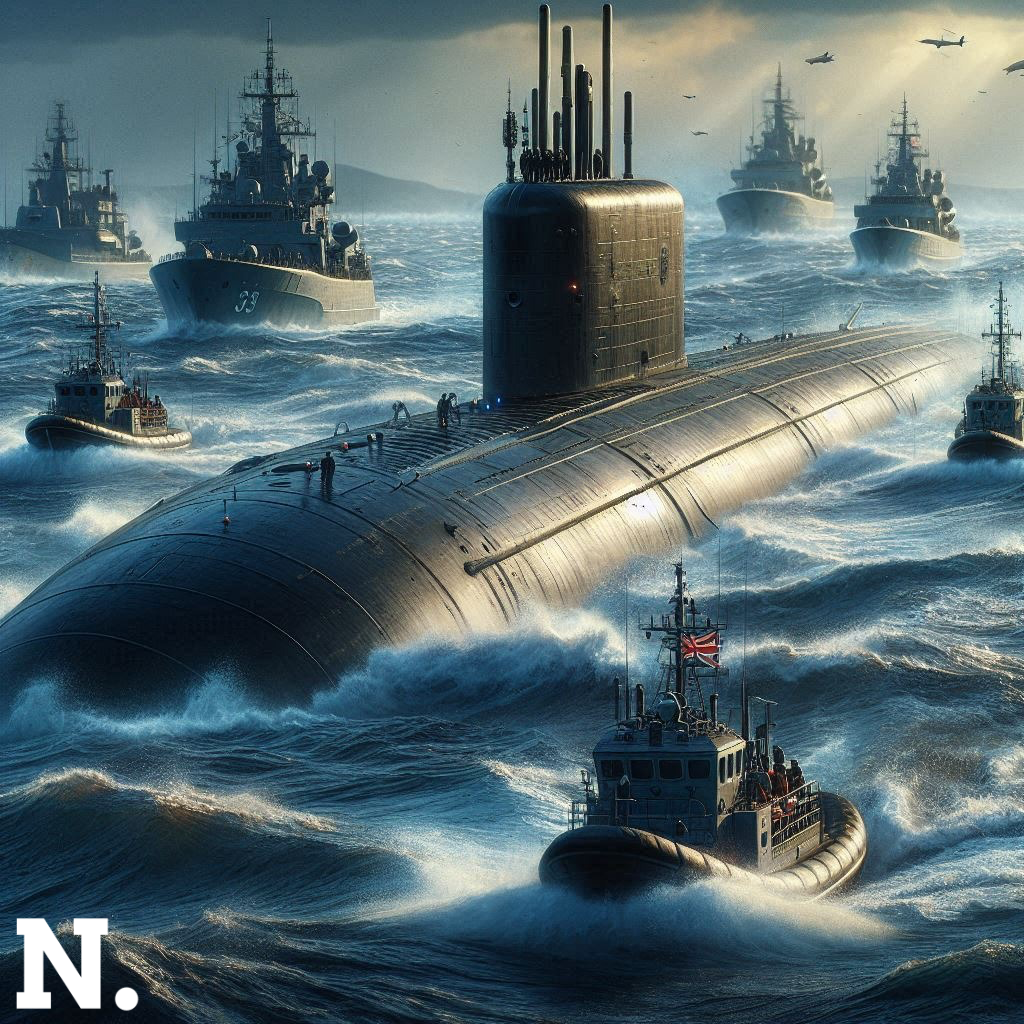
Russian Submarines Patrol Irish Sea: Unprecedented Moves by Kremlin

After the invasion of Ukraine in 2022, Russian submarines have twice made trips across the Irish Sea. The UK military had no option but to defend Irish and British waters. As a result of this rare move by the Kremlin. Three people familiar with the matter disclosed this information. They wished to remain unknown due to the sensitive nature of the assessments.

First Deployment and UK Response

The first deployment of a Russian Kilo-class submarine near the Irish Sea happened around 18 months ago. This area separates Ireland from Great Britain. The second occurrence happened more recently. The extent of the submarine movements exceeded what UK officials had seen before. Two sources confirmed that US officials were aware of these submarine movements.

The UK’s Ministry of Defence stated that they don’t “comment on operations.” A senior Biden administration official mentioned that the US monitors Russian naval activity. But White House spokespeople declined to comment on the latest report. Russia’s Defense Ministry did not immediately respond to a request for comment.

Capabilities of Kilo-Class Submarines

The Kilo-class submarine is a diesel-electric attack submarine. It can fire Russia’s Kalibr cruise missiles, torpedoes, and naval mines. Last month, Russian state media reported that Russian naval vessels, including the Yasen-class Kazan submarine. They conducted simulated drills in the Atlantic Ocean before a visit to Cuba.

Known Deployment Areas and Previous Encounters

Russian submarines operating in waters around Britain and western Ireland during the Ukraine war were already known. However, it was not previously reported that they traveled toward the Irish Sea. Irish media claimed in 2023 that a British warship and chopper had “chased off” a Russian submarine. In Cork Harbour which is in the southwest of the country. Underwater dangers were beyond the capability of the Irish military.

Recent Sightings and Government Responses

Last month, the BBC reported a Russian submarine spotted off the coast of Scotland. It then traveled to Cuba. A spokesperson for Ireland’s Department of Defence said the agency doesn’t comment on other countries’ armed forces operations. According to the spokesperson, “increased maritime patrolling” is being carried out by air and naval forces. Which is close to offshore energy infrastructure in the Irish Sea. The EXA Atlantic underwater cable, which links to the UK and Canada, lands in Cork as well. Governmental organisations are collaborating to safeguard the nation’s data connections.

Strategic Implications of Submarine Movements

It could be Russia’s attempt to identify potential weaknesses in British and Irish Sea defences. By sending submarines near the British and Iris waters. It might also aim to intimidate the UK in response to its support for Ukraine. Navigating the Irish Sea fully submerged would be a challenge for a Russian submarine. This is due to the complex claims to territorial waters and varying depths. In territorial waters, submarines are legally required to transit at surface speed.

Success and Capabilities of the Kilo Program

“One of the most successful naval programs in modern history,” according to the US Naval Institute, is the Kilo program. There are now about 60 Kilo-class submarines in operation. They have been employed to strike targets in Ukraine in the Black Sea. The maximum speed of a Kilo-class submarine is 17 knots when surfaced. And 20 knots when submerged.

Ensuring Maritime Security

The recent missions by Russian submarines in the Irish Sea mark a significant escalation in naval activity. This requires increased vigilance and cooperation between the UK and Ireland. Along with their allies to ensure maritime security. The situation remains tense as both sides continue to monitor each other’s movements and strategies.


Rajlaxmi Deshmukh
Rajlaxmi Deshmukh
Rajlaxmi Deshmukh is a Political Science Expert with Keen Interest in Geopolitics. She was working with a Think Tank Based in Pune before she joined News Interpretation in the capacity of Geo Political Editor.

TOP 10 TRENDING ON NEWSINTERPRETATION

Cyber Attacks on Space Infrastructure: Satellites, GPS and the Ground Systems Behind Them

From the Viasat KA-SAT hack to GPS jamming over the Baltic, a research guide to how attackers target satellites, navigation signals and ground stations, and why it matters on Earth.

How AI Agents Are Used in Cyber Attacks: From Assisted Hacking to AI-Orchestrated Espionage

Attackers now use AI agents to scan networks, write exploits and run extortion campaigns. A research guide to documented cases, including the first reported AI-orchestrated espionage campaign, and what defenders should do.

Cyber Attacks on AI and LLMs: How Attackers Target Large Language Models

Prompt injection, data poisoning, model theft and jailbreaks: a research guide to how attackers target AI systems and large language models, with real cases and defences.

French Supermarket Refrigeration Cyberattack: How Hacking the Cold Chain Can Endanger Lives

In October 2026 attackers heated refrigeration cabinets in hundreds of French supermarkets to as much as 50°C. No one was hurt, but the attack shows how hacking the cold chain can endanger lives through fire, food poisoning and spoiled medicines.

Cyberattacks on Nuclear Facilities: Stuxnet, Kudankulam and the Limits of Air Gaps

Stuxnet, the Davis-Besse worm and malware at India’s Kudankulam plant: what they show about cyber risk at nuclear facilities and the limits of air gaps.

Triton: When Hackers Target the Safety Systems That Prevent Industrial Disasters

The 2017 Triton attack targeted the safety systems that prevent industrial disasters. What happened, who was charged, and how plants protect their last line of defence.

Cybersecurity Risks in Smart Cities: When Connected Infrastructure Fails

How connecting traffic control, emergency alerts and utilities concentrates cyber risk in cities, what the Dallas and Atlanta incidents showed, and what governments recommend.

Weaponized Drones: Hijacking, GPS Spoofing and Emerging Cyber Warfare Risks

How drones can be hijacked, jammed or misled by GPS spoofing, what researchers have demonstrated, and why governments treat drone fleets as a security risk.

Ransomware Attacks on Hospitals: How Healthcare Cyberattacks Put Patients at Risk

How ransomware against hospitals and their suppliers delays care and endangers patients, what the Düsseldorf and WannaCry cases show, and what research says about deaths.

Operational blunder exposes massive Russian cyber espionage attack on Ukrainian prosecutors

A major cyberattack has compromised the email accounts of...

Cyber Attacks on Space Infrastructure: Satellites, GPS and the Ground Systems Behind Them

From the Viasat KA-SAT hack to GPS jamming over the Baltic, a research guide to how attackers target satellites, navigation signals and ground stations, and why it matters on Earth.

French Supermarket Refrigeration Cyberattack: How Hacking the Cold Chain Can Endanger Lives

In October 2026 attackers heated refrigeration cabinets in hundreds of French supermarkets to as much as 50°C. No one was hurt, but the attack shows how hacking the cold chain can endanger lives through fire, food poisoning and spoiled medicines.

Cyberattacks on Nuclear Facilities: Stuxnet, Kudankulam and the Limits of Air Gaps

Stuxnet, the Davis-Besse worm and malware at India’s Kudankulam plant: what they show about cyber risk at nuclear facilities and the limits of air gaps.

Triton: When Hackers Target the Safety Systems That Prevent Industrial Disasters

The 2017 Triton attack targeted the safety systems that prevent industrial disasters. What happened, who was charged, and how plants protect their last line of defence.

Cybersecurity Risks in Smart Cities: When Connected Infrastructure Fails

How connecting traffic control, emergency alerts and utilities concentrates cyber risk in cities, what the Dallas and Atlanta incidents showed, and what governments recommend.

Ransomware Attacks on Hospitals: How Healthcare Cyberattacks Put Patients at Risk

How ransomware against hospitals and their suppliers delays care and endangers patients, what the Düsseldorf and WannaCry cases show, and what research says about deaths.

FBI warns of AVrecon malware targeting outdated routers linked to proxy based cybercrime

A serious cybersecurity warning has been issued regarding commonly...

Related Articles

Popular Categories
