

US cracks down on illegal AI exports as $510 million Nvidia server scheme exposed

A major legal case has emerged in the United States involving the illegal export of advanced artificial intelligence hardware. Federal prosecutors have charged three individuals for allegedly sending restricted AI servers to China in violation of strict export control laws. The servers were built using high-performance chips from Nvidia and assembled by Super Micro Computer, Inc., a key company in the global AI infrastructure market.

The charges were officially announced on March 19 by federal authorities in New York. Two of the accused individuals have been arrested, while one remains at large. The case is being treated as a serious breach of U.S. export rules, which are specifically designed to restrict the flow of sensitive and high-end technology to certain countries. These regulations have become stricter in recent years as global competition in artificial intelligence continues to grow rapidly.

The United States has imposed firm limits on the export of advanced AI chips and related computing systems to China. These restrictions are intended to prevent the use of such powerful technologies in areas that could affect national security, military capabilities, or the overall strategic balance between countries.

Nvidia AI Servers Routed Through Complex Channels

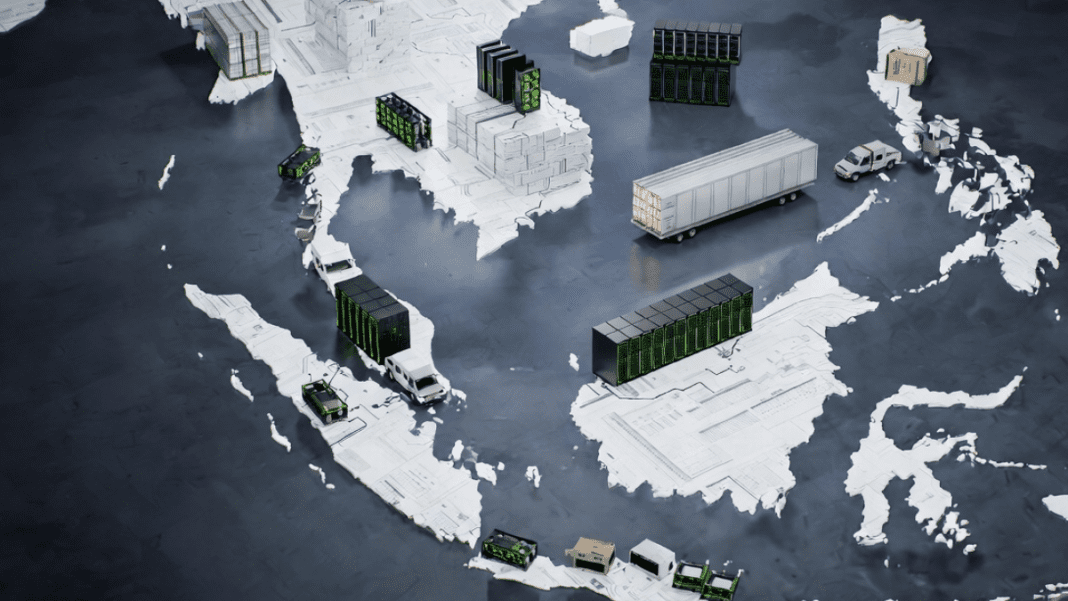
Investigators say the accused did not send the servers directly to China. Instead, they used companies in Southeast Asia to act as intermediaries. This method helped conceal the true destination of the shipments and allowed the servers to move across borders without raising immediate suspicion.

The servers involved in the case were equipped with powerful AI chips that are currently restricted under U.S. law. These chips are widely used in data centers and advanced computing systems because of their ability to process large amounts of data quickly.

Authorities allege that the group used false documentation and misleading records to avoid detection. The operation reportedly involved creating layers of business entities to hide ownership and control. Warehouses were also used to present fake inventory, making it appear that the products were being stored or redirected legally. These actions made it difficult for regulators to track the actual flow of goods.

Advanced Nvidia Blackwell chips reportedly used by Chinese AI firm despite US export controls

Large Financial Scale Raises Concerns

The financial scale of the operation has drawn significant attention. Investigators estimate that orders linked to the scheme reached around 2.5 billion dollars between 2024 and 2025. Out of this amount, at least 510 million dollars worth of AI servers are believed to have successfully entered China.

These servers are designed for high-level computing tasks, including artificial intelligence development, machine learning, and large-scale data processing. Because of their advanced capabilities, they are considered critical components in modern technology systems.

The market reacted quickly after the charges were made public. Shares of Super Micro Computer, Inc. fell sharply in after-hours trading. At the same time, Nvidia experienced a slight rise, indicating that investors viewed its compliance position as stable.

http://India launches anti-dumping investigation into ethyl chloroformate imports from China

Company Responses and Ongoing Investigation

Following the announcement, Super Micro Computer, Inc. stated that the actions described in the case do not reflect its business practices. The company said the individuals involved acted outside its policies and internal controls. It also confirmed that it is cooperating with investigators.

Nvidia also responded by stating that it follows all export regulations and does not support the use of its products in violation of the law. The company emphasized that compliance remains a core part of its operations.

Authorities continue to investigate the case to determine how the operation was carried out and whether similar activities may have occurred elsewhere. The case has brought attention to the challenges of monitoring global supply chains, especially when multiple countries and companies are involved.


TOP 10 TRENDING ON NEWSINTERPRETATION

Cyber Attacks on Space Infrastructure: Satellites, GPS and the Ground Systems Behind Them

From the Viasat KA-SAT hack to GPS jamming over the Baltic, a research guide to how attackers target satellites, navigation signals and ground stations, and why it matters on Earth.

How AI Agents Are Used in Cyber Attacks: From Assisted Hacking to AI-Orchestrated Espionage

Attackers now use AI agents to scan networks, write exploits and run extortion campaigns. A research guide to documented cases, including the first reported AI-orchestrated espionage campaign, and what defenders should do.

Cyber Attacks on AI and LLMs: How Attackers Target Large Language Models

Prompt injection, data poisoning, model theft and jailbreaks: a research guide to how attackers target AI systems and large language models, with real cases and defences.

French Supermarket Refrigeration Cyberattack: How Hacking the Cold Chain Can Endanger Lives

In October 2026 attackers heated refrigeration cabinets in hundreds of French supermarkets to as much as 50°C. No one was hurt, but the attack shows how hacking the cold chain can endanger lives through fire, food poisoning and spoiled medicines.

Cyberattacks on Nuclear Facilities: Stuxnet, Kudankulam and the Limits of Air Gaps

Stuxnet, the Davis-Besse worm and malware at India’s Kudankulam plant: what they show about cyber risk at nuclear facilities and the limits of air gaps.

Triton: When Hackers Target the Safety Systems That Prevent Industrial Disasters

The 2017 Triton attack targeted the safety systems that prevent industrial disasters. What happened, who was charged, and how plants protect their last line of defence.

Cybersecurity Risks in Smart Cities: When Connected Infrastructure Fails

How connecting traffic control, emergency alerts and utilities concentrates cyber risk in cities, what the Dallas and Atlanta incidents showed, and what governments recommend.

Weaponized Drones: Hijacking, GPS Spoofing and Emerging Cyber Warfare Risks

How drones can be hijacked, jammed or misled by GPS spoofing, what researchers have demonstrated, and why governments treat drone fleets as a security risk.

Ransomware Attacks on Hospitals: How Healthcare Cyberattacks Put Patients at Risk

How ransomware against hospitals and their suppliers delays care and endangers patients, what the Düsseldorf and WannaCry cases show, and what research says about deaths.

Operational blunder exposes massive Russian cyber espionage attack on Ukrainian prosecutors

A major cyberattack has compromised the email accounts of...

Cyber Attacks on Space Infrastructure: Satellites, GPS and the Ground Systems Behind Them

From the Viasat KA-SAT hack to GPS jamming over the Baltic, a research guide to how attackers target satellites, navigation signals and ground stations, and why it matters on Earth.

French Supermarket Refrigeration Cyberattack: How Hacking the Cold Chain Can Endanger Lives

In October 2026 attackers heated refrigeration cabinets in hundreds of French supermarkets to as much as 50°C. No one was hurt, but the attack shows how hacking the cold chain can endanger lives through fire, food poisoning and spoiled medicines.

Cyberattacks on Nuclear Facilities: Stuxnet, Kudankulam and the Limits of Air Gaps

Stuxnet, the Davis-Besse worm and malware at India’s Kudankulam plant: what they show about cyber risk at nuclear facilities and the limits of air gaps.

Triton: When Hackers Target the Safety Systems That Prevent Industrial Disasters

The 2017 Triton attack targeted the safety systems that prevent industrial disasters. What happened, who was charged, and how plants protect their last line of defence.

Cybersecurity Risks in Smart Cities: When Connected Infrastructure Fails

How connecting traffic control, emergency alerts and utilities concentrates cyber risk in cities, what the Dallas and Atlanta incidents showed, and what governments recommend.

Ransomware Attacks on Hospitals: How Healthcare Cyberattacks Put Patients at Risk

How ransomware against hospitals and their suppliers delays care and endangers patients, what the Düsseldorf and WannaCry cases show, and what research says about deaths.

FBI warns of AVrecon malware targeting outdated routers linked to proxy based cybercrime

A serious cybersecurity warning has been issued regarding commonly...

Related Articles

Popular Categories