

SoftBank CEO Masayoshi Son Redirects Focus Towards AI Industry

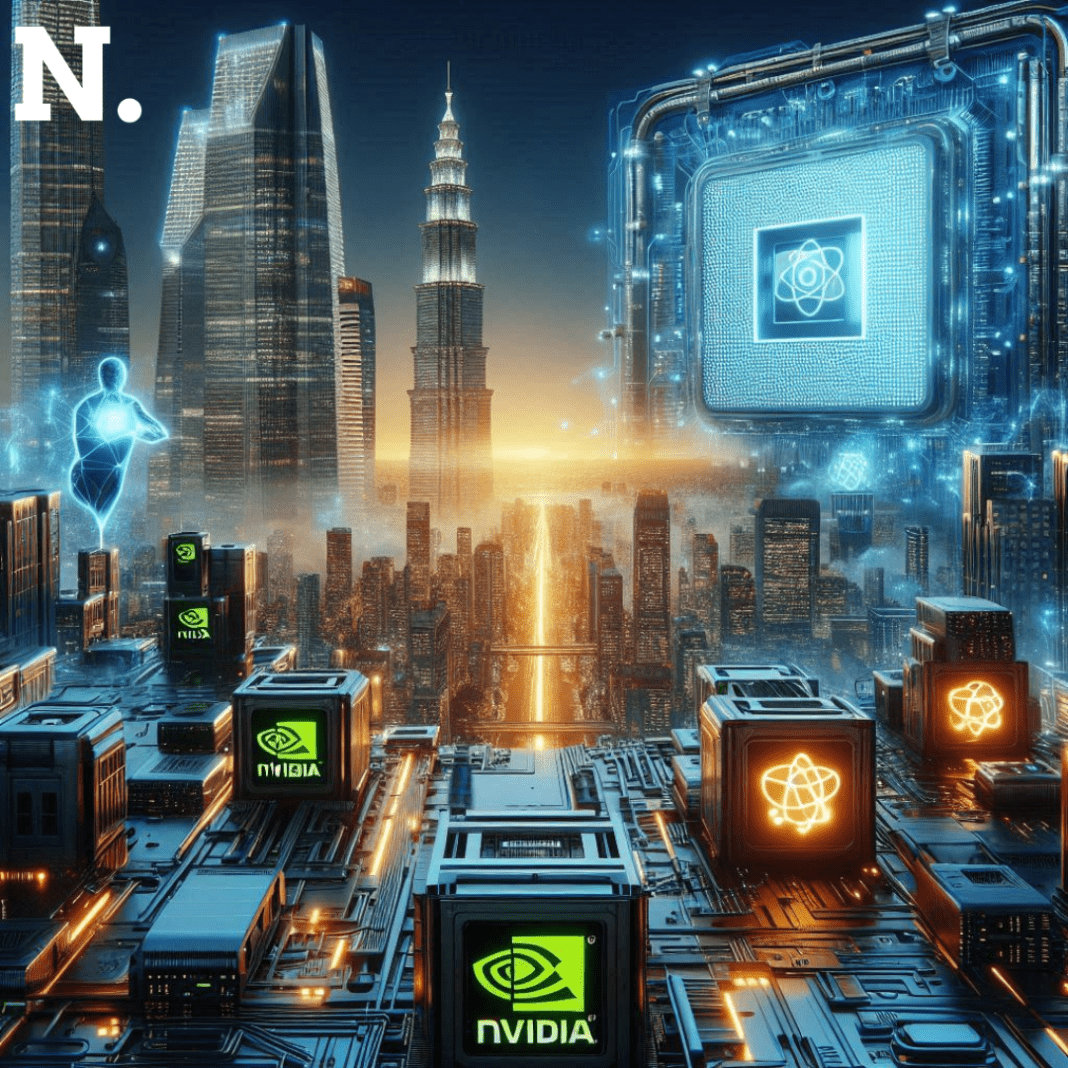
SoftBank CEO Masayoshi Son is pivoting to artificial intelligence after reflecting on selling the company’s stake in Nvidia too early. It will ensure that the company remains resolute and committed to being in the front line as players in the AI industry by using its existing technological assets and new partners.

SoftBank’s Vision Fund: Highs, Lows, and the Future of AI

Time after time, with a staggering Vision Fund under its arm and seeking tech startups in its investment radar, SoftBank is arguably the largest technology investor in the thoughts of many in recent times. Unfortunately, that fund took a huge beating with high-profile failure in WeWork and huge losses in 2020 and 2023. But that has not stopped Mr. Son from speaking out his mind for AI and how easily it would transform a wide reach of industries.

For example, SoftBank recently collaborated with Nvidia, promising to add still more value to its data center based in Japan. With this new development, the company will start deploying the Nvidia Grace Hopper superchip in equipment, bringing valuable characteristics to support all software being developed, in generative AI and next-gen wireless communications. These new data centers are about to change the game regarding AI-driven application performance with better performance, scalability, and energy savings.

SoftBank’s Ambitious AI Plans

Their union is going to develop pretty much robust infrastructure to stand by a super-digitalized society in Japan, that will help its soaring demands in the processing of data and consumption of energies. In his statement, the President and CEO of SoftBank Corp., Junichi Miyakawa, said that through this partnership, they shall be optimizing the AI and 5G networks, lowering consumption of energies, and creating a network of fragmented data centers for various applications of AI.

Among these investments in data center capability, SoftBank also seems to be entering into one giant project, aptly named Project Izanagi. An ambitious project aims to raise $100 billion for creating AI chips that can rival Nvidia in particular. What is significant is that SoftBank and Middle Eastern investors are lining up to put some serious money into the project. This underlines the vision of serious competition at the highest level in the market for AI chips, a view credited to Son ​(Datacenter Dynamics)​.

Other than this, Son has also outlined a move to integration with SoftBank’s major stake in Arm, which is one of the world’s largest chip-design companies. The big synergy going on is between Arm’s vast ecosystem and Nvidia’s AI, going to wield powerful AI for global use, touching on areas ranging from consumer electronics to advanced robotics. More companies will have access to AI and democratize it, while NVIDIA leads the tech industry in a renaissance through new innovations driven by this technology (NVIDIA Blog).

From Nvidia Sale to AI Leader

With the increased interest in artificial intelligence and coinciding with the lightning-fast maturity drive of AI technologies, this is sure to become near-mainstream in any domain. In effect, this would put SoftBank effectively into a prospective position through high investments in AI infrastructure and strategic partnerships in the AI revolution—the current and future technological demand, to be specific.

In essence, what Masayoshi Son did and carried on after that early sale of Nvidia underscores the long-term vision and bridgeability of SoftBank amidst a fast-changing arena of tech. Therefore, with its considerable investments in AI chips, strategic collaborations with industry leaders such as Nvidia, and playing assets like Arm, SoftBank will be well-placed to ride the impending wave of changes in the AI industry for innovation and growth in the coming years.

Conclusion: Masayoshi Son’s Commitment

Masayoshi Son’s decision to pivot much further into deeper AI investments shows, even after the ill-fated premature sale of Nvidia, the SoftBank philosophy of patience, a long view, and flexibility. SoftBank, with its large existing assets like Arm and strategic partnerships with industry leaders such as Nvidia, is priming the head of the AI revolution by anchoring it with cutting-edge projects like Izanagi. NVIDIA Blog: These investments will be able to keep up with the current state of technological demands and, thus, fuel innovation and growth in the tech industry for the next years. Datacenter Dynamics:.

Vedangi Verma
Vedangi Verma
Vedangi Verma is working as an journalism intern in 'newsinterpretation'. She has published articles that cover topics like military and security, national and international politics, cybersecurity, ecological conditions of the said area and so on.

TOP 10 TRENDING ON NEWSINTERPRETATION

Cyber Attacks on Space Infrastructure: Satellites, GPS and the Ground Systems Behind Them

From the Viasat KA-SAT hack to GPS jamming over the Baltic, a research guide to how attackers target satellites, navigation signals and ground stations, and why it matters on Earth.

How AI Agents Are Used in Cyber Attacks: From Assisted Hacking to AI-Orchestrated Espionage

Attackers now use AI agents to scan networks, write exploits and run extortion campaigns. A research guide to documented cases, including the first reported AI-orchestrated espionage campaign, and what defenders should do.

Cyber Attacks on AI and LLMs: How Attackers Target Large Language Models

Prompt injection, data poisoning, model theft and jailbreaks: a research guide to how attackers target AI systems and large language models, with real cases and defences.

French Supermarket Refrigeration Cyberattack: How Hacking the Cold Chain Can Endanger Lives

In October 2026 attackers heated refrigeration cabinets in hundreds of French supermarkets to as much as 50°C. No one was hurt, but the attack shows how hacking the cold chain can endanger lives through fire, food poisoning and spoiled medicines.

Cyberattacks on Nuclear Facilities: Stuxnet, Kudankulam and the Limits of Air Gaps

Stuxnet, the Davis-Besse worm and malware at India’s Kudankulam plant: what they show about cyber risk at nuclear facilities and the limits of air gaps.

Triton: When Hackers Target the Safety Systems That Prevent Industrial Disasters

The 2017 Triton attack targeted the safety systems that prevent industrial disasters. What happened, who was charged, and how plants protect their last line of defence.

Cybersecurity Risks in Smart Cities: When Connected Infrastructure Fails

How connecting traffic control, emergency alerts and utilities concentrates cyber risk in cities, what the Dallas and Atlanta incidents showed, and what governments recommend.

Weaponized Drones: Hijacking, GPS Spoofing and Emerging Cyber Warfare Risks

How drones can be hijacked, jammed or misled by GPS spoofing, what researchers have demonstrated, and why governments treat drone fleets as a security risk.

Ransomware Attacks on Hospitals: How Healthcare Cyberattacks Put Patients at Risk

How ransomware against hospitals and their suppliers delays care and endangers patients, what the Düsseldorf and WannaCry cases show, and what research says about deaths.

Operational blunder exposes massive Russian cyber espionage attack on Ukrainian prosecutors

A major cyberattack has compromised the email accounts of...

Cyber Attacks on Space Infrastructure: Satellites, GPS and the Ground Systems Behind Them

From the Viasat KA-SAT hack to GPS jamming over the Baltic, a research guide to how attackers target satellites, navigation signals and ground stations, and why it matters on Earth.

French Supermarket Refrigeration Cyberattack: How Hacking the Cold Chain Can Endanger Lives

In October 2026 attackers heated refrigeration cabinets in hundreds of French supermarkets to as much as 50°C. No one was hurt, but the attack shows how hacking the cold chain can endanger lives through fire, food poisoning and spoiled medicines.

Cyberattacks on Nuclear Facilities: Stuxnet, Kudankulam and the Limits of Air Gaps

Stuxnet, the Davis-Besse worm and malware at India’s Kudankulam plant: what they show about cyber risk at nuclear facilities and the limits of air gaps.

Triton: When Hackers Target the Safety Systems That Prevent Industrial Disasters

The 2017 Triton attack targeted the safety systems that prevent industrial disasters. What happened, who was charged, and how plants protect their last line of defence.

Cybersecurity Risks in Smart Cities: When Connected Infrastructure Fails

How connecting traffic control, emergency alerts and utilities concentrates cyber risk in cities, what the Dallas and Atlanta incidents showed, and what governments recommend.

Ransomware Attacks on Hospitals: How Healthcare Cyberattacks Put Patients at Risk

How ransomware against hospitals and their suppliers delays care and endangers patients, what the Düsseldorf and WannaCry cases show, and what research says about deaths.

FBI warns of AVrecon malware targeting outdated routers linked to proxy based cybercrime

A serious cybersecurity warning has been issued regarding commonly...

Related Articles

Popular Categories
