

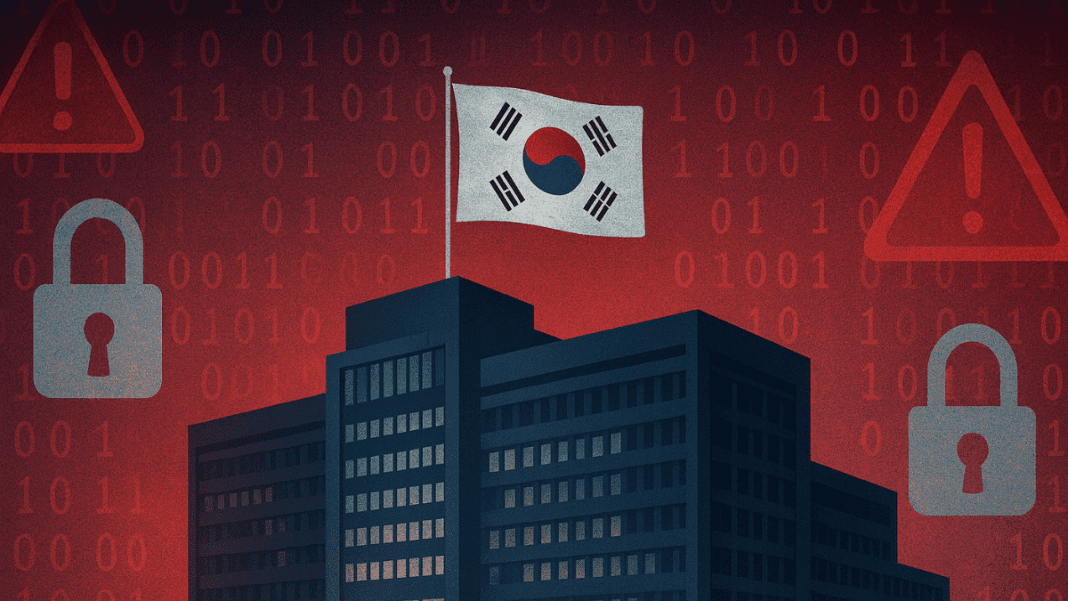
South Korea reels from wave of cyberattacks — nearly 1 million personal records stolen in 2025

Cyberattacks on South Korea’s state agencies have reached alarming levels this year. The Ministry of Health and Welfare reported that it was targeted more than 56,000 times in just the first eight months of 2025. This is nearly 200 times higher than the figure recorded last year.

Health Ministry Hit by Record Number of Attacks

Official data shows that in 2024 the ministry faced only 338 hacking attempts. In 2023, the number stood at 211, and in 2022 it was 1,144. The sudden jump to over 56,000 attacks in 2025 shows how sharply the threat has grown in a very short time.

When all affiliated agencies of the Health Ministry are included, the total number of attacks rises even more. By August this year, there were more than 552,000 cyberattacks. In 2022, the number was 219,807. This indicates more than double the attempts in just three years.

One of the most alarming targets has been the Korea Social Security Information Service, which holds sensitive records about citizens’ income and assets. This agency faced more than 68,000 hacking attempts in the first eight months of this year. In 2022, the number of attempts was just over 3,300, meaning attacks increased nearly 20-fold. Officials have warned that such attempts could cause serious damage if the data is exposed.

Rising Threat of Data Breaches

The surge in attacks is not only about numbers. It also raises the risk of large-scale data theft. A separate report revealed that state-affiliated bodies lost almost 4 million pieces of personal information last year. By July this year, another 912,000 pieces of information had already been stolen.

These leaks can involve names, contact details, and other personal records. Many experts warn that the real figure could be even higher, since not all cases are detected or made public. Once this data is stolen, it can spread quickly and be misused for fraud, scams, or other illegal activities.

How Cyber Attacks on Industrial Control Systems Can Endanger Lives ?

Investigations suggest that some of these cyberattacks have links to well-known hacker groups. One security report claimed that a large amount of stolen data was found on a hacker’s computer. This data included files from key government branches such as the Ministry of National Defense, the Ministry of Foreign Affairs, and the Supreme Prosecutors’ Office.

Another area of concern is the Onnara Service, which is a digital network that connects government branches for administrative duties. It was reported that hackers may have gained access to this system, though the claim has not been confirmed by local authorities. What has been confirmed is that a private contractor responsible for managing the system was hacked last year. The breach has since been linked to attackers from abroad.

Cyberattacks Spread to Civilian Sector

The wave of cyberattacks has not been limited to government agencies. Several large companies in the private sector have also been hit. Mobile carriers and credit card firms have reported major data breaches. These incidents sparked anger among customers and led to nationwide concerns about data safety.

Russian hackers hit 20 South Korean equity funds, dump tax files and investor data online

Adding to the difficulties, public services faced delays after a fire broke out at the National Information Resources Service, where key government servers are housed. The fire, believed to have been caused by a battery, disrupted the network service and added to the challenges already created by cyberattacks. An investigation is still underway to determine the exact cause of the fire.

The combination of hacking incidents, data leaks, and system breakdowns highlights how fragile critical networks have become. Both government and private institutions are now facing growing pressure to protect the sensitive information of millions of people.

Renuka Bangale
Renuka Bangale
Renuka is a distinguished Chartered Accountant and a Certified Digital Threats Analyst from Riskpro, renowned for her expertise in cybersecurity. With a deep understanding of cybercrimes, malware, cyber warfare, and espionage, she has established herself as an authority in the field. Renuka combines her financial acumen with advanced knowledge of digital threats to provide unparalleled insights into the evolving landscape of information security. Her analytical prowess enables her to dissect complex cyber incidents, offering clarity on risks and mitigation strategies. As a key contributor to Newsinterpretation’s information security category, Renuka delivers authoritative articles that educate and inform readers about emerging threats and best practices.

TOP 10 TRENDING ON NEWSINTERPRETATION

Cyber Attacks on Space Infrastructure: Satellites, GPS and the Ground Systems Behind Them

From the Viasat KA-SAT hack to GPS jamming over the Baltic, a research guide to how attackers target satellites, navigation signals and ground stations, and why it matters on Earth.

How AI Agents Are Used in Cyber Attacks: From Assisted Hacking to AI-Orchestrated Espionage

Attackers now use AI agents to scan networks, write exploits and run extortion campaigns. A research guide to documented cases, including the first reported AI-orchestrated espionage campaign, and what defenders should do.

Cyber Attacks on AI and LLMs: How Attackers Target Large Language Models

Prompt injection, data poisoning, model theft and jailbreaks: a research guide to how attackers target AI systems and large language models, with real cases and defences.

French Supermarket Refrigeration Cyberattack: How Hacking the Cold Chain Can Endanger Lives

In October 2026 attackers heated refrigeration cabinets in hundreds of French supermarkets to as much as 50°C. No one was hurt, but the attack shows how hacking the cold chain can endanger lives through fire, food poisoning and spoiled medicines.

Cyberattacks on Nuclear Facilities: Stuxnet, Kudankulam and the Limits of Air Gaps

Stuxnet, the Davis-Besse worm and malware at India’s Kudankulam plant: what they show about cyber risk at nuclear facilities and the limits of air gaps.

Triton: When Hackers Target the Safety Systems That Prevent Industrial Disasters

The 2017 Triton attack targeted the safety systems that prevent industrial disasters. What happened, who was charged, and how plants protect their last line of defence.

Cybersecurity Risks in Smart Cities: When Connected Infrastructure Fails

How connecting traffic control, emergency alerts and utilities concentrates cyber risk in cities, what the Dallas and Atlanta incidents showed, and what governments recommend.

Weaponized Drones: Hijacking, GPS Spoofing and Emerging Cyber Warfare Risks

How drones can be hijacked, jammed or misled by GPS spoofing, what researchers have demonstrated, and why governments treat drone fleets as a security risk.

Ransomware Attacks on Hospitals: How Healthcare Cyberattacks Put Patients at Risk

How ransomware against hospitals and their suppliers delays care and endangers patients, what the Düsseldorf and WannaCry cases show, and what research says about deaths.

Operational blunder exposes massive Russian cyber espionage attack on Ukrainian prosecutors

A major cyberattack has compromised the email accounts of...

Cyber Attacks on Space Infrastructure: Satellites, GPS and the Ground Systems Behind Them

From the Viasat KA-SAT hack to GPS jamming over the Baltic, a research guide to how attackers target satellites, navigation signals and ground stations, and why it matters on Earth.

French Supermarket Refrigeration Cyberattack: How Hacking the Cold Chain Can Endanger Lives

In October 2026 attackers heated refrigeration cabinets in hundreds of French supermarkets to as much as 50°C. No one was hurt, but the attack shows how hacking the cold chain can endanger lives through fire, food poisoning and spoiled medicines.

Cyberattacks on Nuclear Facilities: Stuxnet, Kudankulam and the Limits of Air Gaps

Stuxnet, the Davis-Besse worm and malware at India’s Kudankulam plant: what they show about cyber risk at nuclear facilities and the limits of air gaps.

Triton: When Hackers Target the Safety Systems That Prevent Industrial Disasters

The 2017 Triton attack targeted the safety systems that prevent industrial disasters. What happened, who was charged, and how plants protect their last line of defence.

Cybersecurity Risks in Smart Cities: When Connected Infrastructure Fails

How connecting traffic control, emergency alerts and utilities concentrates cyber risk in cities, what the Dallas and Atlanta incidents showed, and what governments recommend.

Ransomware Attacks on Hospitals: How Healthcare Cyberattacks Put Patients at Risk

How ransomware against hospitals and their suppliers delays care and endangers patients, what the Düsseldorf and WannaCry cases show, and what research says about deaths.

FBI warns of AVrecon malware targeting outdated routers linked to proxy based cybercrime

A serious cybersecurity warning has been issued regarding commonly...

Related Articles

Popular Categories
