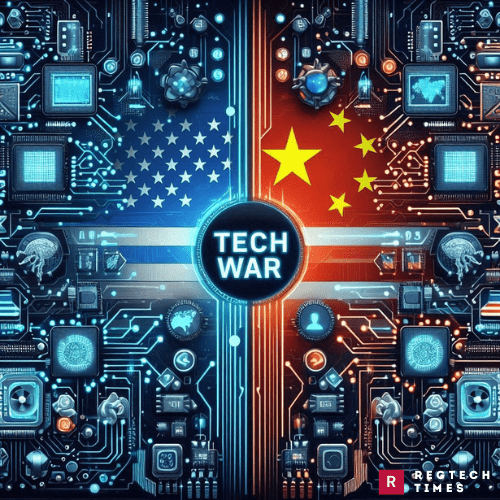

In recent years, the phrase “Tech Cold War” has come to symbolise the intense technological rivalry between the United States and China, shaping the current geopolitical landscape. This emerging conflict reshapes global technology dynamics, driven by national security concerns, economic strategies, and a race for technological supremacy.
China’s Drive for Technological Independence
At the core of China’s strategy in the Tech Cold War is a determined push for technological self-reliance. This effort to reduce dependence on Western technology is not merely about economic efficiency but is deeply rooted in national security concerns. The Snowden leaks, which exposed extensive US espionage activities, have heightened China’s apprehension about using foreign technology, prompting a significant shift towards developing domestic alternatives.
China aims to replace Western hardware and software in its public sector and critical infrastructure with homegrown products. This nationalistic approach is part of a broader strategy to build a resilient technological ecosystem that minimizes vulnerabilities to external pressures and control.
US-China War: Looming Threat Over Philippines; Strategic Role in Spratly Islands
The Tech Cold War and Its Implications
The rivalry between the US and China in the Tech Cold War is akin to the geopolitical tensions of the traditional Cold War, though with a modern technological twist. This new conflict encompasses critical areas such as semiconductors, artificial intelligence (AI), and telecommunications, with both nations vying for dominance in these essential fields.
The US has introduced a range of measures aimed at limiting China’s access to advanced technologies. For instance, export controls on advanced graphics processing units (GPUs) and other high-end chips aim to prevent China from gaining an edge in technologies that could enhance its military and AI capabilities. Companies like NVIDIA, which produce some of the most advanced technologies, face restrictions on selling their products to China.
Tech War Strategy : US Allies Japan and Netherlands Target China’s AI Chip Development
Technical and Economic Challenges
China’s efforts to replace Western technology come with significant challenges in the Tech Cold War. While the country is heavily investing in its domestic tech sector, particularly semiconductor manufacturing, it still struggles to achieve technological parity with leading US companies. Developing high-performance semiconductors and other advanced technologies remains a complex and resource-intensive task.
The move towards domestic technology is driven by both strategic necessity and economic opportunity. Chinese companies are encouraged to use local products, even if they fall short of Western standards, as long as they are “good enough” to meet domestic needs and gradually improve over time.
US-China Price War: The High Stakes Battle for AI Dominance
US Reactions and Strategic Measures
In response to China’s technological advances, the US has implemented various strategies to maintain its edge in the Tech Cold War. The controversy surrounding TikTok, a popular Chinese app, highlights broader concerns about data security and potential espionage. The US government’s demand for TikTok to be sold to an American company or face a ban emphasizes its focus on protecting user data and preventing foreign access.
Additionally, the US has imposed penalties on companies that violate export restrictions, complicating the business environment for tech firms operating between the two nations. This ongoing “cat and mouse” game between US regulations and Chinese market access illustrates the high stakes involved in this technological rivalry.
The Military Dimension
The Tech Cold War has significant military implications. Both the US and China understand that technological superiority, especially in AI and advanced computing, will be crucial for future military power. China’s substantial investments in technology are aimed at ensuring its military can leverage the latest advancements, thereby gaining a strategic advantage.
Global Economic and Strategic Impact
The Tech Cold War is resulting in the development of two separate technological ecosystems. This bifurcation will have considerable global economic implications, influencing everything from international trade to technology standards. China’s ambition to set its own technological standards and expand its influence beyond its borders represents a direct challenge to the US-led global tech order.
China Expands Spy Base in Cuba; US Alarmed by Growing Espionage Challenge
The path to technological parity between China and the US is fraught with challenges. While China is making notable progress, achieving full technological equivalence will take time. The race in AI and other cutting-edge technologies will influence global economic and military dynamics for decades to come.
The Tech Cold War between the US and China is not just about technological supremacy but also a broader contest for global leadership and influence. As both nations continue to invest heavily in their technological capabilities, the outcomes of this rivalry will have lasting impacts on international relations, economic structures, and technological innovation worldwide.